

MSCI confirmed on 11 November 2026 that it will remove Strategy (MSTR) from the MSCI USA Index at the close of 30 November, which also takes it out of MSCI World and ACWI, after a new screen classed the company as a non-operating issuer. Strategy still holds its bitcoin and nothing forces it to sell, but the decision is a clear reminder that when you own bitcoin through a stock, a fund or an exchange, someone else's rulebook decides what happens to your exposure, while coins you hold yourself answer only to you.
We make a hardware wallet, so we look at this from the custody side. Nothing here is advice about Strategy shares, index funds or any other investment.
What MSCI decided
The change came in MSCI's November 2026 Index Review, which says all changes take effect as of the close of 30 November 2026. According to Bitcoin Magazine's breakdown of the review, the new screen doesn't mention bitcoin at all: a company whose operating assets are below half of its total assets is tested against five financial ratios, and one flagged on four or more becomes ineligible. Metaplanet, Yellow Cake, Upexi and Skel were removed from smaller MSCI indexes under the same screen, as The Block reported.
Strategy held 850,364 bitcoin as of 8 November, according to its own purchase tracker. In an August letter to MSCI, the company argued that a deletion "would have no meaningful impact on Strategy's business," and its executives have called the rules discriminatory. The selling pressure is harder to pin down: JPMorgan analysts estimated in November 2025 that an exclusion could drive about 2.8 billion USD of outflows, and up to 8.8 billion USD if other index providers followed, though that estimate was based on an earlier MSCI proposal and MSCI hasn't published a figure of its own.
Why a rule change can move your bitcoin exposure
Index funds don't choose what they own. They track a list, and when the list changes, they sell. Anyone who held Strategy as a way to get bitcoin exposure inside a retirement account or a world index fund is about to lose that exposure on 30 November, and they didn't make that decision.
That's the trade-off with every indirect route into bitcoin. A stock like MSTR adds company risk on top of bitcoin risk: debt, share issuance, management choices and now index eligibility. A spot bitcoin ETF is closer to the asset, though you still hold a share in a fund whose custodian holds the coins, and you trade on market hours through a broker. An exchange balance is a claim on the exchange, which can pause withdrawals or freeze an account under its terms. None of these routes are wrong, and each has real advantages, from tax wrappers to convenience, but each one has a rulebook you don't write.
We compared the ETF route side by side in our guide to Bitcoin ETFs versus self-custody, and Strategy's own buying habits in our piece on what retail holders can copy from Strategy and Bitmine.
What owning bitcoin directly changes
When you hold bitcoin in your own wallet, the coins sit at addresses controlled by a private key only you hold. An index review, a fund's mandate or a broker's trading hours have no say over them, and you can move them at 3 a.m. on a Sunday if you want to.
The responsibility moves with the control. You're the one who has to keep the keys safe and make sure a backup exists that survives a lost device, a house move or a fire. That's the part most people worry about when they first think about self-custody, and it's a fair worry, because there's nobody to call if the only copy of your recovery words gets thrown out.
For many holders the sensible answer is a mix. Shares or ETF units can sit in a retirement account where they make tax sense, a modest trading balance can stay on a regulated exchange, and the bitcoin you mean to keep for years can sit in a hardware wallet you control.
Questions to ask about your own exposure
If the MSCI news made you check what you own, three questions help sort it out. First, ask whether you hold bitcoin itself or a claim on it, since a stock, a fund unit and an exchange balance are all claims of different kinds. Then ask who can change the terms: an index provider, a fund board, an exchange or only you. Finally, look at what happens if that party makes a decision you disagree with, whether that means a forced sale, a withdrawal pause or nothing at all.
If the answers show that most of your long-term bitcoin depends on decisions other people make, that's a reason to move some of it somewhere you control. Start with a small test transfer and confirm you can recover the wallet before you move the rest.
Where Ryder One fits
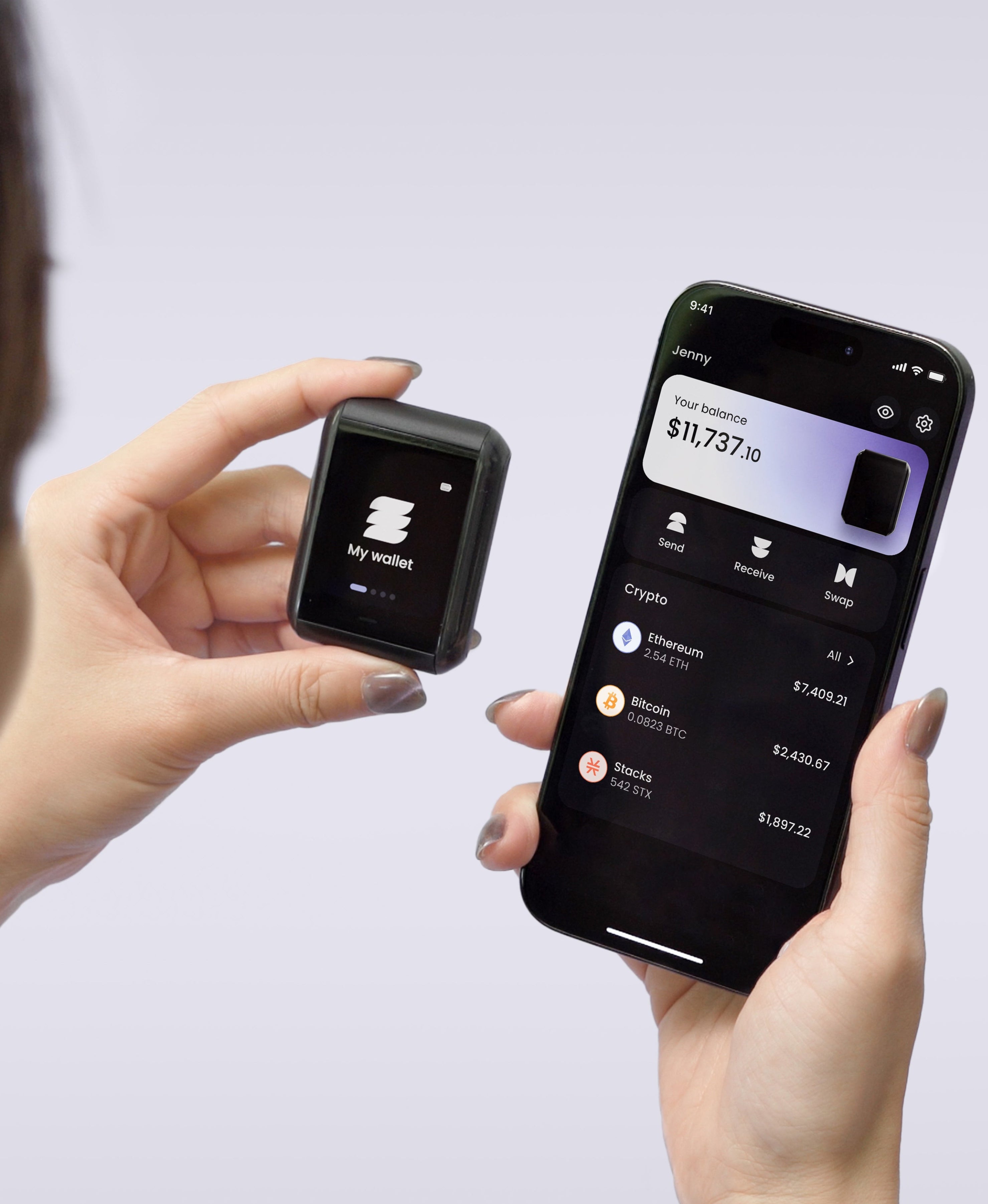
Ryder One holds Bitcoin, along with Ethereum, Solana and their tokens, with keys generated inside an EAL6+ secure element that never leaves the device. Every transaction shows on its screen before you approve it, and it talks to your phone over NFC only. For the backup, TapSafe splits recovery between a Recovery Tag and an encrypted piece in your own iCloud or Google Drive, while the seed phrase stays available on the device as a last resort, so the bitcoin you take out of someone else's rulebook doesn't end up depending on a single slip of paper instead.



Share: