

Strategy bought another 1,036 bitcoin last week and now holds 850,364 BTC, while Bitmine holds over 6 million ETH, about 4.9% of all ether, and both kept buying as Bitcoin slipped to around 75,000 USD. What a regular holder can usefully copy from them is the long time horizon and the habit of writing down a plan, since their funding methods, custody arrangements and appetite for risk don't translate to a personal account.
We make a hardware wallet, so this article looks at the custody side of the story. It isn't a recommendation to buy Bitcoin, ether, or either company's stock.
What Strategy and Bitmine announced
Strategy's purchase history shows a filing on 9 November 2026 for 1,036 BTC at an average of 79,012 USD each, about 82 million USD in total, which took its holdings to 850,364 BTC. With Bitcoin near 75,000 USD on 10 November, according to CoinGecko, that latest batch was already below its purchase price a day later.
Bitmine reported on 2 November that it held 6,060,506 ETH as of 1 November, which it put at 4.9% of the ETH supply, and that more than 5.2 million of those coins were staked. The company has said for over a year that its goal is to own 5% of all ether.
What retail holders can copy
The most useful habit is the time horizon. Both companies describe their holdings as long-term reserves and keep buying through falling prices, which is the opposite of the panic selling that a 75,000 USD Bitcoin tends to trigger in personal accounts.
The second habit is having a plan on paper. Strategy publishes every purchase, and Bitmine reports its holdings weekly, so their approach is decided in advance rather than made up on a bad day. For an individual, the equivalent is a short written note that says how much you'll hold for the long term, how you'll add to it, and where it will live.
What retail holders shouldn't copy
Both companies raise money from public markets to buy crypto, by selling shares, preferred stock or other securities. That gives them access to capital, and also exposes their shareholders to dilution and their balance sheets to price swings, which is a very different position from someone spending their own savings. Borrowing to buy, or putting money you'll need within 12 months into a falling market, carries risks a public company can spread across thousands of investors and you can't.
Custody is the other gap. A company holding hundreds of thousands of coins runs institutional custody with legal agreements and audits that an individual can't replicate, and their choices tell you little about how you should hold your own coins.
Where your long-term coins should live
If you take one thing from Strategy and Bitmine, make it the long-term mindset, and then make sure the place you keep those coins matches it. Leaving years of savings on an exchange ties them to that exchange's security, rules and withdrawal decisions, while moving them to self-custody puts the keys with you and makes you responsible for the backup.
Most people end up splitting their holdings: a trading balance on a regulated exchange and long-term coins in a hardware wallet. Whatever device you choose, test your backup with a small amount first and keep the recovery pieces apart from the device.
Where Ryder One fits
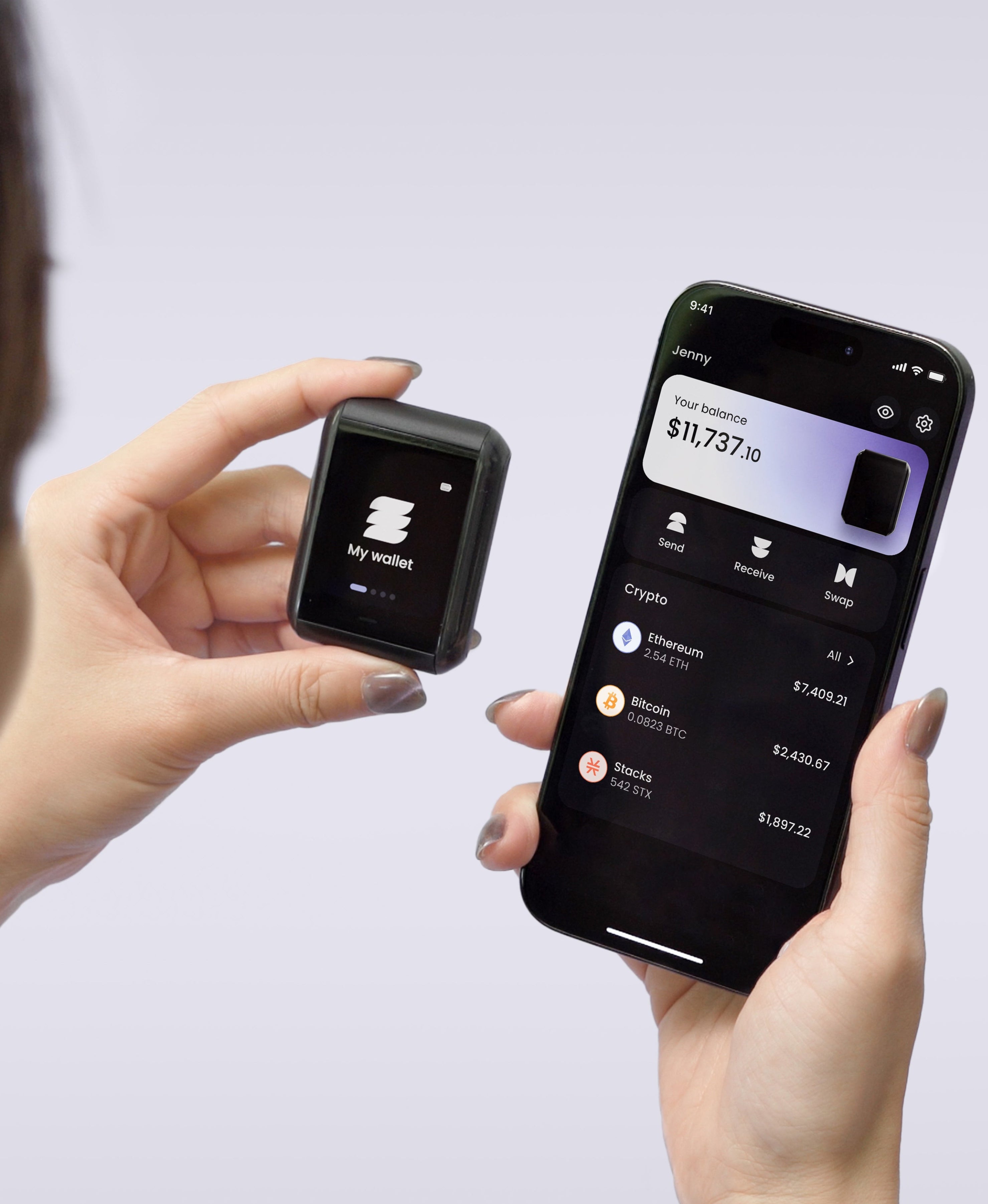
Ryder One holds Bitcoin, ether and Solana, along with ERC-20 and SPL tokens, with the keys generated inside its secure element. Recovery runs through TapSafe, which splits your backup between a Recovery Tag and an encrypted piece in your iCloud or Google Drive, and the seed phrase stays available on the device as a last resort. If you're building a long-term position the way these companies do, that's the part of the plan a hardware wallet takes care of.


Share: