

A private key is a secret piece of information that proves ownership of crypto and lets you authorize transactions from a wallet.
Think of it like the master key to a safe. If someone gets it, they can open the safe. If you lose it and have no backup, you cannot open the safe either.
In most modern wallets, you rarely see the private key directly. Instead, wallets use a seed phrase (a list of words) to generate many private keys under the hood. Each private key corresponds to a public key and one or more wallet addresses.
When you send crypto, you are not moving coins out of a device. You are creating a transaction message and signing it with your private key. The signature proves to the network that the transaction is legitimate without revealing the private key itself.
Private keys should never be:
- Shared with anyone
- Typed into random websites or DMs
- Stored in screenshots, notes apps, or cloud drives
If a website or support person asks for your private key or seed phrase, it is almost always a scam.
The safest way to use private keys is to keep them offline, inside secure hardware, and only sign transactions you verify.
Why this matters for your security
Crypto security is basically private key security. If you control the private key, you control the funds. If someone else gets the private key, the funds can be drained quickly and usually cannot be recovered.
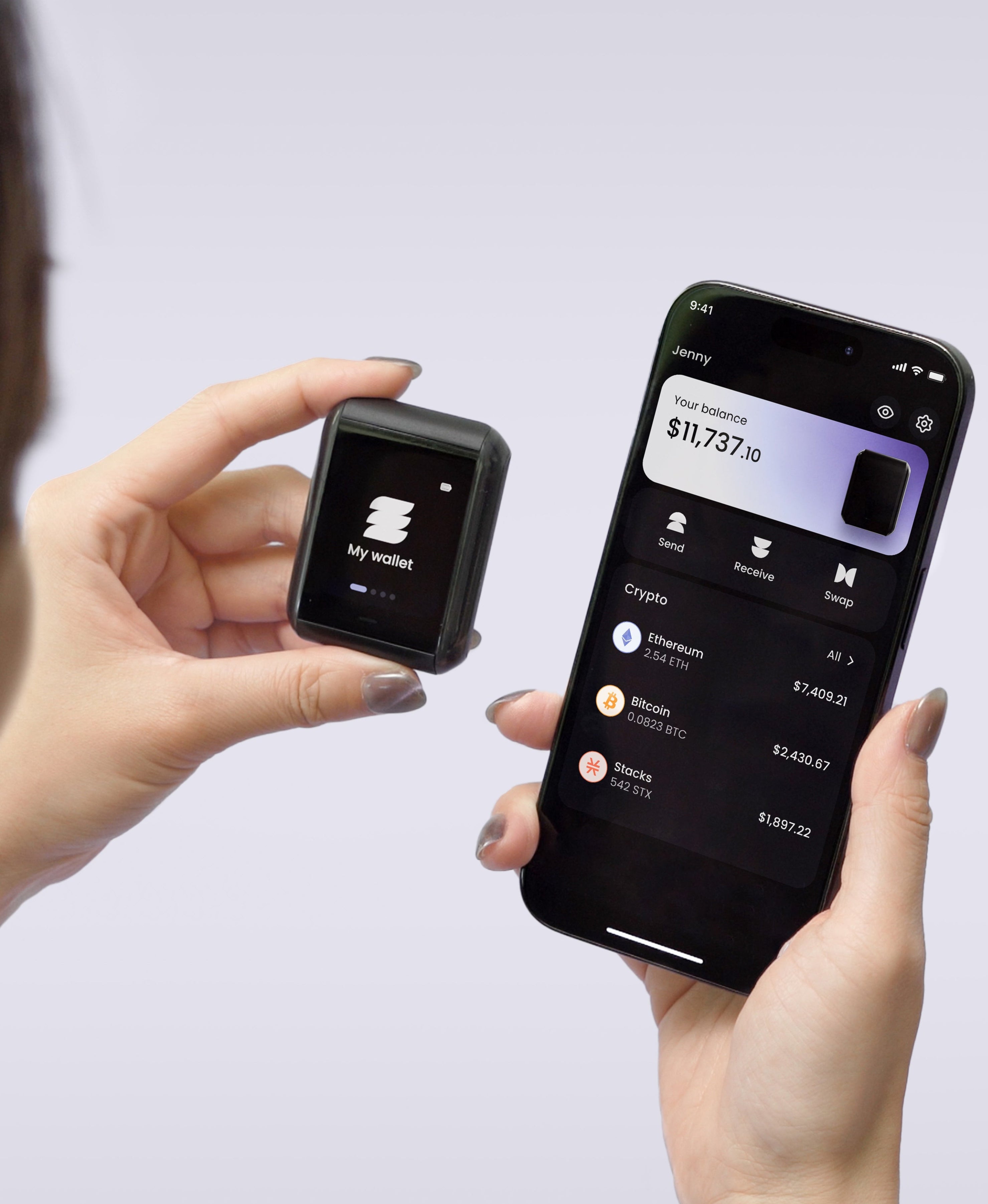
Ryder One keeps private keys inside secure hardware and requires a physical confirmation step when signing.
We make self-custody simple. Set up in 60 seconds for a lifetime of stress-free crypto security.
Related: What is a public key - What is a seed phrase - What is a hardware wallet - What is self-custody



Share: