

A crypto holder dies. They had Bitcoin and Ethereum and a few thousand dollars in stablecoins on a hardware wallet sitting in a desk drawer. The family knows the wallet exists. They don't know the seed phrase. The lawyer doesn't know it. The spouse doesn't know it. Months later, the family is still trying to figure out whether the crypto is recoverable. It isn't. The drawer holds a brick. This is the failure mode crypto inheritance has to design against, and most plans don't. The standard advice (write the seed phrase down, put it in a safe, tell your spouse where the safe is) works in theory and fails in practice. People misplace papers, spouses move, and safes get cleared out by relatives in the chaos of probate. The single point of failure that crypto self-custody was meant to remove gets reintroduced at the worst possible moment. This piece walks through what crypto inheritance is, why the most common plans break, and what a working crypto estate planning approach looks like in 2026.
Why crypto inheritance is harder than regular inheritance
A normal estate works through paperwork. Your will says who gets what. The bank, the brokerage, and the title company all maintain ownership records that can be transferred by a court order. When you die, the executor brings the paperwork to those institutions, and ownership moves. Crypto doesn't work that way. There's no institution holding your Bitcoin. There's a blockchain that records who controls which addresses, and whoever has the private key controls the address. If your heirs don't have the key, the court order doesn't help. The blockchain doesn't accept court orders. It accepts signatures. This is the part most estate planners haven't caught up with. They can draft the will. They can't conjure a private key from a probate filing.
The bad solutions, in detail
Three approaches dominate informal crypto inheritance, and all three have failure modes worth understanding before you commit to one. Seed phrase in a will: Common, dangerous. A will becomes a public document during probate in some jurisdictions. Even where it isn't public, copies of the will exist with the attorney, with the executor, and with the family. Each copy is a single point of compromise for funds that anyone in possession can drain. Seed phrase shared with a spouse or close family member: Better in some respects, worse in others. The spouse now has the same key you do, with all the same risks. If their phone gets phished, your wallet gets drained. If the marriage ends badly, the key is with the wrong person. If they go before you, the share goes with them, and you're back where you started. Custodial inheritance services: Some companies offer a "send your seed phrase to us and we'll release it to your heirs after death" product. This reintroduces every problem self-custody was supposed to remove. The company can be hacked, the company can fail, the company can become uncooperative in a dispute. You've replaced "my heirs will lose the keys" with "my heirs are at the mercy of another counterparty." The pattern across the bad solutions: each one concentrates the inheritance risk in a single party, location, or document. That's exactly the structure crypto inheritance has to avoid.
What a working crypto inheritance plan looks like
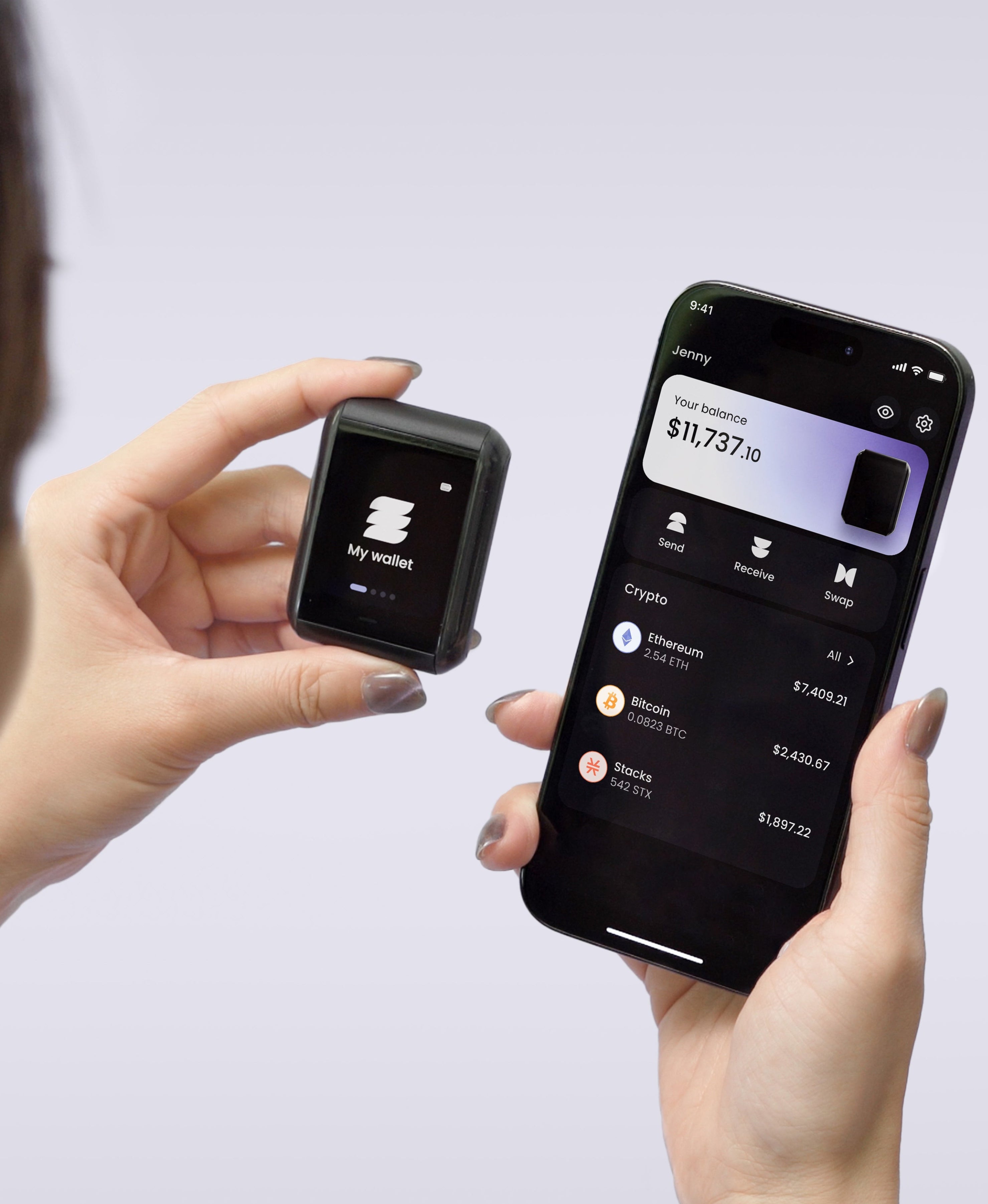
A working plan splits access into pieces that can be reassembled after death without any single piece giving access during life. Three families of solutions meet that requirement. 1. Multisig (multi-signature) wallets: A multisig setup requires several keys to authorize a transaction, with thresholds like 2-of-3 or 3-of-5. You can keep one key, give one to your spouse, give one to your lawyer or to a service like Casa or Unchained that holds keys for inheritance purposes. No single party can drain the wallet, and the threshold can be designed so your heirs reconstruct access once the right number of cosigners cooperate. The downside: multisig is technical to set up correctly, the workflow can be cumbersome day-to-day, and it works best on Bitcoin. Cross-chain multisig is harder. For holders with significant Bitcoin positions and the patience to maintain it, multisig is the gold standard. 1. Shamir-style secret sharing: Your seed phrase gets mathematically split into shares using Shamir's Secret Sharing. You distribute the shares to several people, and a threshold (say 3 of 5) is required to reconstruct the seed phrase. Each individual share reveals nothing on its own. This is closer to the inheritance use case than multisig, because the shares can sit dormant with your heirs and only get combined after you die. The downside is that whoever holds enough shares to cross the threshold during your lifetime can in theory reconstruct your seed phrase, so the holders need to be trustworthy and the threshold has to be set carefully. 1. TapSafe Recovery Contacts: The structure Ryder One ships with extends Shamir secret sharing into a working inheritance flow without the manual steps. Your wallet recovery is split: 50% lives on the Recovery Tag (battery-free, NFC, IP69K rated), and 50% lives encrypted in your phone's iCloud or Google Drive backup. If you choose to add Recovery Contacts, each contact holds 25%, paired in-person via NFC. Contacts have no visibility into your wallet during your lifetime. They can't see balances, they can't sign transactions, and they can't do anything that affects your funds. What they can do is participate in the reconstruction process when it's needed. For inheritance, that's the structural answer. You designate your spouse, a sibling, and a trusted friend as Recovery Contacts. Three pieces of paper aren't sitting in a safe somewhere. Three trusted people each have an encrypted share, none of which gives them any access while you're alive. After you die, the people you chose can come together and reconstruct your wallet without needing the lawyer, the safe, or the will to be involved.
The legal side
A technical inheritance setup doesn't replace the legal one. It complements it. Your will should still reference the existence of crypto holdings without specifying keys, recovery shares, or any sensitive material. The will is a public-ish document. The keys are not its business. What the will does is identify that the assets exist and name the executor responsible for coordinating recovery. A separate document (a memorandum of access, kept with your attorney or a trusted family member) describes the recovery process without including the recovery material itself. Something like "Wallet on the Ryder One in the desk drawer; Recovery Contacts are X, Y, Z; the recovery flow runs through the Ryder app on the phone in the same drawer." The actual material stays distributed. For jurisdictions where crypto is treated as property for estate tax purposes (which is most of them now), a clear valuation methodology and cost basis record helps the executor file.
Practical steps for setting up a crypto inheritance plan today
Four things to do this month. - Decide who your Recovery Contacts are: Pick people you trust to outlive you, to cooperate with each other, and to keep their share private during your lifetime. Three is usually the right number. More than five gets unwieldy. - Set up the wallet's recovery features properly: With TapSafe, that means pairing the Recovery Tag, ensuring the phone backup is in place, and adding your contacts in-person. With multisig, that means generating the cosigning keys, distributing them, and testing the threshold flow with a small amount before committing larger funds. - Write the memorandum of access: It doesn't need to be long. It needs to name the assets, the wallet, the people involved in recovery, and the rough process. Keep it with your attorney or in a place your executor knows to look. - Test the recovery flow once: Most inheritance plans fail because nobody ever practiced. With the consent of your contacts, run through the recovery process on a test wallet. Confirm everyone knows how to find the Ryder app, contact each other, and complete the reconstruction. The first time the recovery is needed is not the time for anyone to be learning the workflow.
The bottom line
Crypto inheritance breaks where regular inheritance works: in the gap between paperwork and access. The court can transfer paperwork. It can't transfer keys. A working plan has to provide a path to the keys that doesn't depend on a single document, a single person, or a single device surviving the moment when it's needed. TapSafe Recovery Contacts gives that structure built in. The keys are split across multiple parties, none of whom can act alone during your lifetime, and all of whom can come together to reconstruct after. Paired with a will and a memorandum of access, it's the closest thing to a complete bitcoin inheritance plan that self-custody currently allows.
Plan for the day you can't sign. Ryder One with TapSafe Recovery Contacts lets you split wallet recovery across the people you trust most, with no access during your lifetime and a clean path for them to reconstruct it after. See how it works.


Share: