


# Hyperliquid Review 2026: Is the Biggest Perp DEX Worth Using?
Perpetual futures are one of the largest categories in crypto trading by volume, and Hyperliquid has captured more of that market than any other decentralized venue. In the 30-day window ending July 7, 2026, the platform processed more than $210 billion in perps volume. What makes that figure worth examining is the structure behind it: Hyperliquid runs on its own blockchain, settles every trade on-chain, and routes nearly all fee revenue directly to token holders through a buyback-and-burn mechanism. Whether you are looking at it as a trading venue, a DeFi protocol, or a token to hold, the architecture shapes each of those decisions. This review covers how the protocol works, where the risks sit, and what holding HYPE long-term means for custody.
What Hyperliquid Is
Hyperliquid is a decentralized exchange built exclusively for perpetual futures contracts, operating on a purpose-built Layer 1 blockchain that includes an Ethereum Virtual Machine component called HyperEVM. Perpetual futures, or perps, are derivative contracts that allow traders to take leveraged long or short positions on an asset with no expiration date, a format that BitMEX introduced to crypto markets back in 2016.
The architecture separates Hyperliquid from most other perp DEXs in the market. Protocols like GMX use an automated market maker model for price discovery, relying on liquidity pool ratios rather than direct order matching. dYdX v3 processed its orderbook off-chain, posting results on-chain only for final settlement. Hyperliquid runs a fully on-chain orderbook, matching buy and sell orders directly at the L1 level, at speeds that approach those of centralized venues.
For users who care about self-custody, this distinction carries weight: collateral deposited on Hyperliquid stays in your wallet until you open an active position, unlike funds deposited on a centralized exchange, where the platform controls your balance from the moment you deposit.
The Numbers in 2026
Hyperliquid crossed $1 billion in cumulative protocol revenue on June 30, 2026, less than two years after launch. The platform started 2026 with approximately 4% of the global perpetuals market by volume. By mid-year, that share had grown to 6.2%, alongside roughly 70% of the decentralized perps market, according to trading data tracked by CoinGlass.
Current metrics show approximately $40.7 billion in weekly trading volume and around $9.57 billion in open interest. The 30-day perps volume figure of $210 billion is notable because it places Hyperliquid ahead of every decentralized competitor by a wide margin and within range of several centralized mid-tier exchanges.
The revenue model is visible on-chain: 91% of protocol revenue comes from transaction fees paid by perps traders. Of that, 99% routes to an automated buyback bot that purchases HYPE on the open market and destroys the tokens. As of July 2026, the buyback program has burned 4.7% of the token's maximum supply, creating a direct link between trading activity on the platform and demand for HYPE.
How It Works
Trading on Hyperliquid requires depositing USDC as collateral. When no position is open, those funds remain in your own wallet address rather than sitting in a protocol-controlled pool. Opening a position moves the required margin into the trading engine, where the on-chain orderbook handles matching.
Liquidations feed into the Hyperliquid Liquidity Provider vault, known as the HLP. This is a shared pool that acts as the protocol's backstop market maker: when a position is liquidated and the margin does not cover the remaining loss, the HLP absorbs the shortfall and holds the position until it can be closed. Depositors in the HLP earn a share of fees and liquidation proceeds in exchange for providing that backstop function, which is the most structurally exposed role in the protocol.
HyperEVM extends the L1 into a programmable layer, allowing developers to deploy Ethereum-compatible smart contracts that interact directly with the exchange's liquidity and trading infrastructure. That programmability means third-party DeFi applications can build on top of Hyperliquid's orderbook and integrate directly with its liquidity, rather than treating the exchange as an external venue.
HYPE Token: Governance, Staking, and Buybacks
HYPE is the native token of the Hyperliquid ecosystem, serving three primary roles: securing the validator set through staking, providing governance over protocol parameters, and serving as the target of the protocol's fee-funded buyback program.
Staking HYPE supports the L1 validator network. Governance allows token holders to vote on changes including new perpetual markets, listing criteria, and fee structures. The deflationary tokenomics create a direct relationship between trading volume on the platform and buy-side pressure on the token, which sits at the center of the investment thesis for those holding HYPE as a speculative position.
Because HYPE runs on HyperEVM, it uses the same secp256k1 key derivation and Ethereum-compatible address format as ERC-20 tokens and other EVM chains. That makes it storable in any hardware wallet that supports Ethereum and EVM assets, with no bridging required.
The Risks
No account of Hyperliquid is complete without addressing how the protocol behaved under deliberate attack.
In March 2025, a trader exploited a gap in the liquidation engine using a low-liquidity memecoin called JELLYJELLY. The attacker opened large offsetting long and short positions in the token, then pumped the JELLYJELLY spot price across external exchanges to force the HLP vault to inherit a losing short. Unrealized losses on the vault peaked between $12 million and $13.5 million before validators stepped in.
Hyperliquid's validators voted to delist the JELLY contract and force-settle all open positions at the attacker's original entry price, overriding the market oracle feed. The HLP closed the position at a small profit of roughly $703,000, so the attack failed on its own terms. The intervention, however, raised a question that has not gone away: if validators can override an oracle price and delist a market under stress, how permissionless is the settlement layer?
Beyond the JELLY incident, the risk profile of using Hyperliquid looks like this:
- Smart contract risk: HyperEVM contracts can contain bugs, and Hyperliquid's L1 has a shorter track record than established chains like Ethereum mainnet.
- Oracle risk: The JELLY incident demonstrated that price feeds for liquidations can be manipulated through thin markets with enough capital.
- Validator concentration: The validator set is small enough to respond quickly to crises, which also means it is small enough to act in ways that override market outcomes.
- Regulatory risk: Hyperliquid does not serve U.S. users to avoid CFTC jurisdiction. Policy shifts on either side of that equation could affect access or operations without warning.
Who Should Use Hyperliquid (and Who Shouldn't)
Active traders who want exposure to crypto price movements through perpetual futures, without depositing funds on a centralized exchange, will find Hyperliquid worth using. The on-chain orderbook provides deep liquidity across a broad range of perpetual markets, fees are competitive, and execution speed matches centralized alternatives for most trading sizes.
Passive holders sit in a different category. The HYPE token's value is tied to trading volume on the platform, which creates ongoing exposure to competitive dynamics, regulatory developments, and the health of the perps market broadly. Providing liquidity in the HLP adds protocol-level risk on top of that. Neither activity suits a set-it-and-leave-it approach.
If your intent is to hold HYPE as a long-term position and you want to remove it from exchange or hot wallet risk, that decision is about custody, not trading frequency. Those two use cases require different tools and different thinking.
Where Ryder One Fits
HYPE tokens on HyperEVM use the same Ethereum-compatible address structure and secp256k1 key derivation as other EVM assets. Any wallet that handles Ethereum can, in principle, hold HYPE. For long-term storage, the right tool is a hardware wallet that keeps your private key offline in secure hardware, permanently isolated from internet-connected devices.
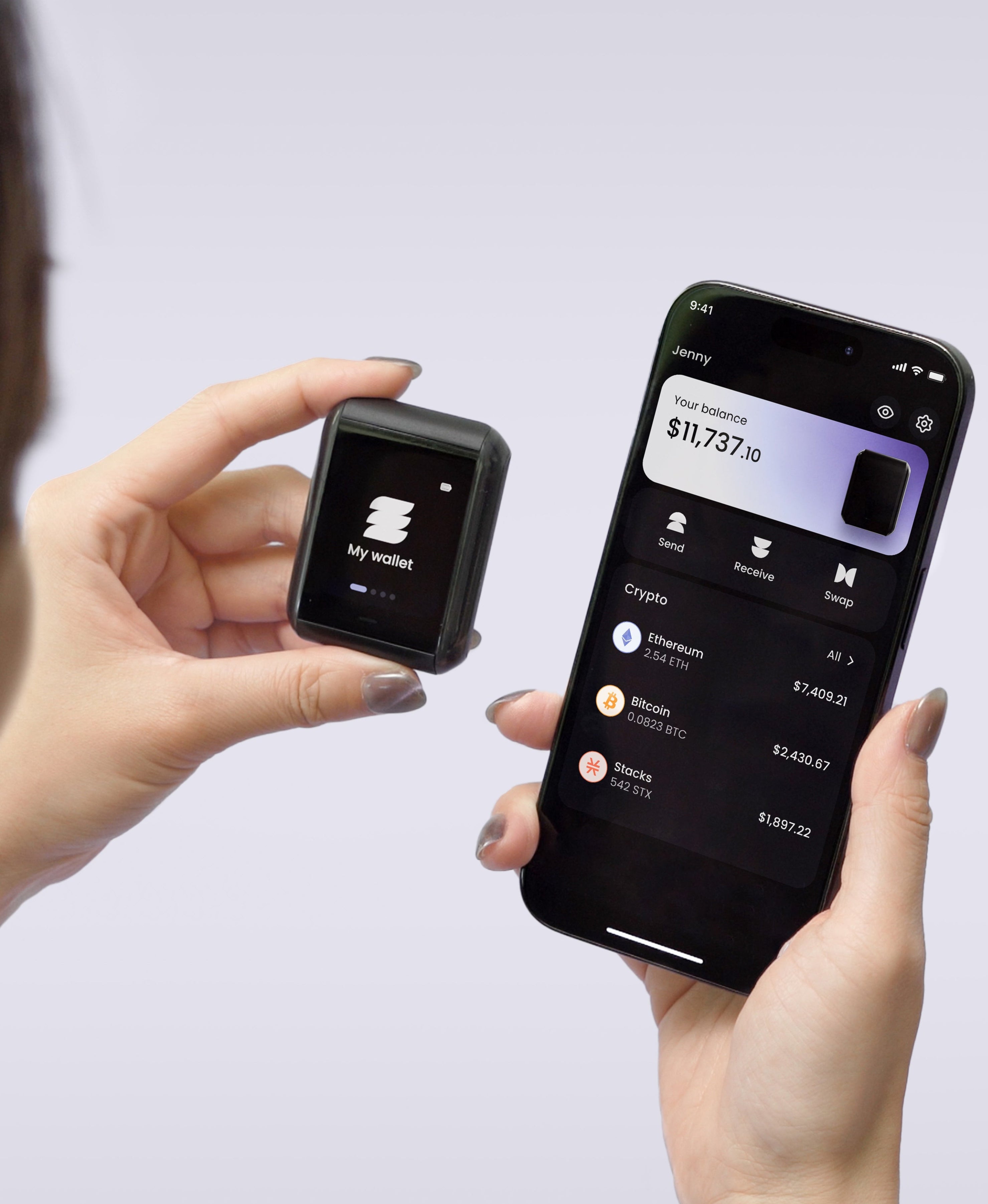
Ryder One is a hardware wallet built around Ethereum and EVM chain support. It generates and stores your private key in an isolated secure element, so the key never touches a networked device. Withdrawing HYPE from Hyperliquid to a Ryder One-secured address removes the exchange as a counterparty risk and puts token custody entirely in your own hands.
[VERIFY BEFORE PUBLISHING: confirm whether HYPE token is supported by Ryder One as an EVM asset]
Hardware wallets are not trading tools. A Ryder One cannot speed up your order fills or reduce your margin requirements. What it does is ensure that the HYPE tokens you hold long-term stay out of reach of phishing attempts, compromised hot wallets, and exchange failures. For positions of any meaningful size, that offline separation is worth the extra step.
Ryder One is available at ryder.id for $229.
SEO
- Target keyword: hyperliquid review
- SEO title: Hyperliquid Review 2026: Is the Top Perp DEX Worth It?
- Meta description: Hyperliquid hit $1B in revenue and $40B weekly volume in 2026. Here's how it works, who it's for, and the self-custody read on HYPE tokens. (145 chars)
- Hero alt text: Hyperliquid review 2026 perp DEX — Ryder self-custody hardware wallet



Share: