

The Coinbase withdrawal fee for sending crypto to your own hardware wallet is a network fee that Coinbase estimates for each send and shows on the preview screen before you confirm, so there's no fixed price list to look up. When we checked on 13 October 2026, Kraken's published fee for withdrawing Bitcoin, Ether or Solana ranged from about 40 cents to 1.25 USD, and the Bitcoin network itself charged about 12 cents for a basic payment. That's rarely a good reason to leave coins on an exchange, although it can change how often you withdraw, especially if you buy a little every week.
How the Coinbase withdrawal fee works
Coinbase's pricing and fees disclosure says that when you send crypto to another wallet, it charges a fee based on its estimate of the network fee for a stand-alone wallet-to-wallet send. The same page explains that Coinbase may group many customer withdrawals into one batch, so the total of the estimated fees users paid within a batch can be higher than the network fee Coinbase pays in the end. In plain terms, you pay the price of sending your coins on your own, and Coinbase may send them more cheaply.
Two other details on that page matter if you're planning a move. Transfers from one Coinbase user's balance to another Coinbase user's balance are free, and cashing out to a bank may carry its own fee depending on the payment method you choose. Neither of those applies to a hardware wallet, where every withdrawal is an on-chain send.
What other US exchanges charge to withdraw crypto
Each exchange sets the fee its own way, and the table below records what each one published when we checked. Dollar figures use prices from mempool.space and CoinGecko on 13 October 2026 (Bitcoin about 83,250 USD, Ether about 2,500 USD, SOL about 106 USD).
| Exchange | How the withdrawal fee is set | What the exchange publishes |
|---|---|---|
| Coinbase | Estimate of a stand-alone network send; Coinbase may batch sends | No per-coin table; the fee appears before you confirm |
| Kraken | Flat fee per asset and network, plus a minimum withdrawal | BTC 0.000015 (about 1.25 USD), minimum 0.000218 BTC; ETH 0.00016 (about 0.40 USD); SOL 0.005 (about 0.53 USD) |
| Gemini | Dynamic fee matched to the current network fee | Shown before you start the withdrawal |
| Robinhood | Estimated network fee added to the amount you send | Shown before you finalize the transfer |
Kraken's fee and minimum table is the easiest to plan around because the number stays put unless Kraken changes it, and the page warns that fees can change and that the final fee shows at confirmation. Gemini's transfer fee schedule says its dynamic fee is meant to match current network fees and that Gemini does not pocket the fee. According to its crypto transfers page, Robinhood adds the estimated network fee on top of the amount you enter, while its Send All option takes the fee out of the balance instead, so the receiving wallet gets slightly less than the full amount.
What the network itself charged that day
To see how those numbers compare with the raw cost of a transfer, we looked at Bitcoin. On 13 October 2026, mempool.space recommended a fee rate of 1 satoshi per virtual byte even for the fastest confirmation, and a simple payment from one native SegWit address to another, with change, is about 141 virtual bytes according to the Bitcoin Optech transaction size calculator. That works out to 141 satoshis, or about 12 cents. Across the previous month, the highest median fee rate in any block on mempool.space was 8 satoshis per virtual byte, which would put the same payment near 94 cents.
Kraken's flat Bitcoin fee was about ten times the network cost on a quiet day like this one. A flat fee has to cover busy days as well as calm ones, though, and you trade a little extra on most days for a price you know in advance. With Coinbase you see the estimate on the preview screen, and the batching note above means that figure prices a stand-alone send even when yours travels in a cheaper batch.
How often to withdraw
For most people the fee matters less as a dollar amount than as a share of what you're moving. If you buy a little every week and withdraw every purchase, a fixed fee eats a bigger slice of each one; if you let purchases build up first, the same fee shrinks to almost nothing.
| Amount withdrawn | Fee at 1.25 USD (Kraken BTC, 13 Oct 2026) | Fee as a share |
|---|---|---|
| 50 USD | 1.25 USD | 2.5% |
| 100 USD | 1.25 USD | 1.25% |
| 300 USD | 1.25 USD | 0.42% |
| 1,000 USD | 1.25 USD | 0.13% |
Waiting has its own cost, because everything you haven't withdrawn yet is still held by the exchange. A sensible middle ground is to pick an amount you'd be comfortable having stuck if the exchange paused withdrawals, and to withdraw whenever your balance reaches it. For someone buying 25 USD a week, a monthly withdrawal of around 100 USD keeps the fee near one percent; moving it every quarter brings it under half a percent. You'll also need to clear the exchange's minimum, which on Kraken was 0.000218 BTC, about 18 USD.
Mistakes that cost more than the fee
The fee is minor next to the money you can lose by sending to the wrong place. Choose the network your wallet supports for that coin, since many tokens exist on several networks and a deposit on one your wallet doesn't use may never show up. On your first transfer to a new hardware wallet, send a test amount of a few dollars first, and accept the second fee as the price of finding out the address and network are right. Before you paste the receive address into the exchange, check it against the address on the device's own screen, because malware on a phone or computer can swap what you copied.
Where Ryder fits
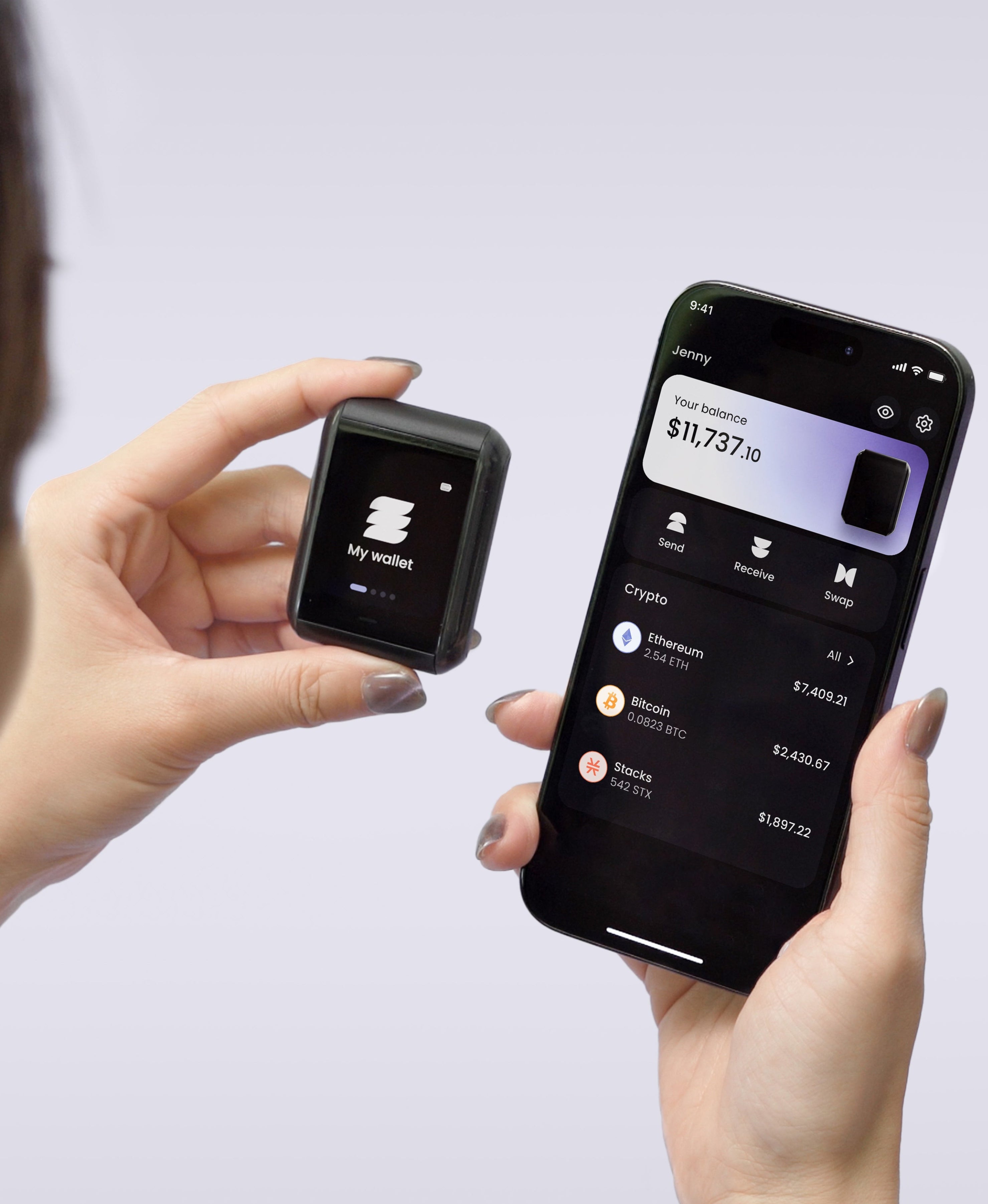
Ryder One receives Bitcoin, Ethereum and Solana, along with a growing list of top ERC-20 and SPL tokens, according to our overview of Ryder One. You can show the receive address on the device itself, where no app or browser extension can change it, which covers the check described above.
If you're moving coins off Coinbase for the first time, our guide on how to move crypto from Coinbase to a cold wallet walks through each screen. The tax side of a withdrawal, including the fee itself, is covered in what moving coins triggers at tax time. When you're ready to compare devices, the Ryder One product page lists what's in the box and the current price (the Starter Combo was 149 USD when we checked on 13 October 2026).



Share: