

Nvidia stock dropped about 4.3% on Monday, 9 November 2026, wiping close to 200 billion USD off its market value, after its board opened an independent investigation into CEO Jensen Huang. The trigger was a governance headline rather than chips, earnings or demand, and that's the part worth taking into your crypto: news about a company, a country or an exchange is out of your hands, while the amount of your money that depends on someone else's systems working is a choice you make.
We make a hardware wallet, so we come at this from the custody side. Nothing here is advice about Nvidia shares or any other investment.
What happened to Nvidia stock
According to CNBC's report on 9 November, Nvidia closed down about 4.3% on the day. The board said a committee of independent directors, working with outside counsel, would review the matter, which follows press reporting that connected Huang's personal life to a US counterintelligence concern involving China. In the same statement, the board said it had no reason to believe that national security or Nvidia's secrets were compromised, and that Huang supports the review and intends to stay on as CEO.
The facts of the investigation are still open, and we won't add to the speculation. What matters for this article is the shape of the move: a single company's stock lost a sum larger than most companies are worth in one session, because of a story about one person.
Why one headline can move a giant
Investors call this key-person and concentration risk. When a large share of a company's value is tied to one founder, one market or one supply chain, news about any of them reprices the whole thing. Nvidia sits at the center of the US-China fight over advanced chips, so a story that touches China, national security and the CEO at once hits three of those pressure points together.
Crypto has its own version of that risk, and it usually shows up as the platform where you hold your coins rather than the coins themselves. When an exchange gets hacked, faces a lawsuit or pauses withdrawals, every customer's balance is suddenly tied to that one company's next decision. We saw it in October, when Binance paused withdrawals after a hot wallet attack and customers waited for the exchange to reopen them in stages.
Shares and coins are held in different ways
If you own Nvidia through a US brokerage, your shares are usually held in the broker's name on your behalf, and SIPC protection covers up to 500,000 USD if the broker itself fails. It never covers a drop in price, which is why Monday's loss belongs to shareholders no matter where they hold the stock.
Crypto on an exchange works differently. The exchange controls the private keys, your balance is an entry in its books, and SIPC doesn't apply to most crypto. With self-custody, the keys sit with you, so no company decision can freeze or delay your coins, although nothing protects you from price swings in that case either. Self-custody removes one layer of risk, the platform, and leaves market risk exactly where it was.
What to do with your crypto this week
Start by sorting your holdings into two buckets: money you trade or might spend soon, and money you plan to hold for years. The first bucket can sit on a regulated exchange with a strong login and withdrawal allow-listing switched on. The second is the part that shouldn't depend on any single company having a good week, and moving it to a hardware wallet you control is the standard way to take the platform out of the picture.
Before you move anything, decide how you'll back it up, because a lost backup is the most common way people lose self-custodied coins. Write the plan down, keep the backup somewhere other than where the device lives, and test a small transfer before the large one.
Where Ryder One fits
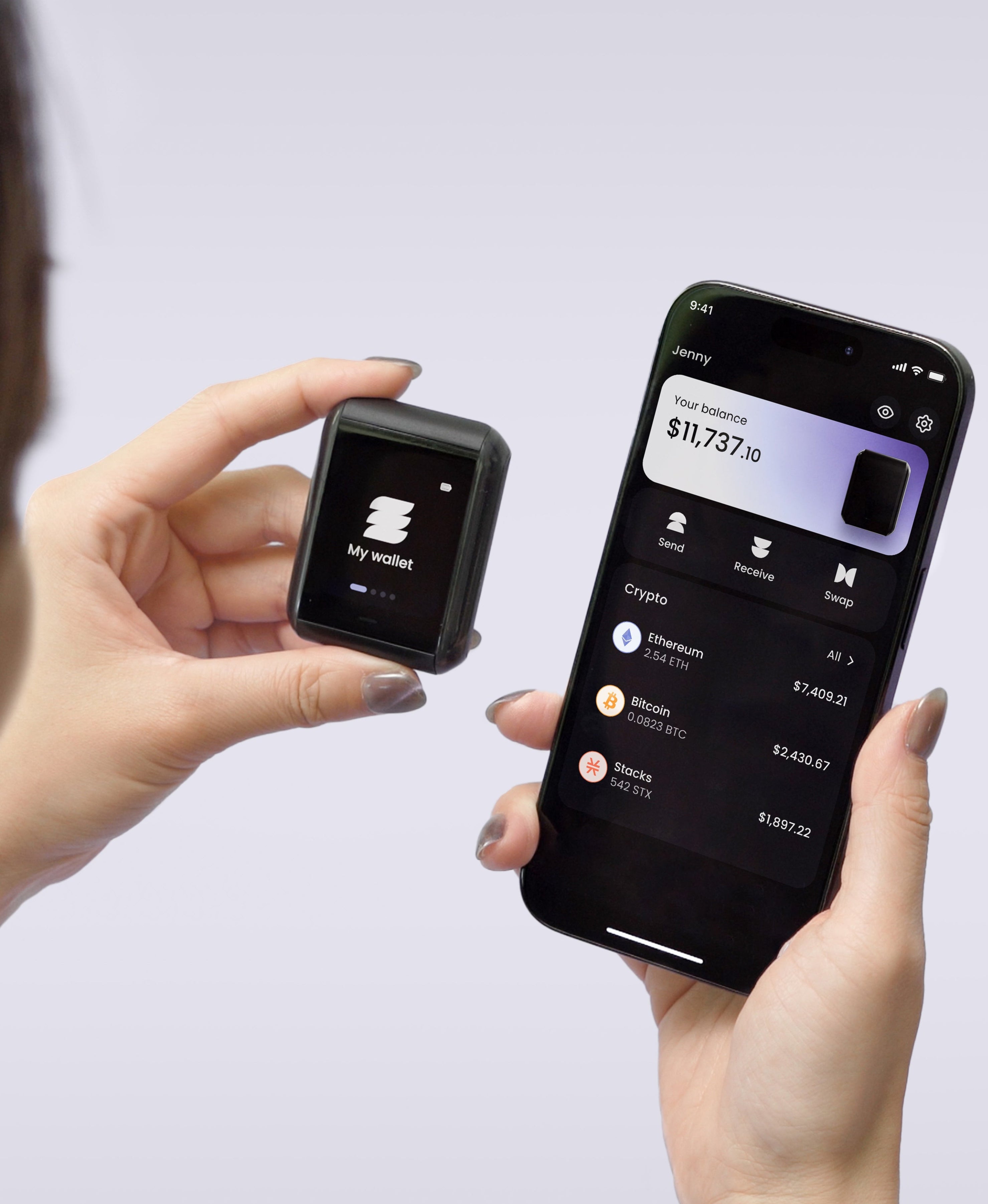
Ryder One is built for that long-term bucket. Your keys are generated inside its secure element and never leave the device, and every transaction appears on its 1.6-inch screen so you can check what you're approving before you sign. Backup runs through TapSafe, which splits recovery between a Recovery Tag and an encrypted copy in your iCloud or Google Drive, so a single lost item doesn't cost you your coins. It holds crypto rather than stocks, so it can't do anything for an Nvidia position; what it can do is make sure the crypto you plan to keep doesn't ride on someone else's headlines.


Share: