


# Robinhood Crypto Wallet: When to Migrate to Self-Custody
Robinhood reported more than 26 million funded customer accounts as of late 2025, and a large share of those accounts hold crypto inside the Robinhood Crypto wallet. If you bought Bitcoin, Ether, or Solana on Robinhood, your coins live with Robinhood Crypto, LLC, the company's regulated crypto custodian. You see balances. You can send and receive. What you don't hold is the private key that signs those transactions, and that's the part that decides whether you control your money or someone else does.
This article is for the Robinhood Crypto user who's past the first thousand dollars and starting to wonder if the wallet inside the app is enough. We'll walk through what Robinhood custodies on your behalf, when migrating to a hardware wallet starts to make sense, how the move works in practice, and the trade-offs you'll feel either way.
What the Robinhood Crypto wallet is, exactly
Robinhood Crypto is a custodial service. Robinhood holds the keys. You hold an account balance that represents a claim on the crypto Robinhood holds for you. When you tap "send" inside the app, Robinhood signs the on-chain transaction on your behalf using keys their custodian controls. The arrangement is different from a wallet you set up yourself, where the keys are generated on your hardware and never leave it.
There is a "Robinhood Wallet" product too, separate from Robinhood Crypto. The Robinhood Wallet app is a self-custodial mobile wallet where you hold a seed phrase and the app generates keys on your phone. If you're using that app, you're in self-custody already, with the standard caveat that a phone is a connected device and any hot wallet on it inherits whatever the phone's operating system exposes. The migration question for the in-app Robinhood Crypto balance is different from the question for the Robinhood Wallet app, and we'll keep them separate.
For the rest of this piece, "Robinhood Crypto" means the custodial brokerage product where Robinhood holds the keys.
The migration question: when does moving make sense
There's no universal threshold, but here are the lines we'd watch.
You start thinking about self-custody when the dollar value of your crypto crosses what we'd call your "won't sleep" number. For some people that's $2,000. For others it's $50,000. The number is the amount you couldn't lose to a custodian failure, a hack, a withdrawal freeze, or a regulatory action without it changing your life. Once you're above that line, the case for cold storage gets stronger every month you wait.
Time horizon matters too. If you're trading positions weekly and you want price exposure with minimal friction, a crypto exchange or brokerage is built for that. If you're buying with the plan to hold for years, the friction of moving funds back and forth disappears against the timeline, and the custodial risk compounds the longer you sit on the platform. FTX held about 8 billion dollars in customer funds when it collapsed in November 2022, and most of those customers had been on the platform less than two years. The risk wasn't visible until the day it was.
Regulatory exposure is the third lever. Robinhood Crypto operates inside the US regulatory perimeter, which is good for consumer protection on one axis and unpredictable on another: the SEC's case against Robinhood Crypto was closed without action in early 2025, but enforcement priorities shift with administrations, and a custodian's compliance burden can change the products you can access. Holding your own keys removes the entire category of "what if my platform stops supporting this asset for my jurisdiction."
If none of those lines feel close to you, staying on Robinhood is a reasonable choice. The pre-migration step is to know which line is closest and what would push you across it.
How the move works in practice
Moving from Robinhood Crypto to a hardware wallet is two steps, with some friction in between.
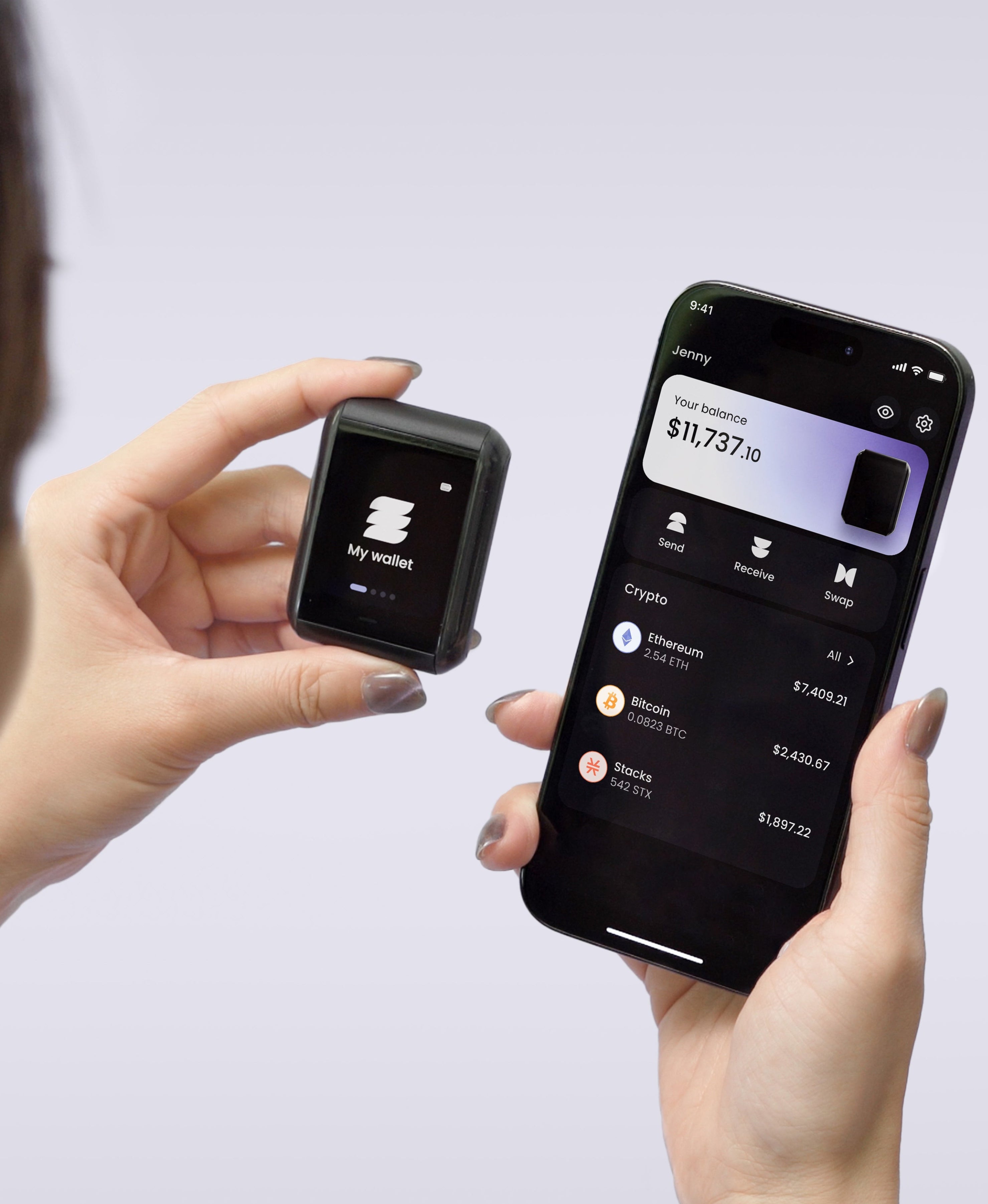
First, you set up the receiving wallet. With Ryder One, that takes about sixty seconds: you pair the device to the Ryder app over NFC, tap the Recovery Tag against the back of the device, and confirm with one tap from your phone. The device generates keys inside its EAL6+ Infineon SLC38 secure element and they never leave the chip. You're ready to receive.
Second, you withdraw from Robinhood. Inside the Robinhood app you select the asset, choose "transfer," paste the address from your Ryder app, and confirm. Robinhood will charge a network fee, run KYC checks on the destination, and post the transaction on-chain. For Bitcoin and Ether the settlement is usually under an hour. For Solana it's faster.
A few practical notes. Robinhood Crypto has supported on-chain withdrawals for a growing list of assets since 2022, but the list isn't every coin they sell. If you're holding a token that Robinhood doesn't let you withdraw, your only "migration" option is to sell on Robinhood and buy the same asset somewhere that supports on-chain withdrawal, which means a taxable event. Check the withdrawal list before you plan the move.
Always send a small test transaction first. Withdraw $20 of the asset, confirm it arrives at the right address on your Ryder, then withdraw the rest. Address-substitution malware exists. Ryder One verifies the receive address on the 1.6-inch AMOLED touchscreen before you commit, which is the defense against that attack, but a test send costs you a few dollars in fees and removes the entire category of "I pasted the wrong address" mistakes.
The trade-offs, in both directions
Self-custody changes your risk profile. It doesn't eliminate risk.
What you gain: nobody can freeze, seize, or lose your coins on your behalf. No counterparty bankruptcy touches them. No platform-level policy change locks you out. The keys are on a chip you own, in a device that talks only over NFC and only when you tap it.
What you take on: the responsibility for backups. With most hardware wallets, that responsibility lands on the 24-word seed phrase, which is a single point of failure dressed up as twenty-four words. Lose the paper, lose the wallet. Have someone find it, lose the wallet. The seed phrase is fragile in the way any single object becomes brittle when everything depends on it. Stamping it on metal is the standard upgrade from paper, and metal does survive fire and water better than paper does. Your security still hinges on one object surviving everything that ever happens to it.
That's the part we set out to fix.
Where Ryder One fits
Our flagship hardware wallet, Ryder One, is built for the person making this migration. It's compact at 41 x 55 x 14.5 mm, NFC-only (no USB, no Bluetooth, no Wi-Fi), and ships at $229 with a Recovery Tag, a Qi wireless charger, and a travel pouch in the box. The 1.6-inch AMOLED touchscreen shows you every transaction in readable detail before you sign, so what you see on the device is what gets broadcast.
The piece that addresses the seed-phrase problem is TapSafe Recovery. We split the keys to your wallet across multiple components so no one object holds the whole thing. The Recovery Tag holds 50% of recovery. Your paired phone holds the other 50%, stored encrypted in your iCloud or Google Drive (not on the phone itself, so losing the phone doesn't lose the backup). Either piece on its own is useless. Together they restore the wallet. You can optionally add Recovery Contacts, each holding 25% of recovery, with no access to wallet info on their end. And the BIP-39 seed phrase is still there on the device as a last resort, so you're never locked to our hardware.
That's how we remove the single point of failure that comes with traditional seed-phrase storage, without removing the standard fallback if you ever want it.
The bottom line
If you hold meaningful crypto on Robinhood and your time horizon is years rather than weeks, the migration to self-custody is worth doing before something forces it. Pick your "won't sleep" number, check that Robinhood supports on-chain withdrawal for the assets you hold, send a test transaction first, and move the rest once you've confirmed the address.
Ready to make the move? Get Ryder One and have your hardware wallet set up in under a minute, with TapSafe Recovery built in from the first tap.
SEO
- Target keyword: robinhood crypto wallet
- SEO title: Robinhood Crypto Wallet: When to Move to Self-Custody (56 chars)
- Meta description: Robinhood Crypto holds your keys. Learn when to migrate your wallet to a hardware wallet, how the move works, and what to watch. (143 chars)


Share: