

Most people start their crypto journey the same way. They download an app, create an account, and buy their first Bitcoin or Ethereum. The exchange holds it, it feels like a bank, and it feels safe.
It isn't though. Exchanges are not banks.
Your crypto on an exchange is not protected by deposit insurance. There is no government backstop, and when things go wrong, they go very wrong, very fast.
Here's what the history actually looks like.
What Happens When Exchanges Fail
Mt. Gox, 2014
At its peak, Mt. Gox handled around 70% of all Bitcoin transactions worldwide. Then it collapsed. 850,000 Bitcoin belonging to customers disappeared. At today's prices, that's tens of billions of dollars. Some creditors have waited over a decade for partial repayment, and many are still waiting.
FTX, 2022
FTX was the second-largest crypto exchange in the world. It had celebrity endorsements, stadium naming rights, and a founder on the cover of magazines. Then, over the course of a few days in November 2022, it collapsed entirely. $8-$9 billion in customer funds vanished. Customers who logged in one morning to check their balance found their accounts frozen by the afternoon. The founder was later convicted of fraud.
DSJ Exchange, 2026
This one is still unfolding. DSJ Exchange, also known as DSJEX, and a related scheme called BG Wealth Sharing, collapsed in late April 2026. The scheme had been running since 2025, promising daily returns of 1.3% to 2.6%, a classic Ponzi structure of promised returns.
On-chain detective ZachXBT confirmed the total amount involved exceeded $150 million. Between April 27 and May 3, criminals transferred and laundered over $92 million across chains to cover their tracks. Tether, Binance, OKX, and U.S. law enforcement moved quickly: approximately $41.5 million has been frozen, including a single $38.4 million USDT freeze on the TRON chain.
The rest is unfortunately gone. The victims are ordinary retail investors who were chasing yield on a platform they trusted.
Three collapses. Three completely different causes. One common thread: the customers had no control over their own funds.
The Actual Risk of Keeping Crypto on an Exchange
When you hold crypto on an exchange, you don't hold crypto. You hold a promise. The exchange holds the private keys and you hold an IOU. If the exchange is hacked, mismanages funds, turns out to be fraudulent, or simply goes bankrupt, your ability to recover anything depends entirely on what's left over after everyone else gets paid first.
This is what people mean when they say "not your keys, not your coins." It's not a slogan. It's a legal and technical reality.
There are also subtler risks that don't make headlines. Exchanges can freeze withdrawals at any time, they can restrict access in your country, they can be hacked without losing all funds but exposing your personal data, making you a target for phishing.
Exchanges are also attractive targets precisely because they concentrate enormous amounts of value in one place. A hardware wallet holding your personal funds is not a worthwhile target for a sophisticated attacker, but an exchange holding billions is.
That being said, it’s not to say that hardware wallets aren’t targeted. The 2020 Ledger data breach leaked the names, addresses, and phone numbers of over 270,000 customers. Althought this breach targeted a third-party service provider that worked with Ledger, the impact was huge. Those people received and are still receiving physical threats and targeted scam attempts for years afterward.
So Should You Use an Exchange at All?
Yes! Exchanges serve a real purpose. They're where you buy and trade crypto. For small amounts that you actively use, keeping funds on a reputable exchange is a reasonable short-term choice.
The problem isn't using an exchange. The problem is storing your crypto there long-term as if it were a savings account.
The question to ask yourself is: if this exchange froze withdrawals tomorrow, how much would I lose? If the answer makes you uncomfortable, that's your answer.
What Self-Custody Actually Means
Self-custody means holding your own private keys. Your crypto stays on the blockchain. You control access to it. No exchange, no company, and no third party can freeze it, lose it, or lend it out without your knowledge.
A hardware wallet is the most secure way to do this. It keeps your private keys offline, so they're never exposed to the internet, never accessible to a remote attacker, and never at risk because a company made bad decisions.
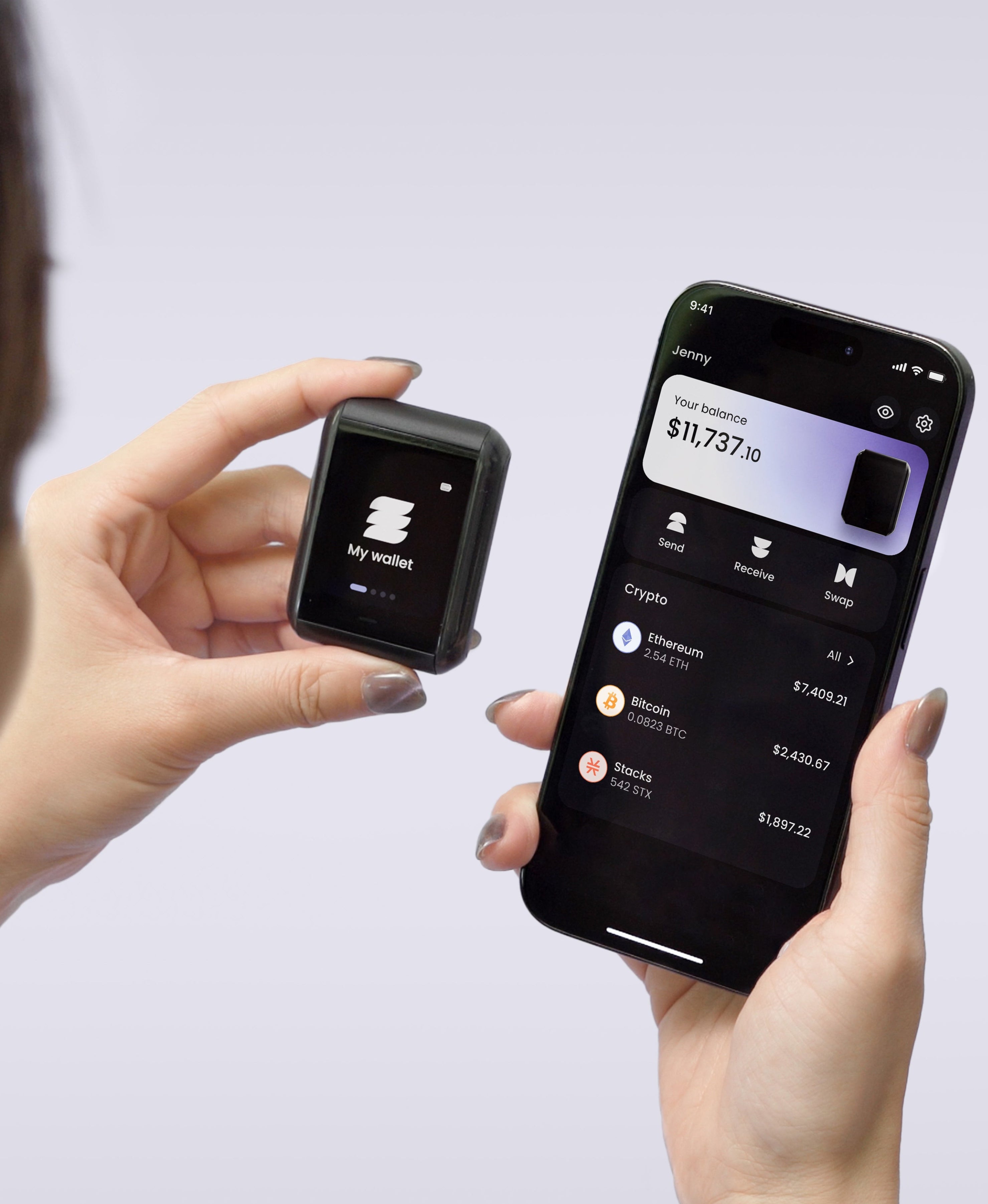
This is where Ryder One comes in. We built the Ryder One hardware wallet for people who are ready to take control but don't want self-custody to be complicated.
Setup takes 60 seconds and TapSafe Recovery means you don't need to write down and store a seed phrase to keep your backup safe: your recovery is distributed across your Recovery Tag, your paired phone, and optional Recovery Contacts. No single piece gives full access alone. And every transaction is verified on the device itself, so what you see is always what you're signing.
The goal isn't to make crypto harder. It's to make sure the only person who can lose your crypto is you, through your own decisions, not someone else's.
Final Thoughts
Exchanges are for buying and trading. Hardware wallets are for holding. The longer your crypto sits on an exchange, the longer you're exposed to risks that have nothing to do with the market and everything to do with the company you're trusting.
Mt. Gox users didn't see it coming, nor did FTX users or DSJ Exchange users that were promised 2.6% daily returns. None of them expected to lose everything.
Cold storage isn't a precaution for paranoid people. It's the default for anyone who takes their holdings seriously.
Ready to move your crypto off an exchange? ryder.id/products/ryder-one
FAQ
Is it safe to leave crypto on an exchange?
For small amounts that you're actively trading, a reputable exchange carries manageable risk. For long-term holdings, it's not safe. Exchanges have been hacked, mismanaged, and defrauded. When they fail, customers are typically last in line to recover anything.
What is the safest way to store crypto?
A hardware wallet is the gold standard. Your private keys never touch the internet and you remain in full control of your funds at all times.
What does "not your keys, not your crypto" mean?
It means that if you don't control your private keys, you don't truly own your crypto. You own a promise from the exchange that they'll give it back when you ask. That promise has failed many times.
Can exchanges freeze my funds?
Yes, exchanges can and do freeze withdrawals, restrict accounts, and limit access, sometimes due to regulation, sometimes due to insolvency, and sometimes without warning.
What is a hardware wallet?
A hardware wallet is a physical device that stores your private keys offline. It signs transactions on the device itself, so your keys are never exposed to the internet or to any third party and is the most secure way to store your crypto.


Share: