


# Will Crypto Recover in 2026? What the Data, Analysts, and Four Cycles Tell Us
Bitcoin opened August 2026 around $63,500 and has since slipped to the low $62,000s, sitting more than 50% below its January peak near $108,000. If you've been watching that number and wondering whether crypto will recover in 2026, you're asking the same question as millions of investors who rode out the 2018, 2019, and 2022 bear markets and came out the other side. The data says cycles end. The question is how to be ready when this one does.
What the Halving Cycles Say
Every Bitcoin bear market in history has followed a similar pattern. A halving event cuts the rate of new supply in half. Prices eventually peak. Then a correction follows that strips away 75 to 85 percent of the market's value before a new wave of buyers drives the next move up.
The 2013 cycle saw Bitcoin climb from roughly $12 at the November 2012 halving to $1,127 a year later, followed by a prolonged pullback. After the July 2016 halving, prices peaked at $19,665 in December 2017 and then fell 84 percent to around $3,200 over the following year. The 2021 cycle peaked at $69,044 in November, then fell 78 percent to around $15,500 by late 2022.
Each time, the recovery came. Data from those cycles shows that the average time to return to a previous all-time high runs about 643 days, or roughly 21 months, from the cycle low. The 2021 cycle recovered faster than that, in around 480 days, partly because spot ETF approval in early 2024 created a fresh pool of buyers that hadn't existed in prior cycles.
The April 2024 halving marked the start of the current cycle. Analysts tracking Bitcoin's crash this year have been watching whether this drawdown rhymes with those earlier patterns. So far, both the depth and the timing are consistent with the four-cycle record.
What Analysts Are Forecasting for Recovery
The price targets from major financial institutions span a wide range, with each number reflecting a different reading of how regulatory clarity, macro conditions, and the pace of ETF flows will unfold over the rest of the year.
Standard Chartered's digital assets head Geoff Kendrick revised his year-end 2026 Bitcoin target down twice: first from $300,000 to $150,000 in December 2025, then to $100,000 in February 2026. His current call comes with a near-term warning that Bitcoin could test $50,000 before rebounding, making the recovery dependent on when macro conditions stabilize. The bank's 2030 target remains at $500,000, with the timeline pushed back rather than abandoned.
Bernstein has maintained a $150,000 Bitcoin target for 2026. Their analysts argue that the traditional four-year halving cycle has been disrupted by institutional adoption, which creates more sustained buying pressure between peaks, turning what used to be a boom-bust pattern into something closer to an elongated bull market with deeper mid-cycle corrections.
Both forecasts sit well above current prices. Whether you land closer to the conservative end or the optimistic one, both point to a meaningful recovery from where Bitcoin trades today.
Five Factors That Could Drive a Recovery
1. The CLARITY Act
The Digital Asset Market Clarity Act passed the House in July 2025 by a 294-134 margin, cleared the Senate Banking Committee in May 2026, and then stalled on the Senate floor, blocked by three unresolved disputes and the 60-vote threshold required to overcome a filibuster. As of early August, it's formally eligible for a Senate vote but hasn't received one. If those disputes are resolved before year-end, the bill would give institutional allocators the regulatory certainty they've been waiting for, removing a barrier that has kept significant capital on the sidelines throughout 2026.
2. ETF Inflows Returning
Spot Bitcoin ETFs ended July 2026 with roughly $205 million in net inflows, the lowest monthly total since launch in January 2024, and still far below the pace that drove Bitcoin to its January peak. The full year through late July sits at $5.29 billion in net outflows. That said, inflow trends turned positive in mid-July after June's $4.5 billion outflow month, suggesting that institutional buyers are starting to treat lower prices as an entry point rather than a warning sign.
3. Federal Reserve Policy
The Federal Reserve cut its benchmark rate to the 3.5% to 3.75% range in late 2025 and has held it there while balancing elevated inflation, which runs around 3.6% on a headline basis, against the need to support growth. Markets are pricing in one additional cut before year-end. A move lower in rates would reduce competition from cash and short-duration bonds, making scarcer assets like Bitcoin more attractive to portfolio allocators who've kept powder dry through the downturn.
4. Sovereign Adoption
Seven nations, including the United States, El Salvador, Pakistan, and the UAE, now hold Bitcoin as a strategic reserve asset, with the US Treasury holding more than 200,000 BTC. That level of sovereign commitment creates a structural floor that didn't exist in any previous cycle, and it generates a political incentive for other countries to accumulate before prices recover.
5. On-Chain Bottom Signals
CryptoQuant's realized profit-loss ratio fell to a 43-month low in early 2026, reaching levels that have appeared near market bottoms in 2015 and 2019. Glassnode's RHODL ratio, which tracks the balance between long-term and short-term holders, is flashing signals consistent with late-stage capitulation rather than ongoing distribution. Multiple Glassnode metrics converged simultaneously in Q1 and Q2 2026, the same kind of confluence that appeared before recoveries in each prior cycle. Analysts across both platforms now put the highest-probability bottom window between October and December 2026.
The Lesson Every Cycle Teaches: Hold What You Control
Looking back at the 2018 bear market, the March 2020 crash, and the 2022 collapse, one pattern stands out across all of them. The people who came through each downturn with their holdings intact were the ones who controlled their own coins. Exchange failures, forced withdrawal suspensions, account restrictions, and platform insolvencies all happened during drawdowns, which is precisely when you want to be able to move your funds. The lesson isn't just to hold through volatility. It's to hold keys you own.
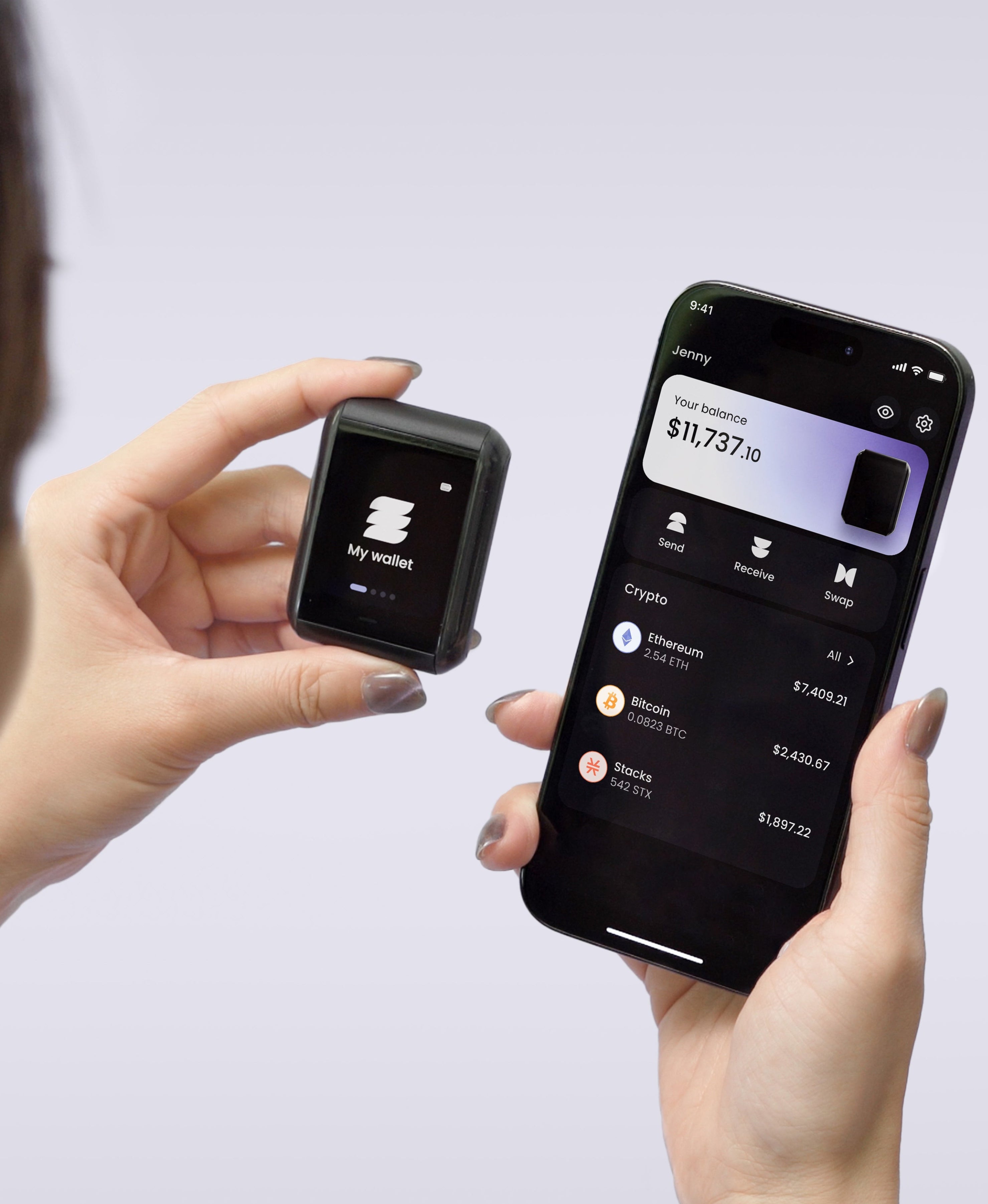
Self-custody used to mean writing a seed phrase on a piece of paper and hoping you never lost it. The fear of losing that backup was the main reason people left coins on exchanges rather than moving them to a hardware wallet. TapSafe Recovery on the Ryder One removes that single point of failure by splitting the backup across a Recovery Tag and your phone in a 2-of-2 Shamir's scheme, so no single lost item wipes your access.
The Ryder One uses an EAL6+ Infineon SLC38 secure element, communicates over NFC only (no USB, Bluetooth, or Wi-Fi), and connects physical button presses directly to the secure element so the device can't be manipulated by a compromised host. The firmware has been audited by Halborn. ETH staking went live on Ryder One in August 2026, so you can earn yield on your holdings while keeping your private keys off any exchange.
When the recovery comes, and four cycles of data suggest it will, the people positioned to benefit are the ones holding coins they control. If you haven't moved to self-custody yet, the Ryder One is $229 and it ships now.
Get the Ryder One for $229 at ryder.id
SEO
- Target keyword: will crypto recover 2026
- SEO title: Will Crypto Recover in 2026? What the Data, Analysts, and Four Cycles Tell Us
- Meta description: Bitcoin is down more than 50% from its January 2026 peak. Here's what halving history, analyst targets, and on-chain data say about a crypto recovery.
- Hero alt text: Ryder One hardware wallet resting on a desk beside a laptop showing Bitcoin's 2026 price chart with on-chain bottom signal indicators highlighted



Share: