

If you hold SOL, some app has probably asked you to connect a Solflare wallet, because it sits beside Phantom as one of the two names most Solana sites list first. It stakes, it swaps, it handles NFTs, and it has been doing that work for years without a confirmed break of its own. What people want to know before they move a balance into it is whether that record covers them.
We make hardware wallets, so read this knowing where we stand. The useful split here is between what Solflare protects well and what no software wallet can protect at all.
The short answer
Solflare is non-custodial. The company never holds your keys, so there is no support desk that could hand your balance to someone who asked convincingly, and no company failure that could freeze it. Your keys come from a recovery phrase generated at setup and sit in an encrypted vault on the device you installed the wallet on, which means the browser profile on a laptop or the app sandbox on a phone.
No compromise of the Solflare wallet itself has ever been confirmed. The Solana drain of August 2022 that emptied thousands of accounts overnight came from Slope, a different wallet whose app had been shipping recovery phrases to a logging server, and Coin Bureau's security review is clear that Solflare users were not the ones hit. That distinction gets lost in forum threads, and it matters.
On audits, the picture is narrower than the marketing suggests. ConsenSys Diligence reviewed the Solflare MetaMask Snap in August 2023 and raised two major findings along with several medium ones, all since fixed or partly addressed. The same review left the browser extension, the mobile apps, the web wallet and the Shield card untouched, so an audited component is not an audited product.
What a hot wallet can and cannot hold off
Every hot wallet shares one structural condition: the key has to be usable by software running on an internet-connected machine, which means the key has to be reachable by software running on that machine. Solflare encrypts the vault and locks it behind a password, and that stops a casual snoop or a stolen laptop with a locked screen. Against malware running with your own permissions, on a machine you are logged into, encryption at rest buys much less than people assume, because the wallet has to decrypt the key every time you sign anything.
The second exposure is the one Solana users meet daily. Approving a transaction in a browser means reading a description written by the page you are on, and Solana's transaction format packs instructions densely enough that wallets often cannot render them in plain language. When the description is unreadable, you are signing on trust. Solflare has put work into this with transaction simulation and warnings, and the warnings help, though a simulation predicts what the code says it will do rather than what a malicious program intends.
Token approvals and stake authority changes deserve their own mention, since both let an attacker keep taking after the first signature. A drained wallet is often a wallet that granted something months earlier and forgot.
The Shield card and the screen it does not have
In December 2025 Solflare shipped its own signing device, the Shield, priced from 49 USD. It is a flat card with an EAL6+ secure element inside, and the key is generated there and cannot be exported. There is no battery, no cable and no wireless radio listening, so the chip is reachable only when you hold the card against a phone over NFC. A PIN gates each use, and three wrong attempts lock the card.
That is a substantial upgrade over keeping the key in a browser, and we would rather someone bought a Shield than kept a life-changing balance in an extension. Credit where it is due: the chip class is the same grade we use, and moving the private key out of software closes the largest hole in the setup described above.
What the Shield lacks is a display. Since the card has no screen, the only account of the transaction you will ever read comes from the Solflare app on your phone, and the card signs whatever the phone passes it. If the handset is clean, this is quick and pleasant. If it is compromised, you are approving a description written by software that has already turned on you, and the card has no way to disagree, because it cannot see what it is signing any more than you can see past the phone.
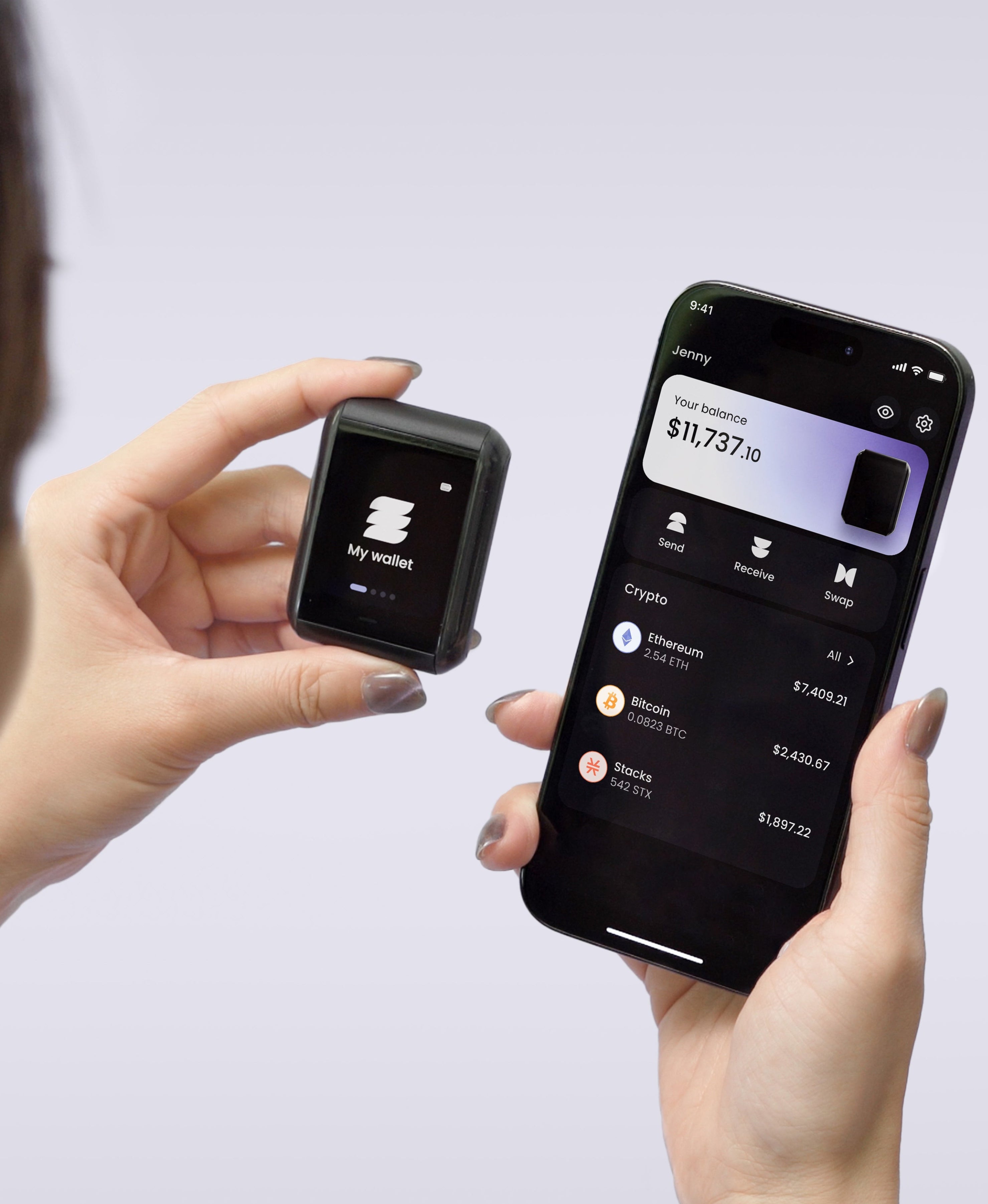
Closing that gap is the reason Ryder One has a 1.6-inch AMOLED touchscreen. The full readable transaction appears on the device itself, receive addresses can be checked on the hardware before you hand one out, and the confirmation button is wired straight to the secure element so no software path can sign without a press. What shows on the device is what gets signed. Keeping a display and a 200 mAh battery that charges wirelessly over Qi is also why Ryder One is shaped the way it is, at 41 x 55 x 14.5 mm and 38 grams, pocket-sized rather than flat.
Backup comes down to twelve words, and then to where you put them
Set up a Solflare wallet and you get a recovery phrase. Set up a Shield and you get a 12-word phrase for it too, restorable onto another Shield. Those words are the whole backup, and they appear on a screen during setup, which means the security of your lifetime fallback depends on that screen being clean at that moment and on nothing having captured it.
Then comes the part everyone puts off. Paper burns, floods and gets tidied into a bin bag by someone helping you move. A steel plate fixes all three and leaves your entire balance resting on one object surviving twenty years without being found by the wrong person, which is an upgrade rather than a solution. TapSafe Recovery takes a different route by refusing to put recovery in one place at all: a Recovery Tag holds 50%, your paired phone holds 50% stored encrypted in your iCloud or Google Drive instead of on the handset itself, and optional Recovery Contacts hold 25% each while seeing nothing about your wallet. It runs on our own implementation of Shamir's Secret Sharing, so no single item is both necessary and sufficient. The BIP-39 seed phrase stays available on the device as a last resort, and you are never locked to our hardware.
So is it safe
For an active Solana user moving small sums through apps all day, Solflare is a credible choice and one of the better-maintained wallets in that ecosystem. Judged as the place your long-term holdings sit, a browser extension is the wrong container, and the Shield only half-answers that, because it fixes where the key lives while leaving your phone as the last word on what you sign.
If you are staying with Solflare, revoke old token approvals, check stake authority after anything unusual, and treat any site that wants a "test transaction" before it will release funds as the drainer it almost certainly is. If you are choosing now, ask what you want to be true on the day your phone is lying to you.
Want a device that shows you what you are signing? Get your Ryder One for 149 USD.
Meta description: Is the Solflare wallet safe? Where your Solana keys are stored, what the audits covered, what the Shield card fixes, and the risk the screen leaves behind.
Target keyword: solflare wallet


Share: