

An NFC tag is a small chip that stores data and shares it wirelessly when you tap it with a phone or NFC reader.
If you’ve ever tapped your phone to pay, you’ve used the same underlying tech: NFC, short for Near Field Communication. An NFC tag is the “thing you tap” that contains a little bit of information, like an ID number, a web link, or instructions an app can read.
A simple way to think about it is this: an NFC tag is like a sticky note for your phone.
- A sticky note is small.
- It does not need a battery.
- It only matters when you read it.
Most NFC tags work the same way. They are usually passive, meaning they do not transmit anything until a phone is placed very close (typically a few centimeters).
When you tap, your phone powers the tag for a moment, reads the data, and then your app decides what to do next.
NFC tags are used across many industries, including:
- Payments and banking: tap-to-pay, card provisioning, and secure access for customer flows
- Retail and consumer products: smart packaging, product info, loyalty, and authenticity checks
- Transit and events: ticketing, passes, and fast check-in
- Logistics and manufacturing: asset tracking and inventory identification
- Healthcare: device and sample tracking (when allowed by local policy)
- Security and access control: door badges and device pairing
Why this matters for your security
NFC is useful in hardware wallets because it can make secure actions feel simple. A “tap” is an intentional physical step, which helps reduce mistakes like approving something you did not mean to.
In self-custody, the safest workflows are often the ones you will actually follow. NFC can remove friction without removing control.
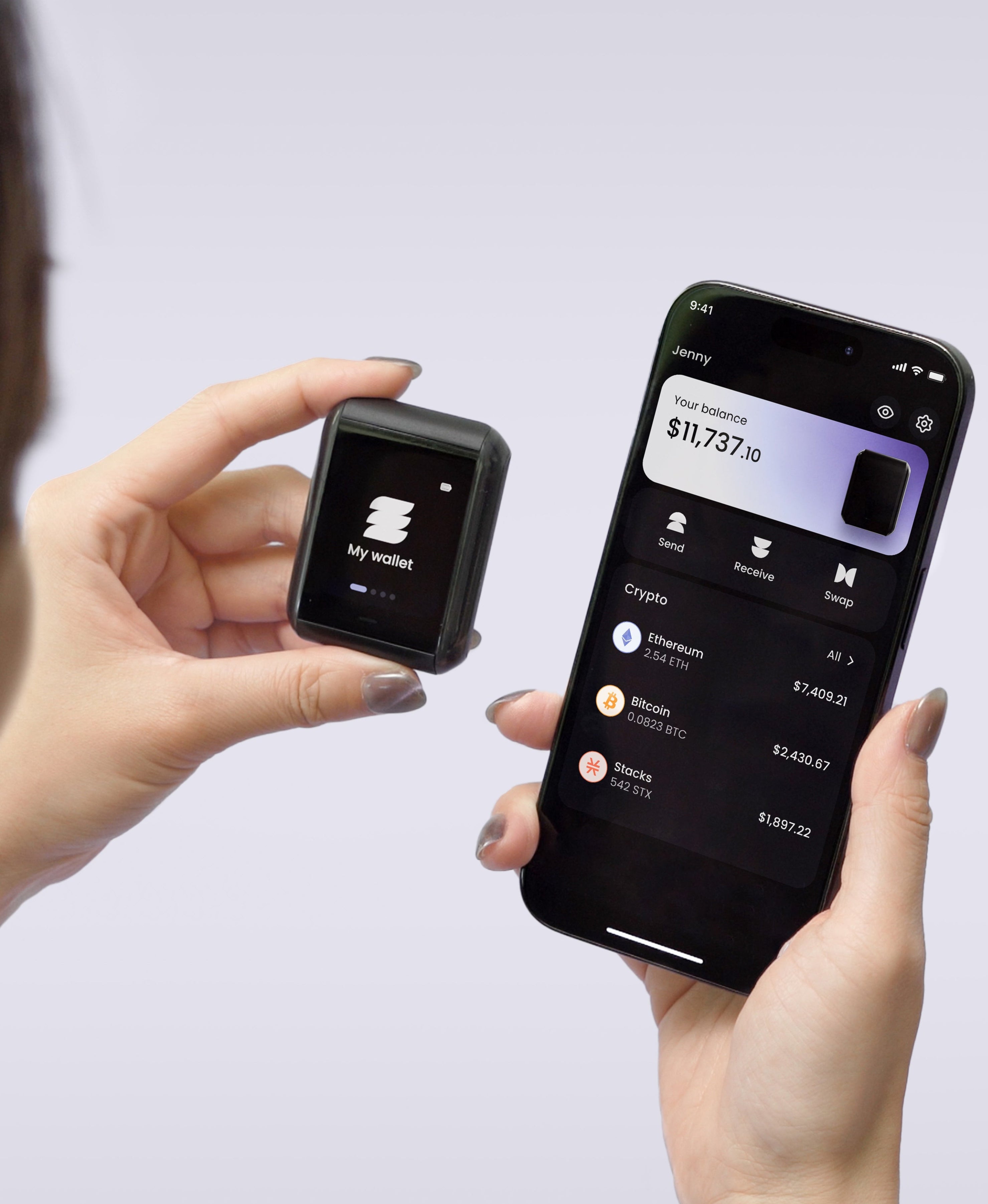
Ryder One uses NFC to make self-custody simple. Learn more →



Share: