

If you hold Solana, Phantom was probably the first wallet you ever opened, and the question of whether Phantom wallet is safe usually arrives later, often after a scare. The short answer is that Phantom is a competently built hot wallet from a team that has done the security work you would want to see. The longer answer depends on what you are asking it to defend, because a wallet living inside a browser tab guards a different perimeter than a device that never touches the internet at all.
What Phantom is, and what it holds
Phantom is non-custodial. Your private key is generated on your own device and stored there under encryption, so the company cannot move your funds, freeze your account, or hand your balance to anyone who asks. That single design choice already puts Phantom ahead of leaving coins on an exchange, where your balance is a database entry the platform controls.
It started as a Solana wallet and has grown well past that. CryptoSlate's 2026 review describes a multi-chain wallet covering Bitcoin, Ethereum, Base, Polygon and Sui alongside Solana, with staking, swaps and transaction previews built in. Scale followed the feature set: one 2026 tally puts Phantom near 17 million peak monthly active users, which makes it one of the most widely installed self-custody wallets in existence.
The security work Phantom has done
Credit where it belongs. Phantom has commissioned outside review from Kudelski Security and Least Authority, runs a bug bounty, ships a community-maintained blocklist of known scam domains, and shows a risk warning before you approve a transaction it considers suspicious. Those are the habits of a team that treats attacks as a normal operating condition rather than a surprise.
There are limits worth naming. The core codebase is closed source, so nobody outside the company can read what your keys are handled by, and independent verification stops at whatever the auditors were given. For some people that is fine. For anyone weighing a large balance against a promise they cannot inspect, it is a reasonable thing to want on the other side of the ledger.
The part a browser extension cannot solve
Here is the structural piece, and it has nothing to do with how well Phantom is coded. A hot wallet keeps your key on a machine that also runs your email, your browser, your downloads and every extension you installed and forgot about. The key sits encrypted at rest, and it has to be decrypted in memory on a general-purpose computer every time you sign something.
That is why almost every Phantom loss you read about is not a break in Phantom. It is malware on the machine, a fake site the user connected to, a malicious token approval, or a support impersonator who talked someone through revealing their recovery words. We have written before about how Phantom wallet hacks happen, and the pattern holds across wallets: the attacker goes around the wallet rather than through it.
Phantom's answer to this is to let you pair a hardware wallet, which moves the key off the computer entirely and requires a physical confirmation on a separate device before anything is signed. That option existing is a fair signal about how Phantom itself understands the problem.
So is Phantom wallet safe for what you are holding?
The useful version of the question is not about the software's quality. It is about the size of what sits behind it and how long you plan to leave it there.
For an amount you would be annoyed but not damaged to lose, and for daily activity where you are trading, minting, staking and connecting to apps all week, Phantom is a sensible choice and the convenience is worth it. For savings you intend to hold for years, a hot wallet is the wrong tool, because you are asking a browser extension on an internet-connected computer to guard something you would never leave in a browser tab in any other part of your life.
Most people who get this right end up running both. Daily balance in Phantom, long-term balance on hardware, and a clear line between them that they do not blur when a mint is about to sell out.
Where your recovery sits is the other half of the question
Whichever wallet you use, the twelve or twenty-four words behind it are the whole thing. Anyone who reads them owns everything, no matter how good the wallet's code is, and if a house fire takes the only copy then no support team on earth can restore it. Phantom generates a seed phrase and asks you to write it down, which hands the hardest problem in self-custody straight to a piece of paper in your desk drawer.
Paper is the weakest version of this. A steel plate is the standard upgrade and survives fire and water, though your security still rests on one object surviving everything and staying unread by everyone who wanders past it. TapSafe Recovery removes that single point of failure by splitting recovery across a Recovery Tag and your paired phone, each holding half, with optional Recovery Contacts holding a quarter each. No single component opens the wallet on its own, and the seed phrase remains available on the device as a last resort under the BIP-39 standard, so you are never locked to our hardware.
Keeping Phantom and outgrowing it are the same move
Nothing here says delete Phantom. Keep it for what it is good at, and give the balance you would grieve over a home that a compromised laptop cannot reach.
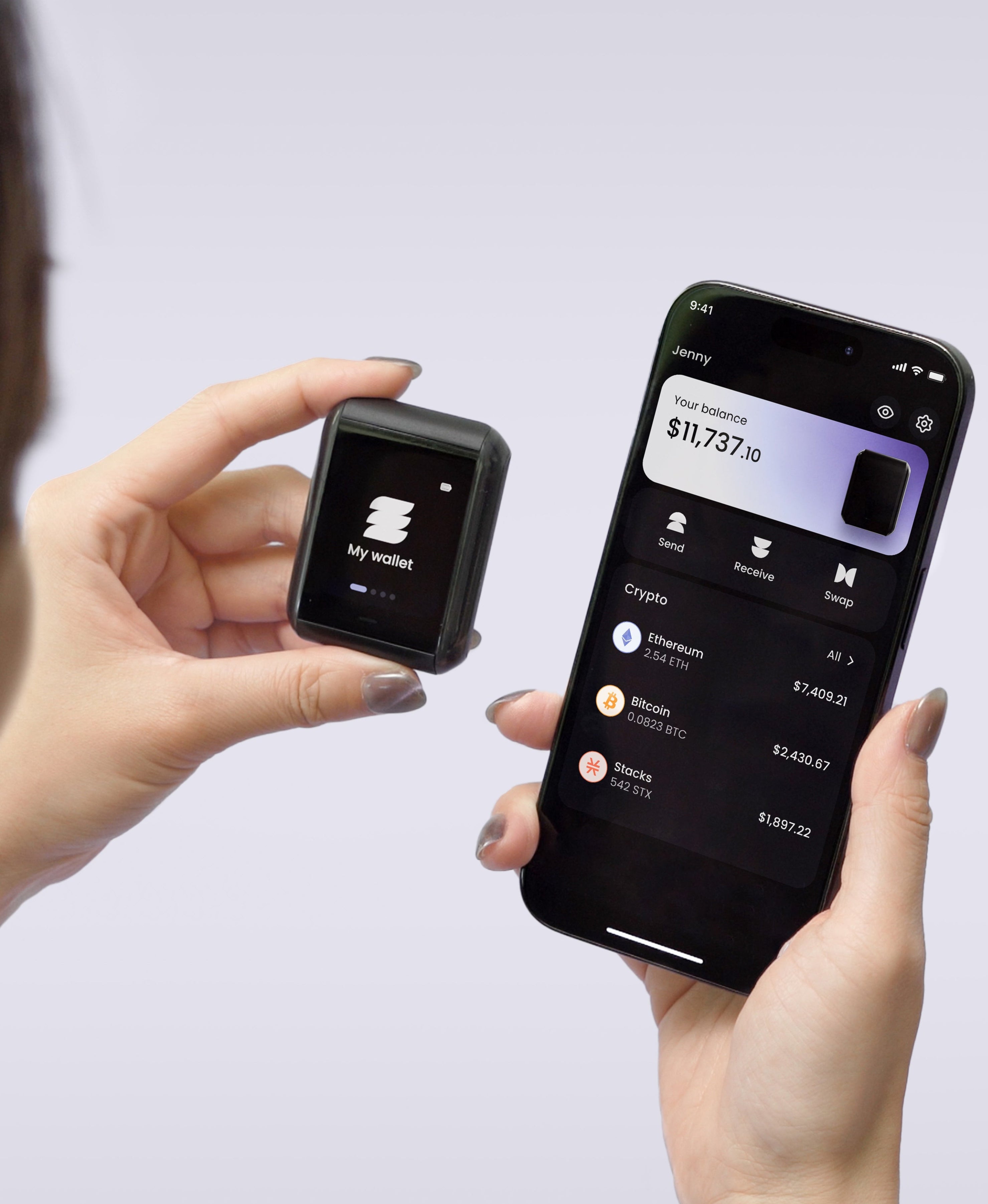
The Ryder One generates keys inside an EAL6+ certified Infineon SLC38 secure element that they never leave, and it supports Bitcoin, Ethereum and Solana along with a growing list of top ERC-20 and SPL tokens. Every transaction renders in readable detail on the 1.6-inch AMOLED touchscreen before you approve it, so a swap that claims to be one thing cannot quietly be another. Communication runs over NFC alone, with no USB data path and no Bluetooth radio, and the firmware was independently audited by Halborn with the full report published in the open. Setup takes about 60 seconds, and the Starter Combo is 149 USD.
Move the part you cannot afford to lose, and keep the rest where it is convenient. See the Ryder One.
Meta description: Is Phantom wallet safe? It is non-custodial and audited, but the key still sits on your computer. What that protects, what it doesn't, and when to move on.


Share: