

A hot wallet stays connected to the internet, while a cold wallet stays offline. The distinction is binary, and most of the other security properties of a crypto wallet flow from which side of that line it sits on. The question of when to use which one is the most consequential setup decision a holder makes. This piece walks through what each one is, what they're good for, the trade-offs you accept with each, and the increasingly common pattern of running both.
What's in a hot wallet
A hot wallet stores the private key on a device that connects to the internet. Most hot wallets live on a phone (Trust Wallet, Phantom, MetaMask Mobile) or in a browser extension (MetaMask, Rabby). The convenience is that the wallet is always available when you want to transact. The cost is that any malware, phishing site, or compromised browser extension that gets execution on the device has a path to the key. Hot wallets are common because they're how most people first interact with crypto. They're free, they install in a minute, and the UX is built around fast transactions. For small balances and active trading, they work.
What's in a cold wallet
A cold wallet stores the private key on a device that doesn't connect to the internet. The most common form is a hardware wallet, which keeps the key on a dedicated chip. Some users run paper wallets (the key written down and stored physically) or air-gapped computers for the same purpose. The defining property is that the key never touches an internet-connected machine, even at signing time. Transactions get prepared on a connected device, sent to the cold wallet to be signed, and the signed transaction comes back to be broadcast. The connected machine never sees the key. For amounts and durations that matter, cold storage is the standard.
The trade-offs
Each setup pays a price for what it provides. Hot wallets pay in attack surface. Every app on the phone, every extension in the browser, every compromised website you visit is a potential vector. The 2025-2026 wave of wallet drainers, signature delegations, and approval-based scams almost exclusively targets hot wallets, because the key is reachable from software the attacker can influence. Cold wallets pay in friction. Every transaction requires the device to be present, powered on, paired with the host machine, and confirmed with a physical interaction. For a holder who transacts once a month, the friction is barely noticeable. For a holder doing five DeFi positions a day, the friction adds up. Cold wallets also pay in recovery complexity. The hardware can be lost, broken, or stolen, and the recovery model has to cover those cases. A hot wallet on a phone can usually be reinstalled from the phone's backup. A hardware wallet's recovery depends on the specific model's backup design.
When each one makes sense
Three rough heuristics cover most cases. Amounts below 500 USD live fine on a hot wallet. The attack surface matters less when the dollar value of the worst case is bounded. Amounts above 5,000 USD belong in cold storage. The math on attack surface flips: the cost of running a hardware wallet is small compared to the cost of one successful drainer transaction. Between the two, the question is how often you transact. Frequent transactions on a five-figure balance might still live on a hot wallet, with the user accepting the heightened risk in exchange for UX. A five-figure balance you touch twice a year belongs in cold storage with no real argument.
The hot-plus-cold pattern most large holders use
The pattern that emerged through 2024 and 2025 is to run both. A hot wallet holds the working balance you need for trading, DeFi positions, and daily activity. A hardware wallet holds the long-term position you don't touch often. Funds move between the two on demand: you replenish the hot wallet from cold when the working balance runs low. The pattern works because each wallet does what it's designed for. The hot wallet handles speed, while the hardware wallet handles preservation, and the user gets reasonable security for both use cases without forcing one wallet to do both jobs.
Where TapSafe Recovery sits
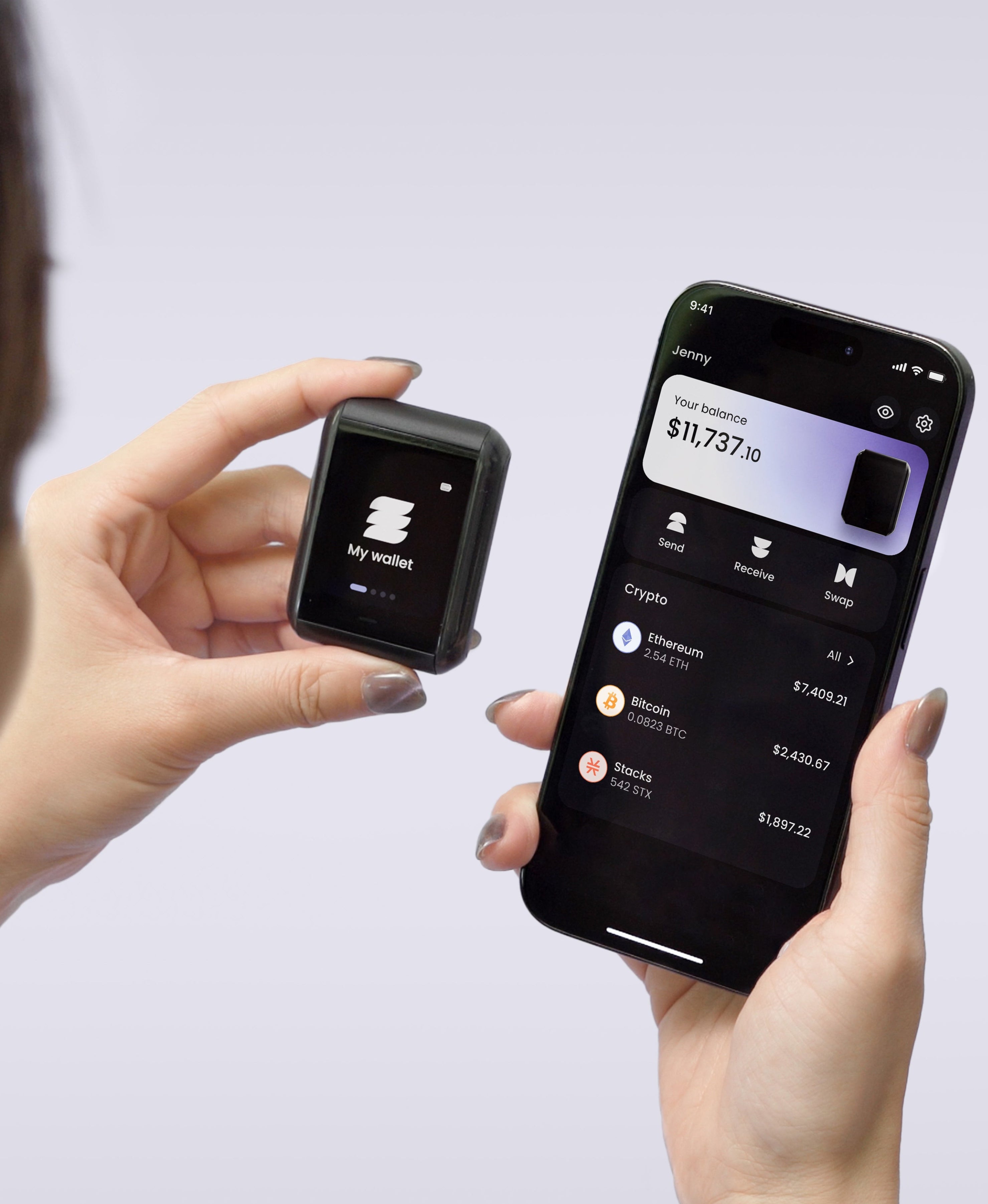
The recovery complexity of cold storage is the friction most holders cite when they default to hot wallets for everything. TapSafe Recovery on Ryder One addresses that friction directly. The recovery is split across three layers: 50% on a Recovery Tag (battery-free, NFC, IP69K rated), 50% encrypted in your phone's iCloud or Google Drive backup, and optional 25% per Recovery Contact for the people you trust. No single failure (lost device, lost phone, lost paper) takes the wallet down. The seed phrase stays available on the device as a last resort. The structural result is that cold storage no longer requires you to manage a piece of paper carefully for thirty years. The recovery model survives the failure modes that used to push holders back to hot wallets.
The bottom line
A hot wallet is convenient and reachable from any software on your device. A cold wallet is offline and reachable only through physical interaction. Most holders who pay attention end up using both, with the working balance hot and the long-term position cold. The line between them runs along how much loss you could absorb if the device hosting the key were compromised tomorrow.
Cold storage for the position. Hot wallet for the activity. Ryder One gives you cold storage on an EAL6+ secure element with TapSafe Recovery as the structural backup, so the long-term position stays offline while your hot wallet handles daily activity. See how it works.


Share: