

Does Kalshi use crypto? It does, as a way to fund and empty your account, but once your coins land there they stop being coins in a wallet you control: its help center says crypto deposits are applied to your cash balance, usually within 30 minutes. That matters more after 23 November 2026, when a New York judge declined to stop Kalshi from offering sports and other event contracts in the state while the Attorney General's lawsuit goes on, so anyone holding a balance there is watching a legal fight from the inside.
Developing story, last updated 25 November 2026: the New York case is still open. Still unconfirmed are whether Kalshi and the state reach a deal on users under 21 by the 30 November deadline, how the judge rules after the January hearing, and what any ruling would mean for existing New York accounts. We'll update this article as those details are confirmed.
How does Kalshi use crypto?
Kalshi is a prediction market where you trade contracts on events, and crypto shows up in two places. The first is funding. The Block reported that users can fund accounts with USDC and Bitcoin, that Solana became the fourth cryptocurrency Kalshi accepts, and that its crypto integrations run through a partnership with Zero Hash, a crypto infrastructure provider. Kalshi's own help page adds that it works with more than one provider, that the provider can vary, and that deposits can carry provider fees plus network gas, with the assets and networks open to you shown when you make a deposit.
The second is the markets themselves. Kalshi lists contracts on crypto prices, and its help center says most crypto price markets settle on a CF Benchmarks index, so you're betting on where a price lands while holding a dollar balance on the platform.
Getting coins back out is possible too. According to Kalshi's crypto withdrawals page, you follow the on-screen steps to send funds to your wallet address, they typically arrive within 30 minutes, and Kalshi charges no fee. The same page warns that a crypto withdrawal can't be cancelled or reversed once submitted, and that the assets available for withdrawal may not include every asset you can deposit.
What the New York judge decided on 23 November
Here's what's confirmed, based on Front Office Sports' report from the hearing. New York County Supreme Court Justice Melissa Crane declined Attorney General Letitia James's request for a temporary restraining order, which would have immediately barred Kalshi from offering sports and other event contracts in the state. The report is clear that this "does not mean she has ruled on the merits of the legal battle."
Both sides will now file full briefs, and Crane said an in-person hearing will be scheduled for either 7 or 8 January 2027. That hearing covers the state's request for a preliminary injunction, which would block Kalshi from offering event contracts on sports, culture, elections and other areas in New York.
Age was a live issue in the room. Crane called it a "concern" that Kalshi lets users as young as 18 trade, and a Kalshi attorney said the company "would be able to perhaps come to a compromise" on users under 21 for sports and culture contracts. She asked both parties to tell her by 30 November whether they've reached a deal on that point.
Kalshi spokesperson Elisabeth Diana said: "The judge denied the State's request for a TRO, recognizing that there are complex questions about derivatives and preemption. We remain committed to working with the State on a path forward that works for our 1.5 million customers and for the state of New York."
What New York alleges, and where the case could go
The state's claims are allegations that no court has decided. Front Office Sports reported that James sued Kalshi in state court over the summer, seeking at least 36 billion USD in damages, and that a recent state filing says Kalshi "continues to profit from offering illegal gambling in New York." An attorney for the state also told the court, "we're not seeking to shut down Kalshi entirely."
Kalshi's position, as its spokesperson framed it, turns on whether federal derivatives law overrides state gambling law. The same report notes that Kalshi had earlier sued in federal court, where an appeals court ruled Kalshi couldn't stop New York from enforcing its gambling laws while that case played out, and that Crane expects the question of sports event contracts to reach the US Supreme Court.
What this means for money already on Kalshi
The report we read says nothing about customer accounts, balances or refunds, and we haven't seen any request in this case to freeze them. We don't know what a later ruling against Kalshi would mean for New York users' existing positions or cash, and we won't guess.
What we can say is that the court fight and the custody question are two different things. The court is deciding which contracts Kalshi may offer in one state. The custody question is simpler and applies to every platform you use: whatever you deposit becomes a balance that the platform and its providers hold for you, and you get coins back only through their withdrawal process, on the assets and networks they support at that moment. That's how trading platforms work, and it's part of what you accept when you use one.
For a broader look at how this differs between the two big prediction markets, our comparison of Polymarket and Kalshi and who holds your money walks through each one's setup.
A sensible split if you use Kalshi with crypto
If you hold coins and want to trade on Kalshi, the practical approach is to move only what you plan to trade and keep the rest under your own keys. Before a large transfer, send a small amount in and withdraw it back to your wallet, so you've seen the whole round trip work on the asset and network you'll use, since a crypto withdrawal can't be reversed. Check the exact asset and network Kalshi shows you before each deposit, and remember that what you can withdraw may differ from what you deposited.
Long-term holdings belong in self-custody, which means a wallet where only you hold the private keys. A platform balance works like a custodial wallet: convenient for trading, but someone else holds it.
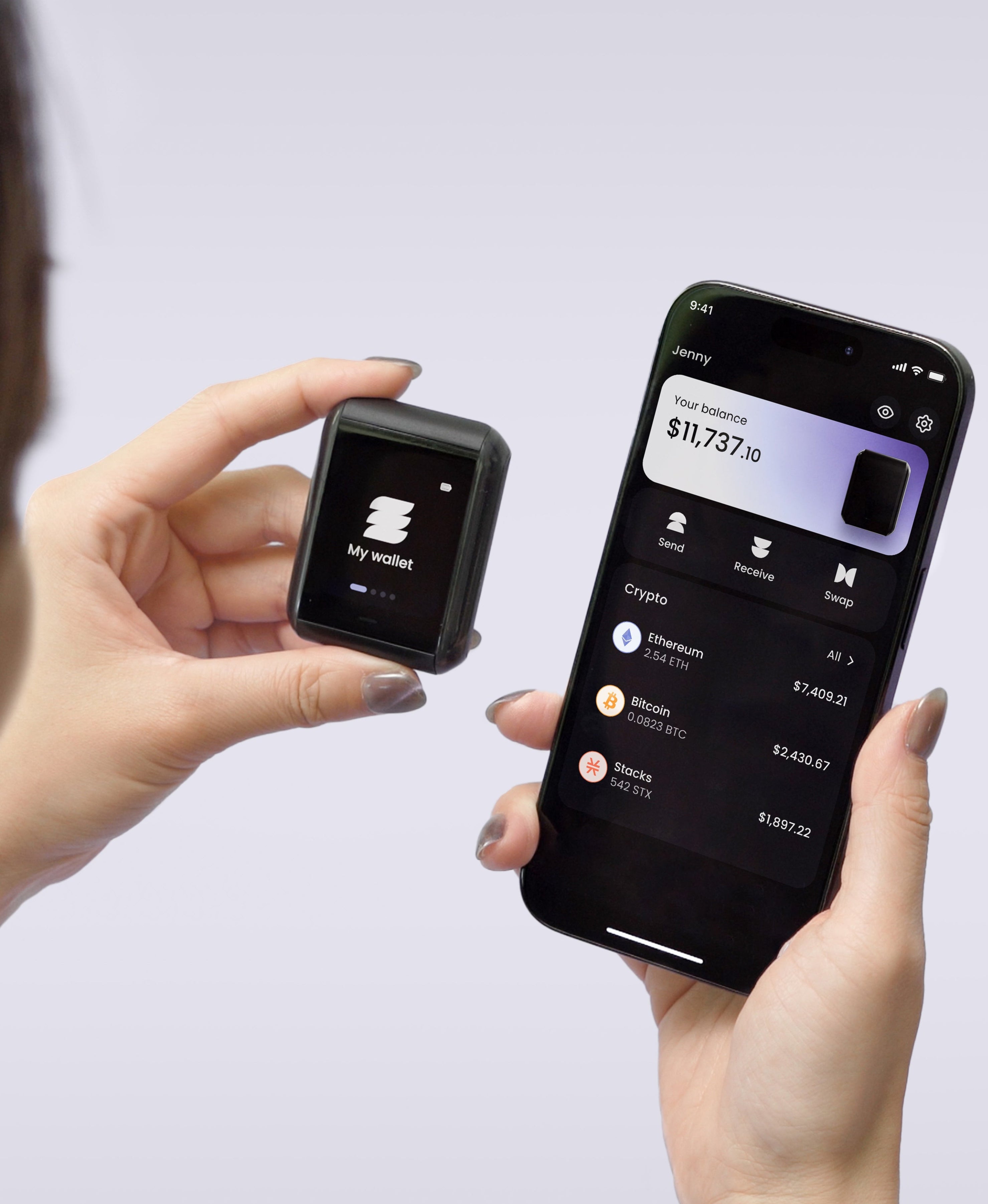
We make a hardware wallet, so this is the part where we come in, and only for coins you keep off the platform. Ryder One generates your private keys inside an EAL6+ secure element where they stay, and you confirm every transaction on the device itself. It supports Bitcoin, Ethereum and Solana, plus USDC on both Ethereum and Solana, so whatever you aren't trading right now can stay in it. It can't protect a balance that's already on Kalshi, though; once you deposit, that money is in Kalshi's hands until you withdraw it.


Share: