


# BitMEX Is Shutting Down September 23: What to Do With Your Funds
Eleven years is a long time in crypto. BitMEX survived the 2017 bull run, the 2018 crash, multiple regulatory crackdowns, and a period when its founding team faced federal charges. It did not survive Hyperliquid. On July 23, 2026, the platform announced it would close permanently on September 23. If you have funds there right now, you have a hard deadline and a fee structure designed to punish inaction.
What BitMEX Was and Why It Mattered
BitMEX was not a regular spot exchange. When Arthur Hayes, Ben Delo, and Samuel Reed launched it in 2014, they built something that had not existed before: a Bitcoin-margined derivatives platform where traders could open positions up to 100 times their initial capital. The perpetual swap contract they created became the dominant instrument in crypto derivatives, widely copied by every major exchange that followed.
At its peak, BitMEX processed billions of dollars in daily volume and held a position at the center of the crypto trading world that very few platforms have matched since. For a certain era of trader, it was the exchange, the place where fortunes were made and, just as often, liquidated in minutes when the market moved against an over-sized position. The platform operated under HDR Global Trading Limited, a Seychelles-registered company, which gave it access to global users for most of its life while keeping its regulatory footprint relatively light.
Arthur Hayes became one of the most-read voices in crypto finance during those years, publishing long-form macro essays that attracted as much attention as the platform itself. The brand carried weight. The shutdown of BitMEX is not a minor event; it is the end of something that substantially shaped how the industry thinks about derivatives.
That era is over.
What's Happening and When
On July 23, 2026, BitMEX published an official announcement stating it would cease all operations. The company said customer funds are safe, that assets exceed liabilities, and that it has never lost user funds to a security breach in its 11-year history. The closure reflects a commercial decision rather than a solvency event.
The timeline breaks into three stages:
- Now: New account registrations are permanently closed.
- August 26, 2026: No new positions can be opened. Only position reductions are permitted from this point.
- September 23, 2026 at 04:00 UTC: All remaining open positions are force-closed, and the platform shuts down.
You have roughly eight weeks from the announcement date to handle your funds. That window is already shrinking, and the August 26 cutoff for new positions arrives even sooner.
What Happens to Your Funds If You Do Nothing
This is the part worth paying attention to. BitMEX will not hold your funds indefinitely after shutdown without charging for it. Any assets remaining on the platform past September 23 are subject to a custody fee of $50 per month OR 1% of the held assets per year, whichever amount is greater.
Run the numbers on a $5,000 balance. At $50 per month, you pay $600 over the first year, which is 12% of your balance eroded by fees on an exchange that no longer operates. On a smaller $1,000 balance, it is worse: the $50 monthly fee takes 60% of that balance in a single year. The fee is not accidental. It is designed to compel action. The longer you wait after September 23, the more it costs you to wait.
These fees also expose something that was always true about keeping assets on any crypto exchange: the platform sets the rules, and those rules can change without your input. Your funds sitting on an exchange are not your funds in any technical sense. They are a claim on that exchange's balance sheet. When the exchange closes, your claim becomes a paperwork problem with a monthly price tag attached.
How to Withdraw
Moving your funds off BitMEX before the deadline involves a few concrete steps, and each one matters for a different reason.
Close your open positions before August 26. After that date, you will not be allowed to open new positions, only to reduce existing ones. If you have active positions, close them before August 26 to avoid having them force-settled on September 23 at prices driven by market conditions on that specific day. Settlement values on the final day will depend entirely on price action you cannot control or predict.
Withdraw your Bitcoin to a wallet you control. Navigate to Account and then Withdrawal in the BitMEX interface. You need a destination Bitcoin address that belongs to a wallet where you hold the private keys. If you are withdrawing to a hardware wallet, confirm the receiving address on the device screen before submitting the transaction. This step matters because malware can silently replace clipboard addresses, and a hardware wallet screen shows you what the device is about to sign before you confirm it.
Moving to another exchange does not solve the problem. Sending your Bitcoin from BitMEX to Binance, Coinbase, or any other platform relocates the counterparty risk rather than removing it. Every centralized exchange can close, freeze withdrawals, or change its terms. Self-custody is the only exit that eliminates this risk because it puts your funds under your direct control, with no third party between you and your Bitcoin.
Verify the withdrawal landed. After submitting, wait for the transaction to confirm on-chain, then check the balance in your receiving wallet. BitMEX has historically processed Bitcoin withdrawals within a few hours during their standard processing windows, but confirm before assuming the transfer is complete.
Why This Keeps Happening
BitMEX's closure did not come out of nowhere. The platform had been in managed decline for several years, and a combination of specific events accelerated it past the point of recovery.
In 2020, the U.S. Department of Justice and FinCEN brought charges against BitMEX and its co-founders for Bank Secrecy Act violations, specifically for operating an exchange without implementing anti-money laundering and know-your-customer controls. The resulting settlement cost the company over $100 million in fines and removed Hayes, Delo, and Reed from their operational roles. The platform never regained the market position it held before those charges.
According to CoinDesk's reporting on the closure, BitMEX also attempted a sale of the business and could not find a buyer willing to take it on. Meanwhile, as CNBC reported, Binance captured the spot market and Hyperliquid built a decentralized perpetuals exchange that offered comparable products without custody risk, pulling traders away steadily over time.
An exchange that invented an entire product category, that defined how crypto derivatives worked for years, still could not survive the structural combination of regulatory pressure, leadership disruption, and a competitor with a model that did not require trusting a central operator. This is worth understanding because it is not specific to BitMEX. Any centralized platform carries some version of that fragile set of dependencies.
Where Ryder One Fits
BitMEX closing is the kind of event we had in mind when we built Ryder One. Not this exchange specifically, but what it represents: even the most established platform in its category can close, pay hundreds of millions in fines, fail to find a buyer, and give users eight weeks to sort out their funds.
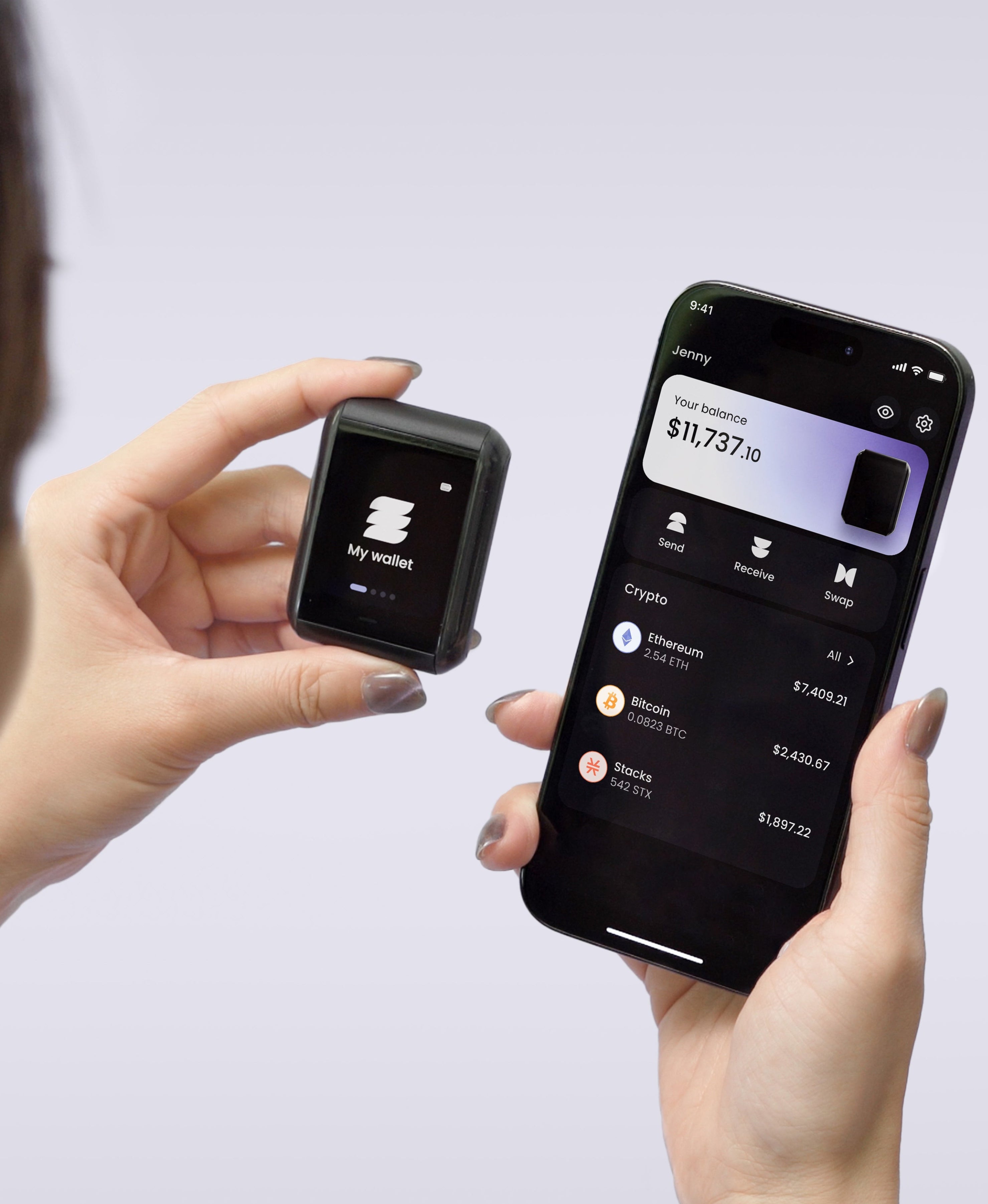
A hardware wallet moves your Bitcoin off every exchange and into your direct control. Your seed phrase gives you recovery access from any device if the hardware is ever lost or damaged, so your funds are not tied to a single physical object. No exchange shutdown, no regulatory action targeting a platform, and no failed acquisition can reach funds you hold in self-custody, because those funds do not exist on any platform's balance sheet.
There is a real cost to keeping Bitcoin on exchanges. The convenience is tangible in the short term, and for years the downside felt distant and unlikely. BitMEX shutting down makes the cost concrete: an 11-year-old exchange with a clean security record is closing, and anyone who does not act before September 23 starts paying $50 a month for the privilege of waiting. The lesson is not complicated. Exchanges hold your Bitcoin for you. When they close, you find out what that arrangement was worth in practice.
If you are moving funds off BitMEX and looking for somewhere to hold them, Ryder One is $229 and ships now.
SEO
- Target keyword: bitmex
- SEO title: BitMEX Is Shutting Down: How to Withdraw Before Sept 23
- Meta description: BitMEX closes September 23, 2026. Here's the withdrawal timeline, the $50/month fee trap, and why this is the self-custody lesson in real time. (155 chars)
- Hero alt text: BitMEX shutdown September 2026 — Ryder self-custody hardware wallet


Share: