


# Bitcoin Runes Explained: What They Are and Why They Matter in 2026
Bitcoin was built as a currency, and for most of its history that was largely how people used it. The arrival of Bitcoin Runes changed that picture. Since launching at the April 2024 halving, Runes introduced fungible tokens natively to Bitcoin in a way that fits the network's core architecture, without the bloat that made earlier token standards technically messy. By 2026, the ecosystem spans thousands of distinct tokens, draws real trading volume across major exchanges, and carries a custody implication that every Bitcoin holder should understand: when your bitcoin lives on an exchange, so do your Runes, and the exchange holds the keys to both.
What Are Bitcoin Runes?
Bitcoin Runes are fungible tokens issued and transferred directly on the Bitcoin blockchain. Casey Rodarmor, the developer who created the Ordinals inscription protocol, designed Runes to fill a gap he saw in the ecosystem. The BRC-20 standard had demonstrated clear appetite for fungible assets on Bitcoin, but its technical approach left behind a growing pile of unnecessary data clogging the network. Rodarmor launched the Runes protocol at Bitcoin block 840,000, the block that triggered the fourth halving in April 2024, timing the release deliberately to give miners a new source of fee revenue as the block subsidy dropped in half.
Every Rune lives inside a Bitcoin UTXO (Unspent Transaction Output). If that term is unfamiliar: a UTXO is what Bitcoin calls a discrete chunk of bitcoin that has not been spent yet. When you hold 0.5 BTC, that balance might exist as one UTXO of 0.5, or as several smaller ones, depending on how the coins arrived. Runes attach to these UTXOs directly, using a data field in Bitcoin transactions called OP_RETURN to record the token's name, ID, supply, and transfer instructions in a compact structure called a Runestone. Because Runes ride inside standard Bitcoin transactions, they move through the network the same way regular bitcoin does.
How Bitcoin Runes Differ From BRC-20
The BRC-20 standard came before Runes and showed clear signs of strain under load. BRC-20 embeds token data into ordinal inscriptions on individual satoshis, and transferring those tokens requires splitting UTXOs in ways that leave behind what researchers called junk UTXOs: spent outputs that serve no purpose but persist inside Bitcoin nodes' UTXO sets indefinitely. Each inscription could also consume up to 4 MB of block space, and moving a token required two on-chain transactions rather than one.
Runes address each of these problems by working with Bitcoin's existing design instead of around it. OP_RETURN data costs only 80 bytes, a fraction of what BRC-20 inscriptions demand. A single Runes transaction handles the entire token transfer in one step, which lowers fees and reduces congestion during busy periods. Because Runes never create junk UTXOs, they do not permanently inflate the UTXO set the way BRC-20 does. The protocol is also compatible with the Lightning Network, Bitcoin's layer-two solution for faster, cheaper payments.
None of this makes Runes immune to risk. Token prices are volatile, most projects are speculative, and the ecosystem is still young relative to the broader crypto market. But from a structural standpoint, Runes represent a more efficient approach to fungible tokens on Bitcoin than anything that came before, which is why the protocol gained traction quickly after launch.
The Runes Ecosystem in 2026
The Runes protocol launched on April 19, 2024, and the response was immediate. In the days that followed, Bitcoin transaction fees hit record highs, with average fees reaching $127.97 as demand flooded the network. Miners earned more in fee revenue during that period than at almost any prior point in Bitcoin's history, validating Rodarmor's argument that new on-chain activity could substantially supplement miner income as block subsidies decline.
By 2026, thousands of Rune tokens trade across major exchanges including Binance, OKX, and Gate.io, with the broader category reaching hundreds of millions of dollars in combined market capitalization. The most-traded tokens include DOG•GO•TO•THE•MOON, one of the first tokens to launch on the protocol, and RSIC•GENESIS•RUNE, which drew attention through its connection to a Bitcoin NFT project. The naming convention is part of the protocol spec: every Rune has a unique name in uppercase, with bullet-point separators between words, encoded permanently at the time of etching.
On the wallet side, Xverse supports Runes natively, letting users view, send, and receive tokens directly alongside their bitcoin. Magic Eden runs a Runes marketplace where users can buy and swap tokens through its platform. Support across self-custody wallets has grown steadily since 2024, though not every Bitcoin wallet recognizes Runes balances yet, so checking compatibility before receiving tokens is worth doing.
Runes and Self-Custody: The Key That Controls Both
Because a Rune lives inside a Bitcoin UTXO, the Bitcoin private key that controls that UTXO also controls the Rune attached to it. There is no independent Runes key and no separate Runes wallet address. Whoever holds the private key to a Bitcoin address holds every asset at that address, Runes included.
The custody implication is direct: when you hold bitcoin on an exchange, the exchange holds the private keys. That means the exchange holds your Runes too, and the exchange can freeze your account, restrict your access for regulatory reasons, or face insolvency without warning, and every asset sitting at that address goes with it. The self-custody answer for Bitcoin automatically becomes the self-custody answer for any Runes living at that Bitcoin address. You do not need a different protocol or a different device to secure both. Securing the private key secures everything at that address, full stop.
How Ryder One Secures Your Bitcoin and Your Runes
When we built Ryder One, we built it around one commitment: private keys are generated inside the device and never leave it. The Infineon SLC38 secure element, certified to EAL6+, handles key generation and signing on-device. When you sign a transaction, the key does its work inside the chip and the signed transaction exits. The key itself stays put, and Ryder's firmware has been independently audited by Halborn, with the full audit report publicly available.
That architecture means any Bitcoin address generated by Ryder One automatically protects every Rune held at that address. Securing the Bitcoin private key secures them. There is nothing extra to configure.
Ryder One also handles recovery differently than most hardware wallets. Traditional devices put the full recovery burden on a single seed phrase written on paper, and if that paper is lost, destroyed, or discovered by the wrong person, the wallet is gone. TapSafe Recovery distributes the backup across three layers: a Recovery Tag, your phone's encrypted cloud storage, and optional Recovery Contacts. No single component gives full access on its own, so there is no single point of failure to lose, burn, or steal. The seed phrase remains accessible on-device as a last resort, because we comply with the BIP-39 standard and we do not lock you to Ryder hardware. But in normal use, your recovery does not depend on a single sheet of paper surviving everything life throws at it.
If you hold bitcoin and want to hold Runes, the private key is what matters. Ryder One keeps it offline, inside a certified secure element, with a backup system built to survive the conditions that destroy single-component approaches.
Pick up Ryder One for $229 at ryder.id/products/ryder-one. It ships with a Recovery Tag, wireless charger, and travel pouch, and setup takes under 60 seconds.
SEO
- Target keyword: bitcoin runes
- SEO title: Bitcoin Runes Explained: What They Are and Why They Matter in 2026
- Meta description: Bitcoin Runes are fungible tokens on Bitcoin using the UTXO model. Learn what they are, how they differ from BRC-20, and why self-custody matters for Runes.
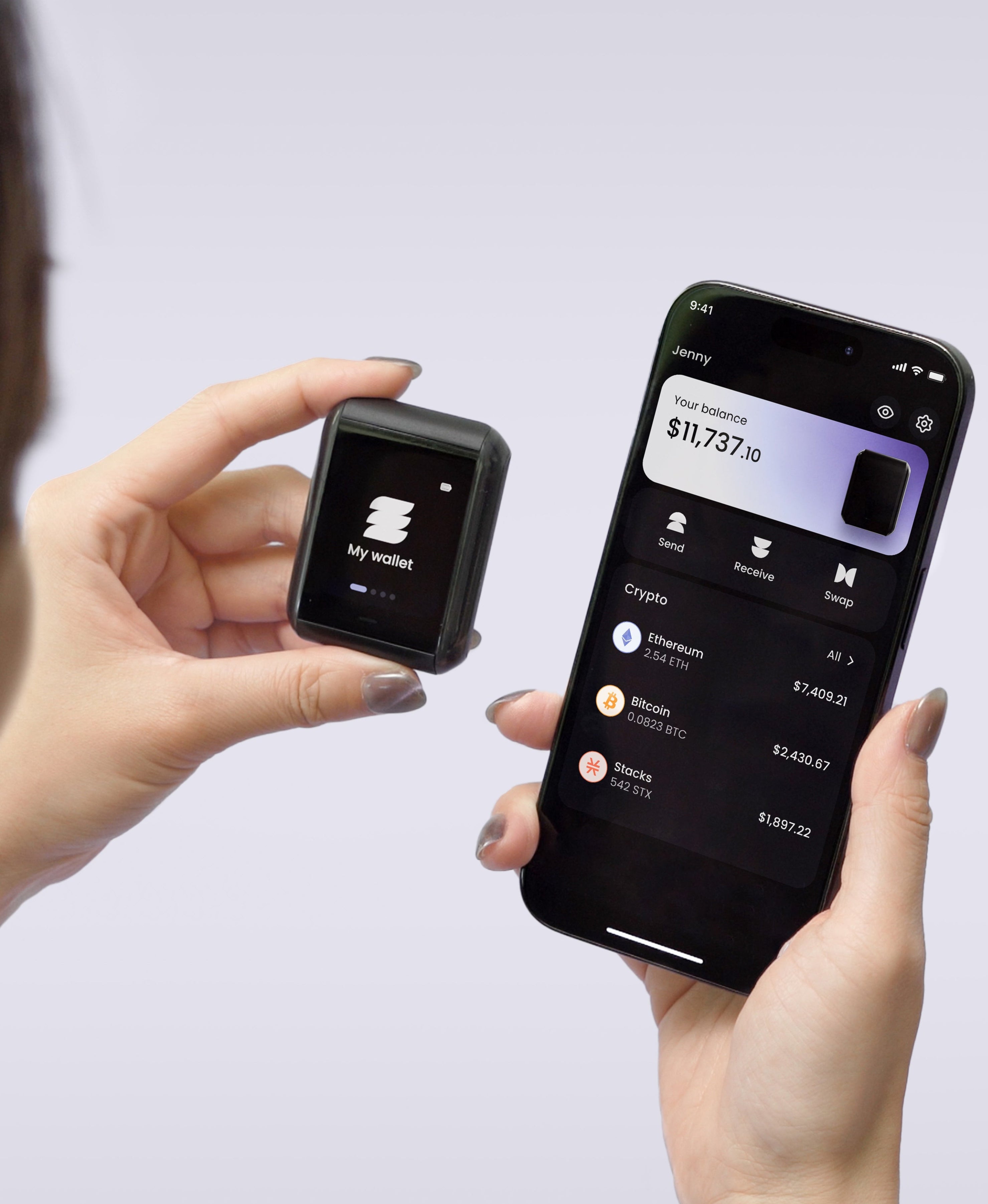
- Hero alt text: Ryder One hardware wallet sitting on a desk next to a Bitcoin Runes token interface on a phone screen, illustrating self-custody of Bitcoin and Runes assets




Share: