


XRP is trading near $2.40 as of mid-June 2026, well off the $3.40 peak it printed in January 2025 after the SEC dropped its appeal in the Ripple Labs case. For the rest of 2026, published price targets span $1.50 on the bearish reset side and $8.00 on the institutional adoption side, although the credible cluster from research desks sits between $2.50 and $4.50.
In this piece we walk through the forces that move XRP around, how XRP differs from Bitcoin in ways that matter to a holder, what the 2026 bull and bear cases look like in plain numbers, and what self-custody holders should think about no matter which way price breaks.
What drives XRP price in 2026
Five forces are doing the work this year, and you can see each of them in the data.
Ripple's resolution with the SEC removed the regulatory overhang that had suppressed XRP for four years, and the 2024 appeal dismissal cleared the way for US exchanges to list the asset without the unregistered-security cloud hanging over it. The base case for XRP today reflects that new legal footing rather than the prior uncertainty discount.
Cross-border payments are the second force, and the numbers here are concrete. Ripple's On-Demand Liquidity product uses XRP as a bridge asset for international settlements, and payment volume through ODL has climbed to roughly $50 billion annualized by mid-2026, up from about $10 billion in 2022. That kind of usage creates demand independent of speculation, which is what gives the base case its floor.
ETF speculation is the third driver. Multiple XRP spot ETF applications sit in front of the SEC, and if even one is approved the asset would follow the path Bitcoin and Ethereum carved out: measurable inflows, a new buyer base, and a clearer story for advisors recommending the position. Most analysts expect at least one approval by Q4 2026, though slipping into 2027 is on the table.
Banking adoption is the fourth, and it's quieter but durable. Santander, Standard Chartered, and others have integrated Ripple's settlement infrastructure, and as more banks route cross-border flows through ODL, the XRP demand floor strengthens. Macro positioning is the fifth: like every crypto asset, XRP correlates with broader risk appetite, so rate cuts and dollar weakness lift it while rate uncertainty and dollar strength drag.
The bull case ($5 to $8)
The bull path requires the XRP ETF landing by Q4 2026, with inflows scaled to the Bitcoin ETF playbook, which would put roughly $3 to $8 billion into XRP ETFs over the first year. Ripple's banking partnerships keep expanding to additional Tier-1 institutions, and ODL volume crosses $100 billion annualized.
If that scenario plays out, XRP retests the all-time high near $3.40 and breaks higher into the $5 to $8 range. Sustaining above $5 needs both the ETF approval and continuing banking adoption, since one without the other gives a sharp rally but no follow-through. This isn't a fringe case; it's the path several institutional desks (Standard Chartered, Bernstein) are sizing as base-case probability rather than tail outcome.
The base case ($2.50 to $4.50)
In the base case, ETF approval slips into 2027 while banking adoption keeps grinding along at its current pace, ODL volume grows but doesn't accelerate, and the macro picture stays mixed. Under those conditions XRP holds a range, occasionally tagging the upper bound but not pushing through it.
This is the outcome most current data points toward, and it's where the credible analyst targets sit. Although it lacks the headline appeal of the bull case, it's the path with the highest probability mass if you're sizing a position rather than telling a story.
The bear case ($1.50 to $2.00)
The bear case requires three things stacking: a macro recession, an ETF rejection, and a slowdown in banking adoption. If all three land, XRP loses the regulatory premium that drove its 2024 and 2025 rally, and trading volume rotates toward Bitcoin and the major altcoins.
It isn't the base-rate outcome, but it's the downside tail that disciplined holders should still size for. Position sizing that survives the bear case is the same position sizing that lets you sleep through the bull case.
What price models can't capture
Three forces sit outside what any price model captures cleanly. A major bank could announce a competing on-chain settlement layer (CBDC integration, JPMorgan's Onyx evolving, a new Visa B2B rail), and Ripple's network effect would then have to compete with well-funded entrants. The probability isn't zero; it's just hard to time.
Regulatory reversal is the second wildcard. A future SEC could revisit the security classification question, and the 2024 dismissal isn't immune to political change. The third is founder selling: Ripple Labs holds a large XRP balance, and periodic escrow releases create selling pressure that price models don't fully ingest. The 2026 unlock schedule releases roughly 3 billion XRP across the year.
What this means for self-custody XRP holders
For a long-term XRP holder, the specific 2026 print matters less than two structural inputs: ETF approval timing, and ODL adoption growth. Both are observable, both are uncertain, and neither is something you can hedge from inside a brokerage account.
What you can control is custody. XRP held on a hardware wallet is the same XRP no matter where price goes, and the wallet doesn't depend on Coinbase, Bitstamp, or any exchange continuing to operate. For holders sitting on positions accumulated during the 2020 to 2024 regulatory limbo, mid-2026 is a reasonable moment to verify the self-custody setup: backup tested, firmware updated, recovery process rehearsed at least once.
Where Ryder One fits
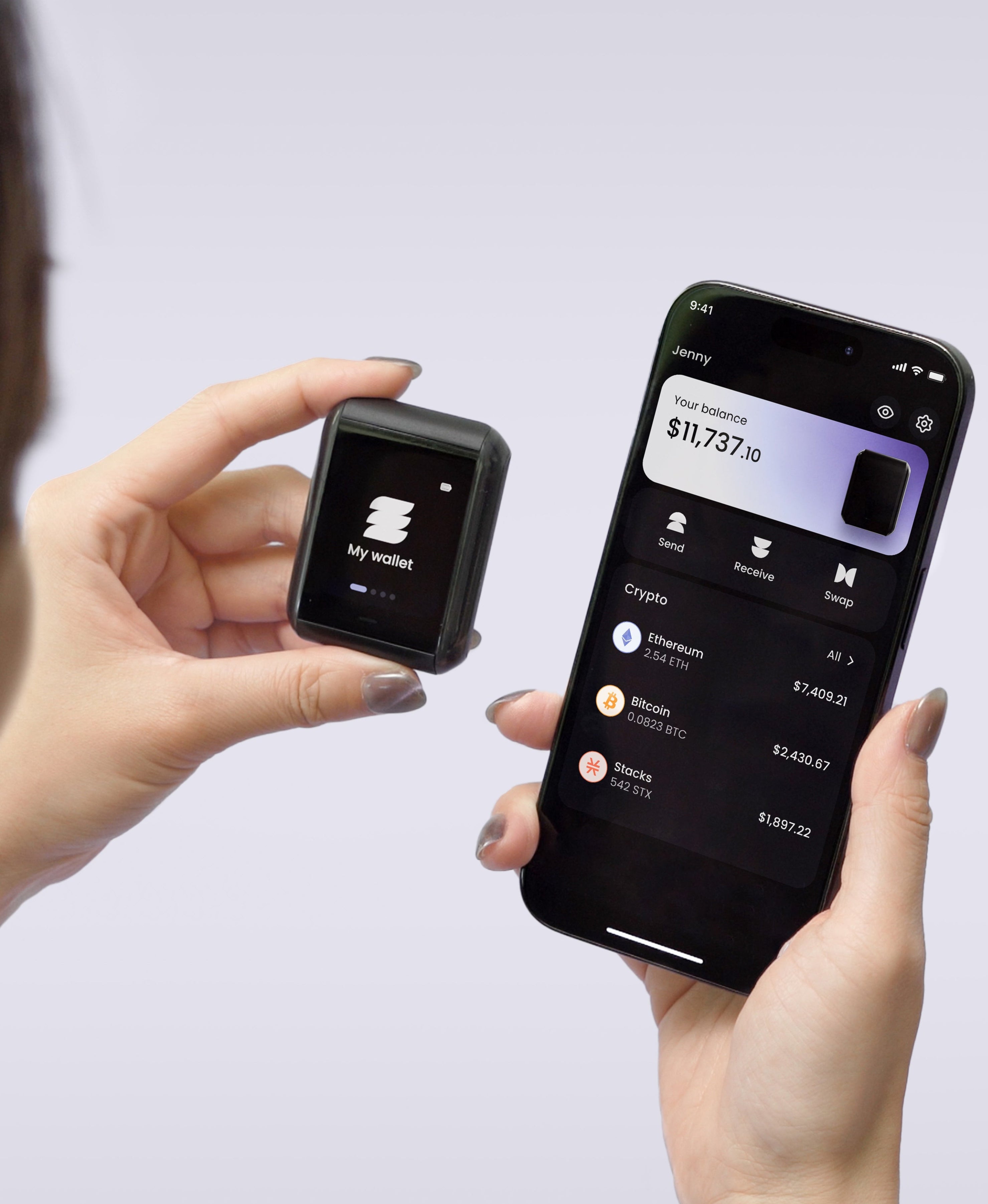
We built Ryder One to hold XRP on an EAL6+ Infineon SLC38 secure element, with every transaction verified on the 1.6-inch AMOLED touchscreen before a physical button press signs it. The hardware is compact and charges over Qi wireless, and connectivity is NFC-only so there's no Bluetooth or USB attack surface to defend.
For the backup, we built TapSafe Recovery to split your wallet across three layers so no single object carries the whole position. The Recovery Tag holds 50% of your wallet, your paired phone holds 50% (stored encrypted in iCloud or Google Drive, not on the device itself), and you can add up to four Recovery Contacts who each hold 25%. Your BIP-39 seed phrase is always available on the device as a last resort, so you're never locked to our hardware.
For XRP holders watching the 2026 tape, we handle the part of the question that's in your control: whether you hold the keys. The price prediction is speculation; the custody is concrete.
The bottom line
XRP price targets for 2026 span $1.50 to $8.00, with credible base-case clusters at $2.50 to $4.50. The bull case rides on ETF approval and continued banking adoption, and the bear case rides on regulatory reversal or macro recession. For long-term holders, the price question matters less than the custody question, and self-custody on a hardware wallet is the part of the position that doesn't depend on which scenario unfolds.
Hold XRP off the exchange. Ryder One keeps your XRP offline on an EAL6+ secure element, with TapSafe Recovery as the backup. The wallet doesn't watch the chart.
SEO
- Target keyword: xrp price prediction 2026
- SEO title: XRP Price Prediction 2026: Bull Case, Bear Case, and Drivers (60 chars)
- Meta description: XRP price predictions for 2026 span $1.50 to $8.00, with base case clusters at $2.50-$4.50. Here's what drives price and what holders should focus on. (155 chars)



Share: