

"Gas" in crypto is the fee paid to process a transaction on a blockchain network. The term comes from Ethereum, where it was used as a metaphor for the computational fuel a transaction consumes. The concept has since spread to most major chains, with each chain implementing the fee mechanism differently. For self-custody holders, gas matters in two ways: every time you send a transaction, you pay it, and the way the fee is calculated affects how much you pay and how fast the transaction confirms. Understanding the basics makes the wallet's "fee" prompts less mysterious. This piece walks through what gas is, how it works on Ethereum specifically, how it differs on other chains, and what self-custody holders can do to manage transaction costs.
What gas is
Every transaction on a blockchain consumes resources: validators have to verify the signature, execute any smart contract calls, update the state of the chain, and propagate the result to the network. The cost of those resources is paid by the transaction sender, in the form of a fee denominated in the chain's native token. On Ethereum, the fee is called "gas" because the metaphor maps to fuel: a transaction has a defined amount of work to do, the work consumes a defined amount of "gas units," and the sender pays a price per gas unit. The total fee is gas units times gas price. On Bitcoin, the same concept exists without the "gas" terminology. Bitcoin transactions pay a fee based on the size of the transaction in bytes (or more precisely, virtual bytes), with the sender choosing the fee rate. The mechanic is similar; the terminology differs. On Solana, fees are typically a small fixed amount per transaction (lamports, Solana's smallest unit), with optional "priority fees" for transactions that want to jump the queue.
How Ethereum gas works in detail
Ethereum's gas mechanism has three components. Gas units are a measure of computational work. A simple ETH transfer uses 21,000 gas units. A smart contract interaction uses more (anywhere from 50,000 to several million gas units depending on what the contract does). The wallet estimates the gas units a transaction will need based on the transaction's complexity. Gas price is denominated in gwei, where 1 gwei = 0.000000001 ETH (10\^-9 ETH). The sender specifies a gas price they're willing to pay. Higher gas prices get processed faster because validators prioritize them. Base fee and priority fee (post-EIP-1559). Since August 2021, Ethereum's gas fee has two parts: a base fee that the network sets based on demand, and a priority fee (also called a "tip") that the sender pays to validators on top. The base fee gets burned (destroyed), reducing ETH supply, while the priority fee goes to the validator. The total fee for a transaction is: (Base Fee + Priority Fee) × Gas Units For a typical ETH transfer at 20 gwei base fee and 1 gwei priority fee: (20 + 1) gwei × 21,000 = 441,000 gwei = 0.000441 ETH At an ETH price of 3,000 USD, that's about 1.32 USD per transaction. Smart contract interactions cost more because they use more gas units.
Gas on other chains
Different chains handle fees differently. Bitcoin. Fees are based on the transaction's size in virtual bytes, with the sender choosing a fee rate in sats per virtual byte. A typical Bitcoin transaction is around 200 virtual bytes; at a fee rate of 10 sats/vbyte, the total fee is 2,000 sats. No "gas" concept; just a fee. Solana. Each transaction pays a base fee of 5,000 lamports (0.000005 SOL). Priority fees can be added voluntarily to get transactions processed faster during network congestion. Typical transactions cost less than 0.01 USD. Layer 2 networks (Arbitrum, Optimism, Base). These networks settle to Ethereum but charge much lower gas fees than mainnet Ethereum. Transactions typically cost a few cents instead of several dollars. Tron. Uses a "bandwidth" system where users get free transaction allocations daily; beyond the allocation, fees are paid. USDT transfers on Tron are popular because of the low fees.
Why gas matters for self-custody holders
Three practical implications. You can't avoid gas. Every transaction you send costs gas. Even an attempt to "rescue" funds from a hacked or compromised wallet requires gas to be paid first, which means the rescue can't happen if there's no native token in the wallet to pay the fee. ERC-20 transfers cost more than ETH transfers. Moving USDC, USDT, or any other token on Ethereum costs more gas than moving ETH itself, because the transaction has to execute the token contract's transfer function. Budget accordingly when sending tokens. Gas spikes during congestion. During high-demand periods (NFT mints, major DeFi events, market volatility), Ethereum gas prices can spike from 20 gwei to 200+ gwei. A 1 USD transaction can become a 10 USD transaction. Layer 2 networks insulate against this; mainnet doesn't.
How to manage gas costs
A few practical moves reduce gas spending. Use Layer 2 networks for active DeFi. Arbitrum, Optimism, Base, and other L2s charge a fraction of mainnet Ethereum gas. Bridge funds to the L2 you use most often. Time your transactions. Ethereum gas prices are lower during weekends and during off-peak hours (typically 1-9 AM UTC). For non-urgent transactions, waiting can save meaningful amounts. Use a wallet that shows gas estimates clearly. Wallets like Rabby, MetaMask, and most hardware wallet companion apps show the gas estimate before signing. Ryder's does too. Verify the estimate is reasonable before approving. Batch transactions where possible. Some wallets and protocols support batching multiple operations into one transaction, paying gas once for the whole batch. This works especially well for token approvals plus immediate use. Keep some native token in every wallet. A wallet with no ETH (or SOL, or BTC, depending on the chain) can't send anything, including out of the wallet. Always keep enough native token to cover several future gas payments.
Where Ryder One fits
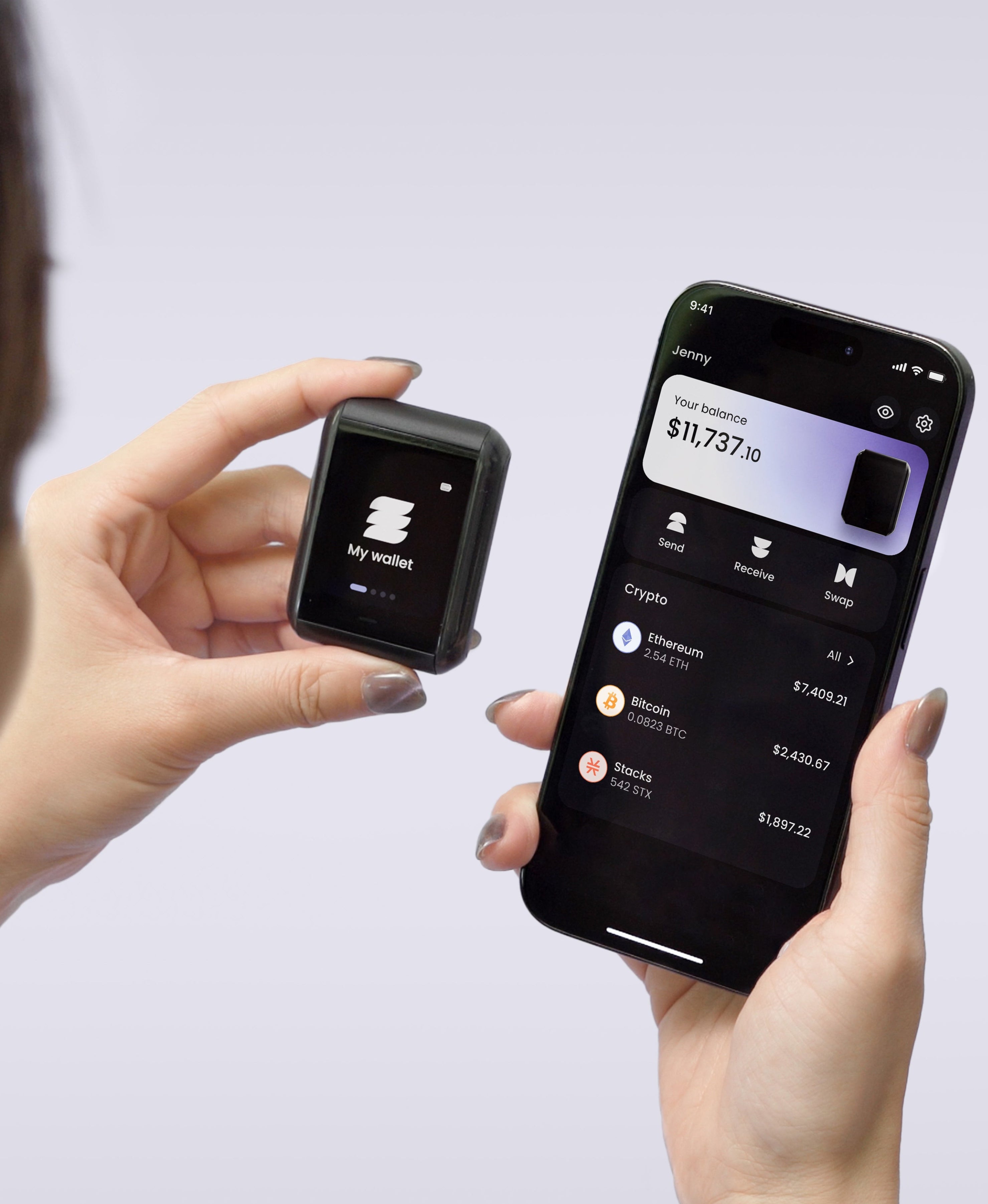
Ryder One handles gas the way any hardware wallet should: the gas fee is displayed on the device's 1.6-inch AMOLED touchscreen alongside the transaction details, so you can verify exactly what you're paying before signing. The physical button press confirms the entire package, including the fee. No surprises after you've signed. For users moving across Ethereum mainnet, Layer 2 networks, Bitcoin, and Solana, the device supports each chain's native fee model: gas on Ethereum and L2s, sat-denominated fees on Bitcoin, lamport fees on Solana. The on-device verification step works the same way regardless of which chain's fee structure you're paying.
The bottom line
Gas is the fee paid to process a transaction on a blockchain. On Ethereum, it's calculated as gas units times gas price, with a base fee (burned) and a priority fee (paid to validators). Bitcoin and Solana have their own fee mechanics that fill the same role. For self-custody holders, the practical considerations are keeping enough native token in every wallet to pay fees, using Layer 2 networks for active DeFi, and verifying the gas amount on the wallet's signing screen before confirming any transaction.
Verify the gas before you sign. Ryder One shows every transaction's fee on the device's 1.6-inch AMOLED touchscreen alongside the destination and amount, signed with a physical button press wired directly to the EAL6+ secure element. See how it works.



Share: