

A match on Tinder. Three weeks of warm conversation. A casual mention of crypto investing that "changed her life." A link to a slick trading platform with rising charts. A small initial deposit that immediately shows a profit. Encouragement to deposit more. And then, weeks later, the platform stops processing withdrawals. This is pig butchering, and Tinder is one of its biggest hunting grounds. In the FBI's latest Internet Crime Complaint Center (IC3) report, victims reported more than \$6.5 billion in losses from cryptocurrency-related investment fraud in 2024, a category that includes pig-butchering scams. Most victims aren't crypto beginners. Many already owned hardware wallets before they were drained.
How a Tinder crypto scam plays out
The pattern is consistent enough to teach and play out in six phases. Phase one: the match. A profile that's slightly too polished., photos that look professional, a bio that mentions a successful career, often in finance, tech, or international business. Quick to suggest moving the conversation off Tinder, usually to WhatsApp or Telegram. Phase two: rapport. Two to four weeks of warm, attentive messaging. Daily check-ins, personal stories, photos that build a sense of intimacy. The scammer is patient. They're running this play across hundreds of targets in parallel. Phase three: the hook. A casual mention that they trade crypto on the side. Sometimes they wait for you to ask, but often they steer the conversation there themselves. They show fake screenshots of profitable trades and mention that an "uncle" or "industry contact" gives them tips. Phase four: the pitch. They invite you to try the platform with them. The platform is real-looking, with a professional website. The app may sometimes be downloadable. Initial deposits show immediate gains. Sometimes you can even withdraw small amounts at first, which is how the scam earns trust before the trap closes. Phase five: the trap. They encourage larger deposits. Then larger. When you try to withdraw a real sum, the platform demands "tax fees" or "verification deposits" that have to be paid first. Each fee unlocks the next obstacle. The wall keeps moving. Phase six: the disappearance. The match deletes their profile. The platform stops responding. The funds are gone, routed through mixers and across multiple chains within hours.
Why hardware wallets don't automatically protect you
This is the part most crypto-native explainers get wrong. They assume that if you have a hardware wallet, you're protected because malicious websites can't drain funds without your signature. Pig butchering doesn't work that way. The victim willingly signs the outgoing transactions. The hardware wallet does its job: it shows you the destination address, you confirm, you sign. The address belongs to the scammer's pseudo-platform, but the wallet has no way to know that. Cryptography can't tell you whether a wallet address belongs to a Binance subaccount or a fake trading platform run by an offshore compound. The hardware wallet protects against malware, phishing, and remote drains. It doesn't protect against you choosing to send funds to someone who's lying to you.
The single habit that stops it
The structural defence is brutal but it works: any crypto investment opportunity introduced by someone you met on a dating app is a scam. Treat the rule as absolute. Not "probably a scam." Not "scam unless they prove otherwise." Scam, full stop, with no exceptions. The category of "person you matched with on Tinder who turns out to have a brilliant crypto trading strategy" doesn't exist outside fiction. Anyone trying to occupy that category is running pig butchering on you, regardless of how convincing they are. This rule survives every attempt to make exceptions. "But she's so consistent." "But the platform looks real." "But I withdrew a small amount and it worked." Yes. That's the script. The script is designed to defeat your skepticism. The only defence that works is refusing to engage with the category at all.
Why this hits crypto holders specifically
Crypto holders self-select for specific traits: comfort with novel financial systems, willingness to send irrevocable transactions, high net worth in a portable asset class, and a culture that already normalises following influencers and strangers into trades. Pig butchering operations target dating apps because the matches who say "yes I'm interested in crypto" are exactly the targets they want. Holders with hardware wallets are sometimes more vulnerable, not less. The technical confidence ("I'm running cold storage, I'm safe") creates a blind spot. The blind spot is that hardware wallets defend the keys. They don't defend the holder's judgement.
What to do if you've already sent funds
If you've already sent funds to a scam platform: assume the funds are gone. The honest answer is that recovery is rare, and most "crypto recovery services" advertising help with these scams are themselves scams. There's a small set of legitimate options. Report to the FBI IC3 (ic3.gov) and to Chainalysis or local law enforcement. Provide every wallet address, every transaction hash, every screenshot of the conversation. Real recovery sometimes happens when on-chain analysis traces funds to an exchange before they're cashed out, but the window is hours, not days. Stop sending more. The "tax fee to release withdrawal" stage is designed to extract a final round of payments after the original deposits are gone. There is no withdrawal coming.
Where Ryder fits
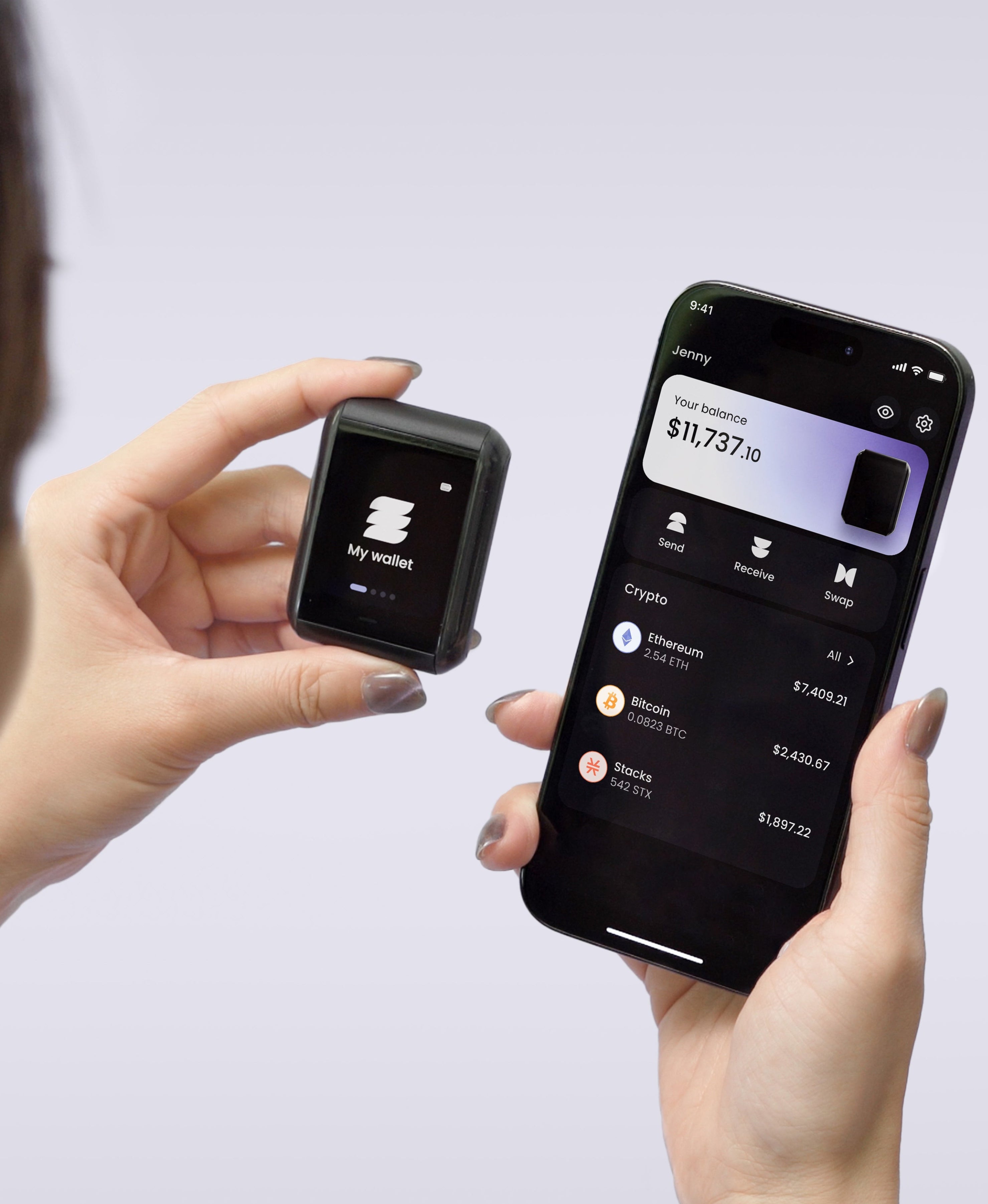
Ryder One won't stop you from sending funds to a scammer if you choose to…but nothing will. What we do is reduce the surrounding risk: every transaction shows the destination address on the 1.6-inch screen for you to verify before signing, your seed phrase stays on-device, and TapSafe Recovery means a scammer who somehow obtains physical access to your wallet still can't drain it because no single layer alone gives full access. The deeper protection is structural skepticism, and that's not something hardware can give you. The rule that works: any investment introduced by a dating-app match is a scam. Hold the rule. Hold your funds.
The takeaway
Tinder pig-butchering scams have stolen billions from holders who believed they were protected by their cold storage. The hardware wallet defends against attackers. It doesn't defend against you signing transactions you've been emotionally manipulated into trusting. The structural defense is a single habit: no crypto opportunity from a dating-app match is real. None. Hold that rule and the entire category of attack stops working. If you want a wallet built around the assumption that recovery, custody, and physical security all need to work without depending on a single point of failure, Ryder One is what we built.


Share: