

A Bitcoin Ordinal that sold for five figures last week is now sitting in someone's Phantom wallet on a phone they also use to scroll Instagram. Most Ordinals are stored that way. The market has grown into billions of dollars in cumulative trading volume and the storage practices haven't caught up (see live tracking on Dune). For a quick snapshot of current inscription activity, pull the latest numbers from Ordinals.com. If you bought Ordinals this year and the question of where to keep them has been on the back burner, this piece is the prompt to take it off. Ordinals are real money now. The hot wallet protection most people use is what holders put behind real money in 2018, before the lessons stacked up. The right answer in 2026 is the same answer it became for regular Bitcoin: keys offline, signing on a screen malware can't reach. This piece walks through what an Ordinals wallet is, why hot wallets stop being enough at certain values, and what to look for in a hardware wallet that can hold Ordinals safely.
What is an Ordinal?
An Ordinal is data inscribed onto a single satoshi (the smallest unit of Bitcoin) using the Ordinals protocol. Each inscription gives that satoshi a unique identity that can be tracked, sold, and held. Ordinals can be images, text, audio, or any other file type that fits within the size limits of a Bitcoin transaction. To Bitcoin itself, Ordinals are just specific UTXOs (unspent transaction outputs) marked with extra data. To collectors, they're Bitcoin-native NFTs. The Ordinals market took off in 2023, scaled into 2024, and matured through 2025 into an asset class people allocate to. By early 2026, total inscriptions had climbed past 100 million. Some inscriptions trade for five and six figures. A handful have sold for seven.
Why Ordinals storage is different from regular Bitcoin storage
The mechanics of holding Ordinals are similar to holding Bitcoin: you control the UTXOs that contain the inscriptions with a private key. The complication is in how that UTXO gets treated. A normal Bitcoin wallet, when it sends Bitcoin, can grab any UTXO from your balance and spend it. The amount comes out, change goes back, the math works. With Ordinals, that's a problem. If your wallet uses the wrong UTXO (the one carrying your inscription) to pay for an unrelated transaction, the inscription can get sent away, "burned," or merged with other UTXOs in a way that makes recovery hard. Ordinals-aware wallets know which UTXOs hold inscriptions and protect them from accidental spends. Wallets that don't know about Ordinals will happily eat your inscription to pay a network fee. This is the first reason "any Bitcoin wallet" isn't necessarily an "Ordinals wallet."
Why hot wallets stop being enough
The most common Ordinals wallets today are software wallets: Xverse, Unisat, Magic Eden Wallet, Leather, OKX. They run on your phone or browser and are convenient for browsing marketplaces, inscribing new Ordinals, and trading. They are also hot wallets. The private key lives on a device that connects to the internet, opens emails, installs apps, and runs whatever extensions you have loaded. Most Ordinals never get drained but some do. The ones that do tend to belong to people who held high-value inscriptions for months and forgot the device hosting them was also browsing random NFT mints. The failure modes are the ones every hot wallet has. Phishing pages that ask you to sign a transaction that moves your inscription to a stranger, malicious browser extensions that swap addresses on the fly or even wallet-draining contracts that misuse signature delegation. The extra failure mode for Ordinals is that an inscription is harder to recover than fungible Bitcoin: there's only one of it. Once someone else owns it, replacing it usually means buying it back from them, if they'll sell.
What a hardware wallet adds for Ordinals
The core thing a hardware wallet does is the same for Ordinals as for any other Bitcoin asset: keep the private key on a chip that never connects to the internet, and verify every signature on a screen malware can't draw to. For high-value Ordinals, that defense matters more, not less. The address-substitution and clipboard-hijacker attacks that cost regular Bitcoin holders money work the same way against Ordinals holders. The difference is that an Ordinal you wanted to send to your buyer ending up at the attacker's address isn't recoverable through a market trade. You're chasing a unique asset across the chain. The other benefit is structural: a hardware wallet pairs naturally with cold storage practices for the inscriptions you're not actively trading. The Pixel Pepe you bought to flip can stay in a hot wallet. The Bitcoin Frog #150 you bought to hold can sit in cold storage and not get touched again until you decide to sell.
The complication: Ordinals tooling on hardware wallets
Ordinals support on hardware wallets is uneven. Some hardware wallets have native Ordinals UI in their companion app: you can see your inscriptions, send them, and protect specific UTXOs from accidental spends. Others can hold the underlying Bitcoin UTXO containing the inscription, but you'll need to use a third-party tool (a PSBT workflow with Sparrow, Magic Eden's hardware-wallet flow, or similar) to manage the inscription itself. If you're storing inscriptions worth more than a few hundred dollars, the workflow worth setting up is: software wallet for active trading, hardware wallet with explicit coin control for the inscriptions you're holding long-term, and a clear separation between the two so you don't accidentally consolidate a high-value UTXO into a fee.
Common mistakes Ordinals holders make
Four patterns we see often. - Sending Ordinals from a wallet that isn't Ordinals-aware. A wallet that doesn't track inscriptions can spend the UTXO containing your Ordinal as part of a regular transaction. The Ordinal moves with that UTXO and ends up wherever you sent the Bitcoin. If that destination is an exchange, the Ordinal goes to the exchange's hot wallet. Recovery is unlikely. - Accidentally consolidating UTXOs. Some wallets automatically combine small UTXOs to save on fees. If one of those UTXOs holds an inscription, you've consumed a unique asset to pay for a transaction. Coin control settings are the answer. - Storing inscriptions in a wallet you also use for everything else. A wallet that lives on the same phone you install random apps on is a wallet at risk. A wallet you only open from a device you don't browse from, or a hardware wallet you only tap for inscription transactions, has a much smaller attack surface. - Not verifying receive addresses on a hardware screen. When you buy an Ordinal and have it sent to your wallet, the receive address has to be right. Reading it off your laptop or phone leaves room for clipboard malware. Reading it off a hardware wallet's screen does not.
What to look for in a hardware wallet for Ordinals
Four questions worth asking. Does the wallet (and its companion app) support viewing and managing inscriptions, or only the underlying Bitcoin? If the latter, you'll be using a third-party tool to interact with Ordinals. Does the wallet support coin control or UTXO selection so you can protect specific UTXOs from accidental spends? Without this, the wallet can eat your inscription on a future transaction. Does the device have its own screen and require physical button presses to sign? An external screen is the defense against software-side address-substitution. A button wired directly to the secure element is the defense against host-triggered signing. Is the secure element certified and the firmware audited? Bitcoin holders have spent years getting hardware vendors to publish credible security audits. Apply the same bar to whichever wallet you trust with five-figure inscriptions.
The bottom line
Ordinals are Bitcoin assets that happen to be unique, and they need Bitcoin-grade storage practices. A hot wallet on a phone is fine for the inscription you bought yesterday and plan to flip tomorrow. The ones you have decided to hold belong on a hardware wallet, with coin control turned on, on a device that signs nothing without the press of a physical button. This is the same lesson the Bitcoin community absorbed with regular BTC after a few years and a few collapsed exchanges. Ordinals holders are running the same curve faster, because the values stacked up sooner. The right answer is the same.
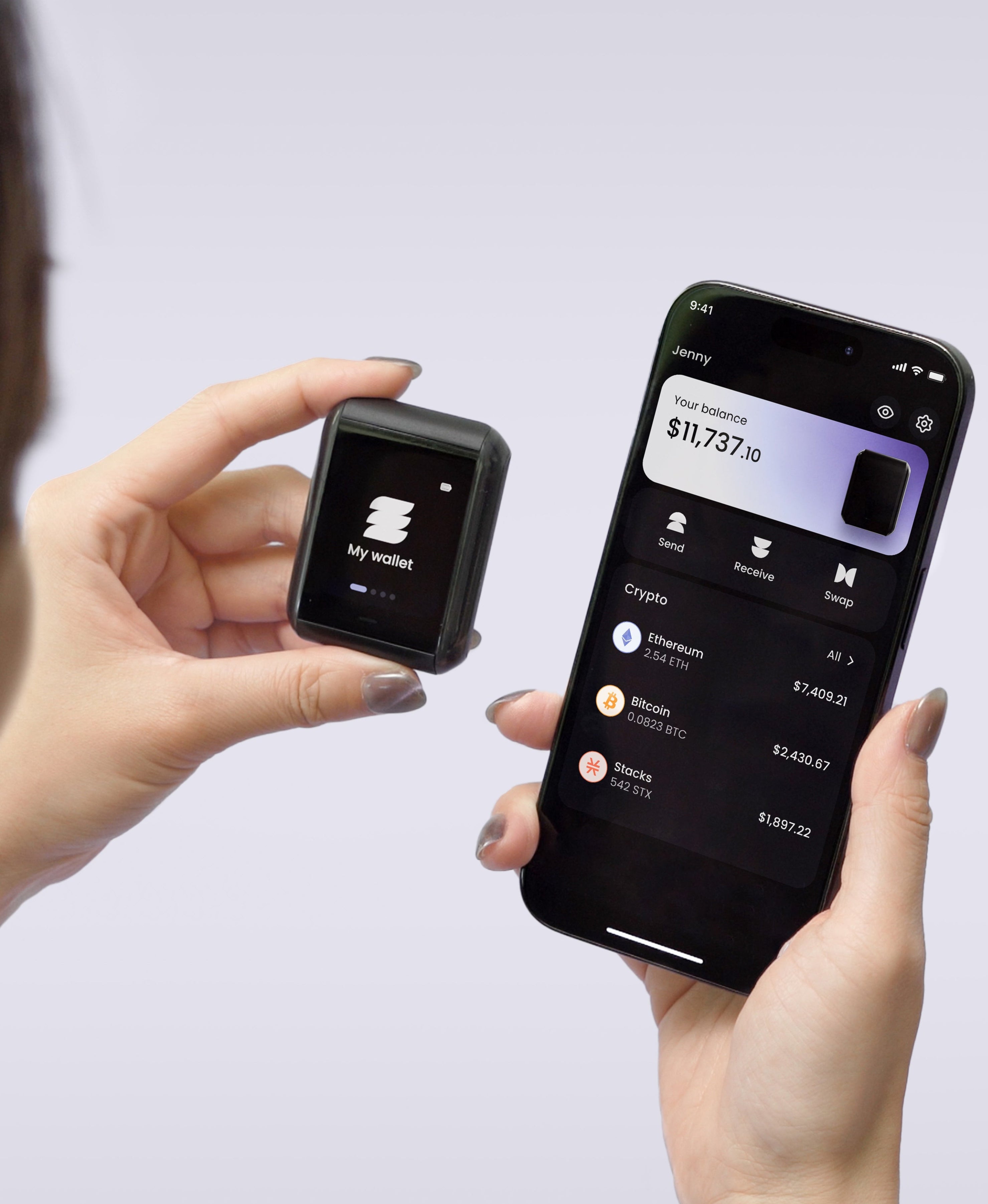
Ryder One keeps your keys offline on an EAL6+ secure element, with every transaction verified on the device's screen and TapSafe Recovery protecting the backup. While we don’t support Ordinals yet, it’s on our roadmap! See how it works.


Share: