

For most of the last decade, if you bought a hardware wallet you got a USB port. Micro-USB, USB-C, sometimes both. It was the obvious choice. Everyone's laptop had one, the cables were cheap, and it gave the wallet a way to push transactions to the connected app.
The problem is that USB is a general-purpose, two-way data interface. The moment your wallet has a port, anything that plugs in can try to talk to it. That's a tradeoff worth looking at if you're choosing a wallet in 2026.
Why USB became the default
Early hardware wallets needed a way to sit between your computer and the blockchain. Bluetooth wasn't trusted, Wi-Fi added too much surface, and phones weren't yet ubiquitous as signing companions. USB was the path of least resistance. It's how Trezor, Ledger, KeepKey, and most of the field shipped their first generations.
It also became the firmware delivery channel. New OS, new coin support, new bug fix? Plug in, click update, follow the prompts. That convenience set up a few of the patterns we now have to defend against.
The attack surface a USB port creates
The port itself. A wallet with a port has a physical interface that responds to anything you plug in. That includes malicious cables and rogue charging stations. Tools like the O.MG cable can act as a keyboard or run a payload while looking like a regular USB-C cable. If your wallet trusts the host and the host is compromised, your transaction-signing flow is now happening alongside untrusted input.
Firmware updates over USB. Several of the largest hardware-wallet incidents have involved the update or companion-software path, not the chip itself. The 2023 Ledger Connect Kit supply-chain attack didn't crack a secure element; it injected malicious code into a software library that wallet front-ends loaded. The lesson isn't that USB caused the bug. It's that USB-based update flows expand the trust chain you have to keep clean.
Public ports and "convenience" cables. Plugging your wallet into a coworking-space dock or a hotel-room USB hub is a worse idea than it sounds. You don't always know what's on the other end.
What goes wrong in practice
Most real-world losses don't come from chip-level attacks. They come from convincing the user to do something USB makes easy:
- Phishing pages that prompt a "firmware update" while the wallet is plugged in
- Fake Ledger Live or fake Trezor Suite installers that intercept addresses
- Malicious browser extensions that swap a destination address right before the user confirms on-device
A wallet with a port doesn't cause any of this on its own. It just keeps the door open for it.
Why portless changes the math
A portless wallet removes the physical interface entirely. There's no USB-C, no micro-USB, no proprietary connector. The only way data moves on or off the device is the radio you choose to use, and the only radio worth shipping for this purpose right now is NFC.
NFC has three properties that matter here:
- It's short range. A few centimeters, not a few meters.
- It only activates on a tap. The wallet isn't broadcasting a signal you have to discover.
- It carries small amounts of data, which suits transaction signing and rules out anything that looks like USB mass storage.
That changes the answer to several of the questions above. There's no cable to swap. There's no firmware-over-USB flow that a phishing page can hijack. There's no "is this charging port safe" question because the wallet doesn't charge through a data port.
What you give up
Portless isn't free. A few tradeoffs are worth naming:
- The wallet needs its own battery. Ryder One uses a rechargeable battery that lasts more than a month, and you charge it wirelessly.
- Some workflows that assumed always-on USB connection have to shift to per-transaction taps via your phone.
- NFC support across exchanges, dApps, and wallets is still catching up to the universal install base of USB. You'll see this gap close fast, but it's there today.
If those tradeoffs aren't acceptable for your setup, a USB wallet is still a real option. The point isn't that USB is unsafe. The point is that the ratio of convenience to attack surface has shifted.
Where Ryder One fits
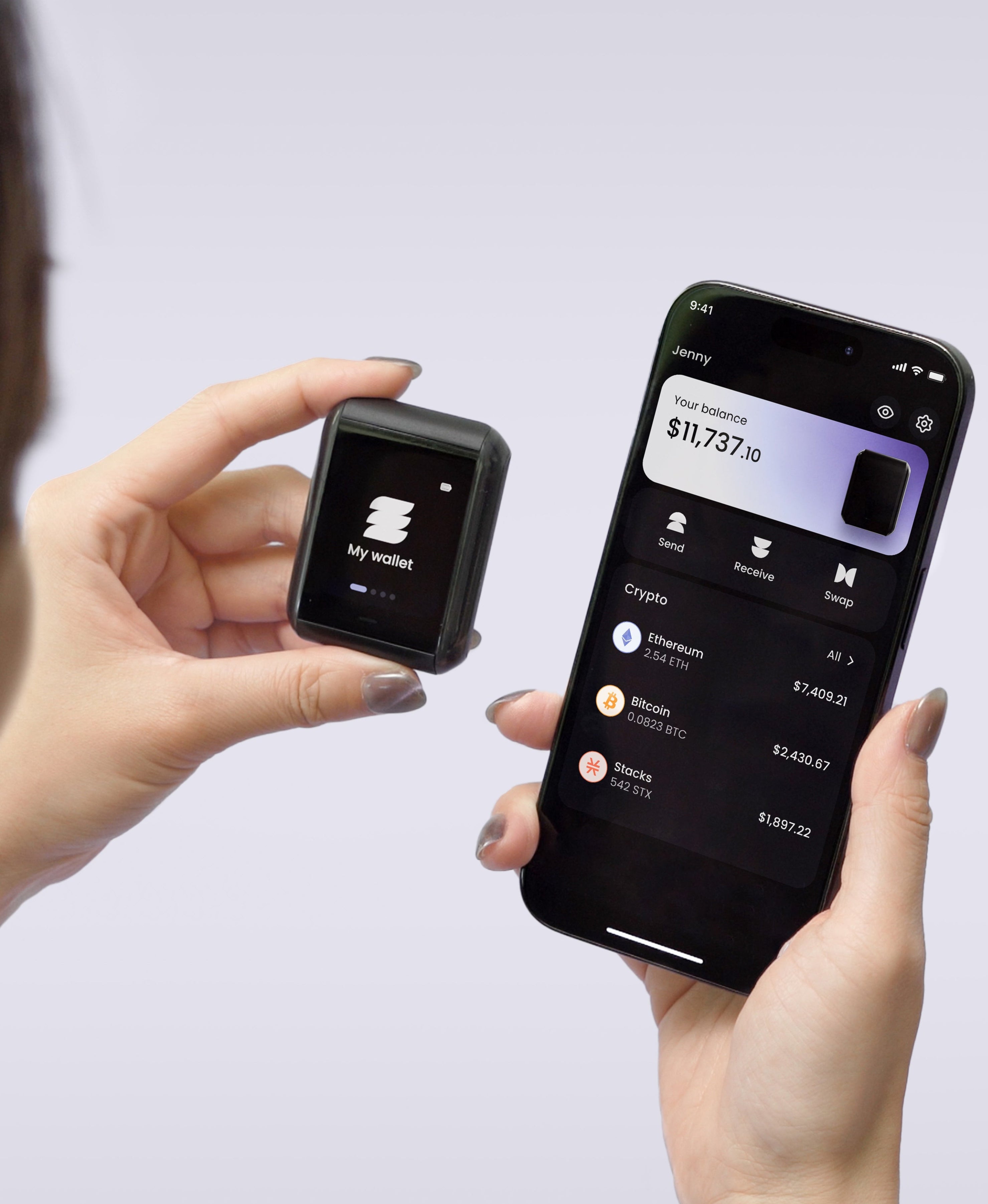
Ryder One was built around this premise. No USB port, no Bluetooth, no Wi-Fi. NFC for signing transactions, a 1.6-inch AMOLED touchscreen for verifying addresses on the device itself, and an EAL6+ certified secure element from Infineon holding the keys.
If you've been on the fence about portless wallets, here's the short version: the things you used USB for, you can mostly do over a phone tap now. The things you didn't want USB to enable, you don't have to defend against.
How to evaluate any wallet's attack surface
When you compare two wallets, ask:
- What physical interfaces does it have, and what protocols do they speak?
- How do firmware updates get delivered, and what verifies them?
- Is the secure element separate from the application processor, and what's its certification level?
- What does the recovery flow rely on, and is that flow itself attackable?
A portless design answers the first question with "NFC only," which makes the second one a lot easier to reason about.
FAQ
Are USB hardware wallets unsafe?
Not inherently. The chip inside a quality USB wallet is the same kind of secure element you'd find in a portless wallet. The risk is in the surrounding flows: cables, companion apps, firmware updates, and the host computer. Those flows are larger and harder to keep clean than a single NFC tap.
Can NFC be intercepted?
NFC operates at distances measured in centimeters and only when both sides are active. The signing protocol on top of it is encrypted. Capturing a useful exchange in the wild is closer to picking a pocket than to sniffing Wi-Fi from across the room.
Do I have to switch from my laptop workflow?
Not really. You can still hold custody of your keys and sign from your laptop. The phone becomes a relay between the dapp and the wallet. The signing itself happens on the device you tap, which is where you want it to happen.
Why isn't every new wallet portless then?
Portless designs need on-device batteries, NFC antennas, and a willingness to break the established UX pattern. That's a non-trivial hardware bet. The companies that committed early are the ones shipping it now.
Bottom line
USB was a reasonable default. It isn't the only one anymore, and the reasons to keep it are getting weaker every year. If you're choosing your next hardware wallet, think about what you want plugged into your keys.


Share: