

Crypto attracts scams the way candy aisles attract toddlers. Public ledgers, irreversible transactions, anonymous addresses, and global reach give fraudsters a working environment they don't have anywhere else. The result is an entire industry of theft running parallel to the legitimate one, evolving as fast as the technology it preys on.
The good news is that most cryptocurrency scams come in a small number of recognizable shapes. Once you know the shapes, you can spot them on contact. This is a field guide to the seven patterns that account for the bulk of crypto theft in 2026, and the structural defense that closes most of them.
Why crypto attracts scams
Three properties of crypto make it a fraud magnet.
Transactions are non-reversible. Once a payment is in a confirmed block, no chargeback exists. The fraud department is you.
The system is global and permissionless. A scammer in any time zone can target a victim in any other, with no bank or platform standing in between to flag the pattern.
The asset is bearer. Whoever holds the keys controls the funds, the same way whoever holds physical cash controls cash. There's no recovery system built into the protocol because the protocol's main feature is removing intermediaries.
These same properties are the source of crypto's appeal. They're also the source of its scam surface. The two come together.
The seven patterns
1. Phishing
A fake website, email, or app that captures your seed phrase or tricks you into signing a malicious transaction. Phishing is the oldest scam on the internet adapted to crypto. The newest variants use AI-generated voice cloning to impersonate exchange support over the phone.
Defense: never type your seed phrase into anything. Use a hardware wallet so the keys never reach a website even if you click the wrong link.
2. Fake support
A "support agent" reaches out via DM after you post a question on Twitter, Discord, or Reddit. They walk you through a "fix" that involves importing your seed phrase to a "synchronization tool" or signing a transaction that drains your wallet.
Exchange support teams don't DM you first. They never ask for your seed phrase. The first move of any DM that claims to be support is to mute and report.
3. Pig butchering
A long-form scam where the operator builds a romantic or friendly relationship with the victim over weeks, then introduces them to a "trading platform" that shows fake gains. The victim deposits more money chasing the gains, and at some point the platform locks withdrawals or vanishes. One recent academic blockchain-tracing study estimates as much as $75 billion in global victims’ losses to pig-butchering scams.
Defense: any unsolicited contact that ends in an investment opportunity is a scam, regardless of who introduced you, how attractive they seem, or how good the platform looks.
4. Rug pulls and exit scams
A token, NFT, or DeFi project that vanishes with the funds. The team disappears, the website goes 404, and the on-chain contract gets drained. Sometimes the rug is fast (within hours of launch). Sometimes it's slow (a year of "building" while withdrawals get harder).
Defense: avoid custodial yield products from anonymous teams. Check token holder concentration on Etherscan before buying. Treat 20%+ APY in stable assets as a sign that someone is taking risk you can't see.
5. Ponzi and yield scams
Returns paid to existing users out of new deposits, dressed up as "automated trading," "DeFi yields," or "AI strategies." The math doesn't work for long. Withdrawals slow, then stop, then everyone learns the returns were always paid out of new deposits.
Defense: if a stable asset is paying yields multiples above the broader market, the source of the yield is the question to ask. If you can't trace it to a specific borrower, lender, or protocol, the source is probably new deposits.
6. Address poisoning
An attacker sends you a tiny token from an address that visually resembles one you've sent to before. The hope is that next time you send, you copy the most recent address from your wallet history and don't notice the change. The funds go to the attacker.
Defense: never copy addresses from transaction history. Always paste from a verified source. A hardware wallet's on-device screen also helps, since you can see the recipient before signing.
7. Hardware wallet supply-chain attacks
A "hardware wallet" sold on a marketplace arrives pre-configured with the attacker's seed phrase. The user transfers funds in. The attacker drains them. Or a real wallet has its firmware swapped before delivery.
Defense: buy hardware wallets only from the manufacturer or an authorized reseller. Verify firmware authenticity at first boot. Never use a seed phrase that came pre-loaded. Generate your own.
The patterns that span all seven
Pull back and you'll notice the same elements show up in most of these.
Urgency. "Act in the next 24 hours." "Limited slots." "Withdrawals close at midnight." Real opportunities don't have countdown timers.
Authority impersonation. The scammer claims to be from your exchange, your wallet provider, the IRS, or a government regulator. Established institutions reach you through verified channels you initiated, not unsolicited DMs.
Custodial dependence. The victim hands the keys to someone else, voluntarily (yield platforms, trading platforms) or by trickery (phishing, fake support). The custody handover is the hinge of the scam.
The third one is the deepest. Most scams in this list either start with the victim already in custodial structure, or end with them leaving custody in a moment of trust. Take the custody surface to zero and most of these patterns lose their grip.
The structural defense
The scam-resistance of self-custody isn't perfect. Phishing still exists, signing malicious transactions still happens, and supply-chain attacks remain a small but live threat. What self-custody does is collapse the surface area to a smaller set of failure modes that the user can defend with a smaller set of habits.
Hold your own keys. Use a hardware wallet for any holdings that would hurt to lose. Verify every transaction on the device's own screen before signing. Buy the device direct from the manufacturer. Generate your own seed phrase. Never type it into anything.
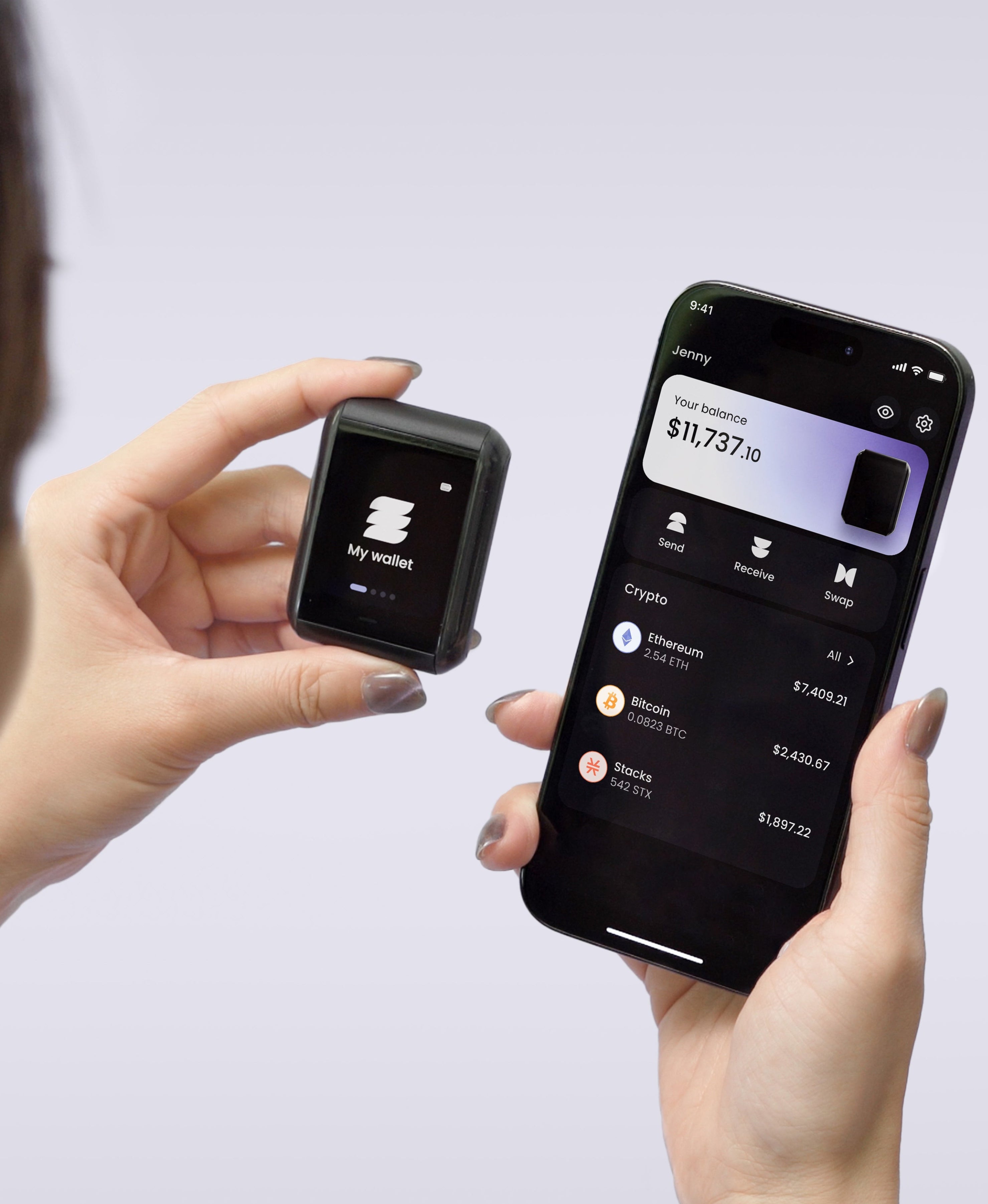
The standard backup is a 24-word seed phrase you write on paper. Metal plates last longer, but your security still hinges on one piece of metal surviving every fire, flood, and move. We built Ryder One to remove that single dependency. TapSafe Recovery splits the wallet backup across a battery-free Recovery Tag, your phone, and an optional circle of Recovery Contacts. No single layer on its own gives anyone access. The seed phrase remains on-device as a last resort.
The shortest version
Most cryptocurrency scams in 2026 fit one of seven shapes: phishing, fake support, pig butchering, rug pulls, Ponzi yield, address poisoning, and supply-chain attacks. Three properties run through all of them: urgency, fake authority, and custodial dependence. The strongest single move you can make is to reduce the third one to as little as possible.
Shrink your scam surface to its smallest possible size. Ryder One keeps your keys offline, your transactions verified on-device, and your backup distributed across three layers. See how it works.


Share: