

- by Ryder Team
The BIP-39 word list, explained simply
The BIP-39 word list, explained simply
- by Ryder Team
When you set up a hardware wallet for the first time, the 12 or 24 words it shows you feel like they were picked at random from a dictionary. They were not. Every word comes from one specific list of 2,048 English words, called the BIP-39 word list. Understanding where that list comes from, why it was designed the way it was, and what rules it follows makes the whole seed phrase system much less mysterious.
This post is for curious users, not just engineers. The math is kept light, but the main ideas are simple.
BIP stands for Bitcoin Improvement Proposal. BIP-39 is the proposal, written back in 2013, that defined a standard way to turn a long secret number into a short list of human-friendly words. The full BIP-39 spec is public on GitHub and anyone can read it.
The big idea was simple. Long random numbers are terrible for humans. We can't read them, we can't write them down without mistakes, and we can't tell one apart from another. Words are easier. So instead of showing users a raw secret, the wallet chops the secret into small chunks and turns each chunk into a word from a fixed list.
Every modern wallet that supports BIP-39 uses the same list. That means a seed phrase from one wallet can usually restore your coins on another wallet, as long as both support BIP-39. This is why losing a hardware wallet isn't the end of the world. You can rebuild on a different device.
Computers think in powers of two, and 2,048 is 2 to the 11th power. Each word in the list stands for exactly 11 bits of a bigger secret, which keeps the math clean: a 12-word phrase is 132 bits (11 times 12), and a 24-word phrase is 264 bits. Those bit counts match standard key sizes used in cryptography, so the fit is on purpose.
The list isn't picked from a random dictionary. The people who wrote BIP-39 chose 2,048 words that follow a few strict rules. You can see the full list on GitHub.
These rules aren't decorative. Each one stops a specific kind of mistake.
The first four letters are unique. No two words in the list share the same first four letters. That means most backup kits can stamp only the first four letters of each word onto a metal plate, and the full word is still recoverable by checking the list. It makes stainless steel backups faster, though the underlying setup still depends on that one plate surviving everything. We built TapSafe Recovery on Ryder One so the backup is split across multiple objects instead of pinned to one.
No ambiguous words. Words that sound like other words, look like other words, or differ only by one letter are cut. The list avoids things like weather and whether both being present. This stops users from writing the wrong one on their backup by accident.
Mostly short words. Shorter words are easier to stamp, easier to write, and easier to read back. The average word in the BIP-39 list is about five letters.
No homophones. Words that sound the same when spoken out loud were skipped. This matters if you ever have to read a phrase aloud to check it.
No plural-singular pairs. The list doesn't contain both bird and birds, because that kind of pair is easy to confuse.
Common, everyday English. Most words on the list are words a 10-year-old would recognize. That makes them easier to remember, though memorizing a seed phrase isn't recommended. Wikipedia's page on mnemonics covers why human memory isn't a backup medium.
Your wallet picks a random number. For 12 words, the number is 128 bits of randomness plus 4 bits of a built-in checksum, making 132 bits total. For 24 words, it is 256 bits of randomness plus 8 bits of checksum, making 264 bits.
That number is then chopped into groups of 11 bits. Each 11-bit chunk points to one word in the BIP-39 list. If the chunk's value is 0, the wallet picks the first word on the list. If the chunk's value is 2047, the wallet picks the last word. Each word in your seed phrase is one of those chunks, in order.
The checksum at the end is a small trick. It lets any BIP-39 wallet tell, within a fraction of a second, whether a seed phrase is one you actually wrote down, or one with a typo. If the checksum doesn't match, the wallet tells you something is wrong with the phrase. This catches a surprising number of mistakes. Wikipedia's entry on checksums covers the general idea.
Users sometimes think of picking their own 12 words, from memory, as a clever trick. It'sn't. The reason the wallet generates the phrase for you is that human-picked words are never random enough to survive a guessing attack.
Any 12 words you'd pick are biased toward common words, words you know, themes you like. A computer can guess a human-picked phrase in seconds. A true 12-word BIP-39 phrase would take all the computers on Earth more time than the age of the universe to guess. The difference isn't small.
If you ever see a site offering to help you pick meaningful words for your seed phrase, close the tab. The wallet picks the words for you for a reason.
Understanding BIP-39 doesn't change the day-to-day rules of handling a seed phrase, but it clears up some common questions.
Can I translate my seed phrase into another language? Technically yes. BIP-39 lists exist for many languages, including Japanese, Spanish, French, Korean, and Chinese. But most wallets default to English, and switching languages on restore can trip people up. Stick with the English list unless you have a strong reason.
Can I shorten each word to four letters on my backup? Yes. The first-four-letters rule is why. A metal plate that stamps only four letters per word is the standard answer. The trade-off is that your security still hinges on that one plate surviving everything; the wallet we built around a different answer is Ryder One, where TapSafe Recovery spreads the backup across a Recovery Tag, your phone, and optional Recovery Contacts.
If one word is wrong, is my whole phrase worthless? Not always. Because of the checksum, any BIP-39 wallet can spot a typo and, in many cases, suggest the correct word. But fixing a typo is slow and error-prone. Writing the phrase correctly the first time is much better.
Can I combine half of one seed phrase with half of another? No. A seed phrase is a single unit. Splitting it or mixing it gives you something that doesn't restore anything.
The BIP-39 list is a piece of design that works quietly in the background of every hardware wallet. It's the reason seed phrases are short, portable, and cross-compatible. The broader self-custody setup builds on top of it, but everything starts with those 2,048 carefully-chosen words.
Any wallet can claim BIP-39 support. The real difference is where the seed is generated, and where it lives after that. A wallet that follows the BIP-39 list but then stores your seed in a cloud backup has already given up most of what the standard is there to protect.
We built Ryder One on top of BIP-39 with one structural change. The seed is generated on a secure chip, shown on the device once, and from that point most users will never need to touch it again. TapSafe Recovery splits the wallet backup across a battery-free Recovery Tag, your phone, and an optional circle of Recovery Contacts, so day-to-day recovery doesn't depend on a 24-word phrase surviving anywhere outside the device. The seed phrase is still there on the device if you ever want to export it, since BIP-39 means you are never locked to our hardware.
If you want a wallet that respects BIP-39 at both ends, standards-compliant generation and a secure chip that keeps the seed out of reach of anything online, Ryder One is the clean answer. Full specs and pricing live at ryder.id.
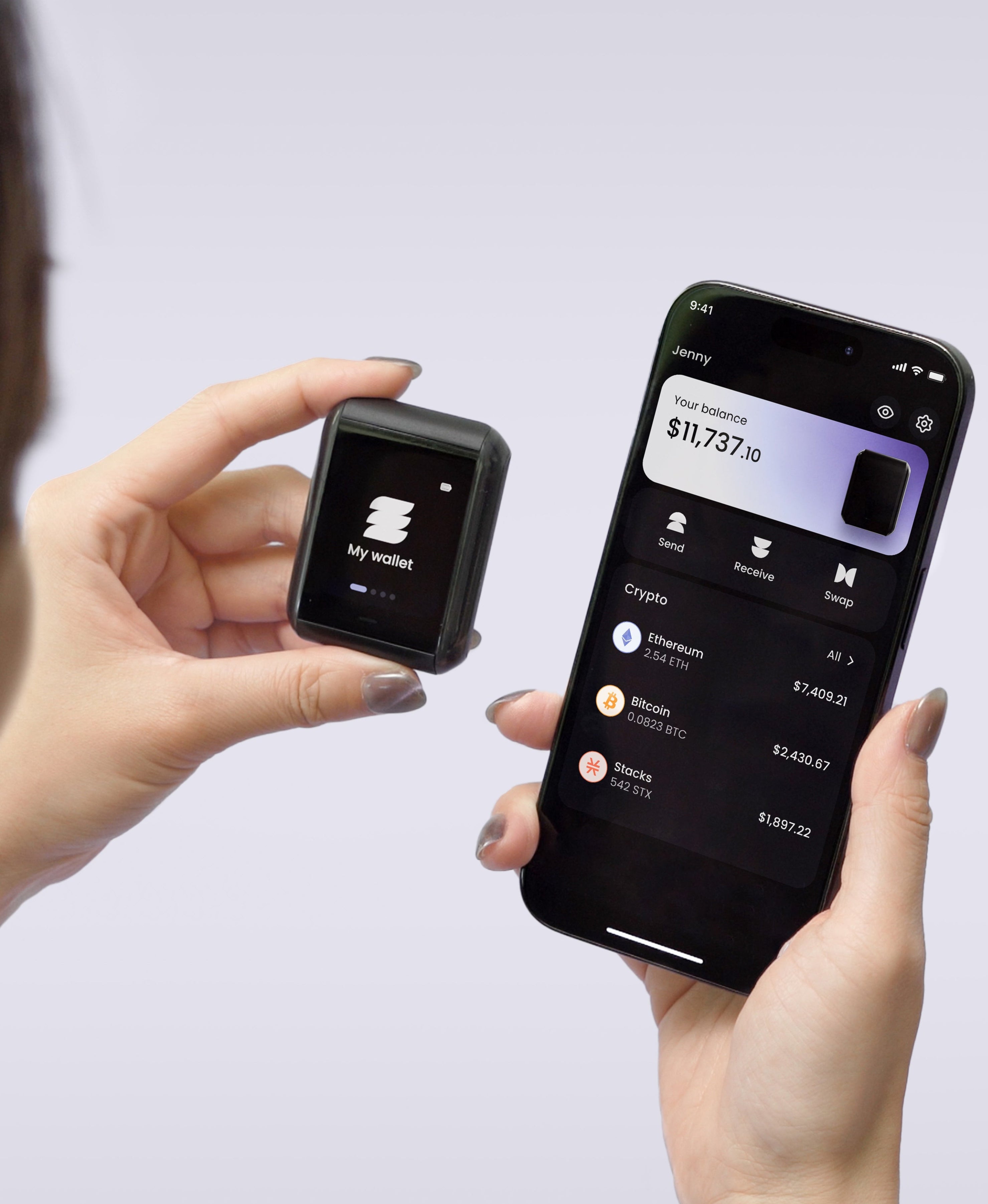
The only crypto wallet you can install on a crowded subway.
Set it up in less than 60 seconds and just tap your phone to send, swap, and recover.

Share: