


A Bitcoin gift card is one of the simplest ways to give someone crypto without making them set up an exchange account first. The market expanded through 2024 and 2025, with major retailers (Walmart, CVS, Coinstar kiosks) adding crypto gift cards alongside traditional Visa and gift card options. The user experience is direct: the buyer picks a USD amount, the recipient redeems a code, and the Bitcoin lands in their account or wallet.
There are also trade-offs. Most Bitcoin gift cards involve a third-party platform that holds the funds until redemption, which means the gift starts custodial and only becomes self-custody after the recipient takes action. Fees, expiration dates, and the differences between providers all matter.
This piece walks through how Bitcoin gift cards work in 2026, the major options, the trade-offs each one carries, and how to set up a Bitcoin gift that lands cleanly in the recipient's own hands.
How Bitcoin gift cards work
The basic mechanic: a buyer purchases a gift card for a fixed USD amount, the card carries a redemption code, and the recipient redeems the code on the gift card provider's platform to receive Bitcoin in an account or wallet they control.
There are two main models.
Custodial redemption. The recipient redeems the code into an account on the gift card provider's platform (Bitrefill, BitPay, or similar). The Bitcoin sits in the provider's custody until the recipient withdraws to a wallet they control. This is the most common model in 2026 because of regulatory and operational simplicity.
Direct-to-wallet redemption. The recipient redeems the code and is prompted to provide a Bitcoin address (their own wallet's receive address). The provider sends the Bitcoin directly to that address, with no custodial holding in between. Less common but cleaner for self-custody-minded recipients.
The difference matters. A custodial redemption means the recipient has to take action to move the Bitcoin to their own wallet; if they don't, the funds stay on the provider's platform. A direct-to-wallet redemption puts the recipient in self-custody from the moment of redemption.
The major options in 2026
Several providers dominate the US Bitcoin gift card market.
Bitrefill. The largest player. Offers gift cards purchased with Bitcoin (sending crypto to friends in fiat-redemption form) and traditional gift cards purchased with fiat that redeem to Bitcoin. Strong international coverage and Lightning Network integration.
BitPay. Established crypto payment processor with gift card products. Lower retail visibility than Bitrefill but solid back-end.
Retailer-issued cards. Some retailers (Coinstar kiosks at supermarkets, certain CVS and Walmart locations) sell Bitcoin gift cards alongside standard gift cards. These tend to be more expensive due to retailer markups but offer convenience.
Crypto exchange gift options. Some exchanges (Coinbase, in the US) offer "gift Bitcoin" features where a sender sends Bitcoin to a recipient's email address. The recipient signs up for the exchange to receive the funds. Not strictly a gift card, though functionally similar.
Fees and expiration
Bitcoin gift cards typically carry higher fees than fiat gift cards because the provider is bridging two systems and taking exchange rate risk during the redemption window.
Typical fee structures:
- Purchase fee. 2-5% of the card's value, paid at purchase.
- Redemption fee. Some providers charge an additional fee at redemption, especially for direct-to-wallet flows.
- Network fee. When the Bitcoin moves to the recipient's wallet, on-chain Bitcoin transaction fees apply. Lightning Network redemptions avoid this.
Expiration policies vary. Some Bitcoin gift cards expire after 6-12 months. Others don't expire but allow the provider to update terms over time. Check the specific provider's policy before purchasing, especially for gifts intended to sit untouched for a while.
Where Bitcoin gift cards fall short
Three structural limitations matter.
They start custodial. Most gift cards aren't self-custody until the recipient takes action. The default state after redemption is funds-on-platform, with the provider holding the keys.
Price exposure during the gap. If a gift card is purchased at one Bitcoin price and redeemed days or weeks later, the BTC value of the gift can shift significantly. Most providers handle this by locking in the BTC amount at purchase time, though the policy varies.
Onboarding friction. A recipient who has never set up a crypto wallet still has to either accept the custodial provider's platform or learn enough to set up self-custody. The gift card removes one barrier (exchange signup) and leaves others in place.
For some recipients (especially those who never wanted to learn crypto), the custodial platform model is fine. For recipients who want self-custody from the start, the gift card model is a half-step that requires follow-through.
The self-custody alternative
The cleaner approach for gifting Bitcoin to a self-custody-inclined recipient skips the gift card entirely.
Option 1: Direct on-chain send. Send Bitcoin directly to the recipient's wallet address. Requires the recipient to have a wallet already set up.
Option 2: Hardware wallet as a gift. Give the recipient a hardware wallet with a small amount of Bitcoin already loaded. The wallet ships with the recovery flow built in, and the recipient takes possession with self-custody already established.
Option 3: Paper wallet with a private key. Generate a Bitcoin paper wallet offline, fund it, and give the paper to the recipient. They redeem the funds by importing the private key when they're ready. Bitcoin paper wallets share many of the same fragility issues that Ethereum ones do, so this option works best as a long-horizon gift rather than active storage.
For long-term gifts (a Bitcoin gift to a younger family member meant to sit for years), Option 2 or 3 fits better than a gift card. The recipient gets the actual Bitcoin, not a redemption code that might expire.
Where Ryder One fits
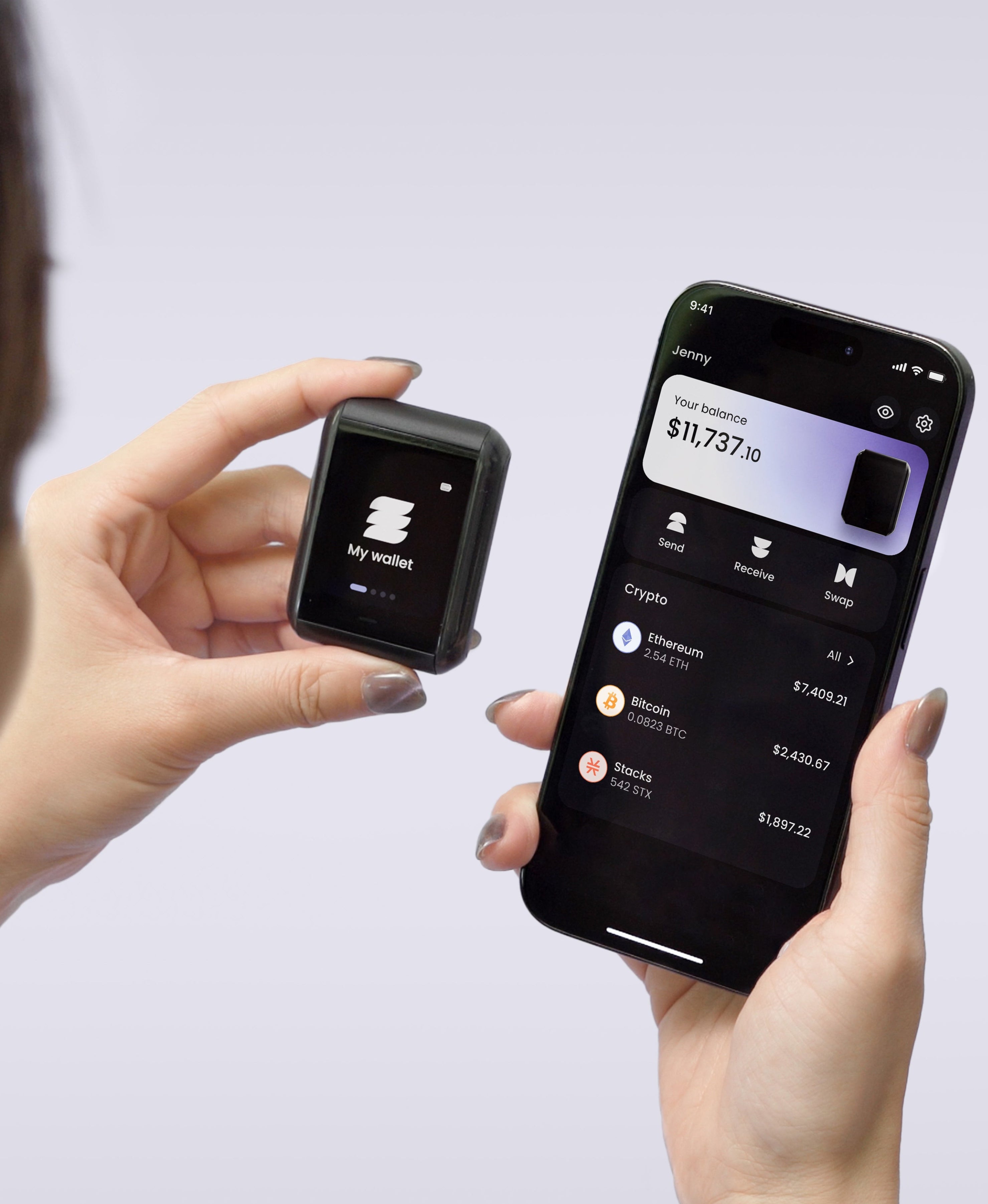
Ryder One can be the structural answer to "I want to gift Bitcoin and have the recipient end up in self-custody from day one." The device ships with TapSafe Recovery already built in, the setup takes about 60 seconds, and the recipient can use their phone to complete the onboarding flow without any crypto exchange in the loop.
For gifters loading the wallet before handing it over: load Bitcoin from your own wallet to the recipient's Ryder One receive address, verify on the device's 1.6-inch AMOLED touchscreen, and sign with a physical button press. The wallet then ships with the funds already on the device, ready for the recipient to take ownership through the standard setup flow.
For the recipient: the EAL6+ Infineon SLC38 secure element holds the private key offline. Recovery runs through the Recovery Tag, the recipient's phone backup, and optional Recovery Contacts. No exchange account needed at any point.
The bottom line
Bitcoin gift cards are a convenient way to give Bitcoin to someone who doesn't have a crypto wallet, with the trade-off that the gift starts custodial and only becomes self-custody if the recipient takes follow-up action. Fees typically run 2-5%, and expiration policies vary by provider. For long-term gifts or recipients who want self-custody from the start, a hardware wallet preloaded with Bitcoin is a cleaner alternative; the recipient takes possession in self-custody without any intermediate platform in the chain.
Give Bitcoin in self-custody from day one. Ryder One ships with TapSafe Recovery built in, EAL6+ secure element holding the private key, and a setup flow the recipient can complete in 60 seconds. See how it works.


Share: