


Bitcoin's market dominance climbed steadily through 2025 and into 2026, reaching levels not seen since 2021. As of June 2026, BTC dominance sits at roughly 63% of total crypto market cap, the highest sustained level in four years.
For altcoin holders, the dominance number signals something specific: capital flowing into crypto is parking in Bitcoin rather than rotating out into Ethereum, Solana, or smaller-cap tokens. The "altcoin season" thesis (where Bitcoin gains attract capital that then disperses across the broader crypto market) hasn't played out this cycle the way it did in 2017 or 2021.
This piece walks through what Bitcoin dominance measures, why it matters for portfolio construction, what's different about this cycle, and what self-custody holders should take from the dominance trend.
What Bitcoin dominance measures
Bitcoin dominance (BTC.D) is the share of total cryptocurrency market capitalization that Bitcoin holds. The calculation is:
BTC.D = (BTC market cap) / (total crypto market cap)
If BTC dominance is 60%, then 60% of all the dollar value in crypto sits in Bitcoin, with the remaining 40% distributed across every other token combined.
Historically, BTC dominance has cycled between roughly 35% (deep altcoin seasons, when smaller tokens outperform) and 70% (Bitcoin-led periods, when capital concentrates). The cycles haven't been periodic; they've responded to specific events (DeFi summer 2020, NFT boom 2021, regulatory crackdowns 2022).
Where dominance sits today
As of June 2026, BTC dominance is around 63%, close to a four-year high. The trend through 2025 and into 2026 has been steadily up:
- Q1 2025: ~52%
- Q4 2025: ~58%
- Q2 2026: ~63%
For comparison, the 2021 altcoin season ended with BTC dominance at ~39%, meaning altcoins as a group held nearly two-thirds of all crypto market cap. The reversal since has been one of the larger sustained dominance moves on record.
Why dominance is climbing
Three structural reasons.
- Spot Bitcoin ETFs created a one-way bridge. The ETFs launched January 2024 brought traditional investment capital into Bitcoin specifically. ETF buyers aren't typically rotating into altcoins; they're getting Bitcoin exposure through a regulated wrapper. This created sustained dollar inflows that don't have a parallel in altcoin markets.
- Institutional adoption is BTC-only. When public companies add crypto to their balance sheets, they almost universally pick Bitcoin. Strategy holds 845,256 BTC. Other treasury companies (Marathon Digital, MetaPlanet, Fold before its sale) hold Bitcoin. Almost no public company has Ethereum or Solana on its balance sheet. Institutional flows are heavily Bitcoin-weighted.
- Regulatory clarity arrived first for Bitcoin. The CLARITY Act being debated in the Senate treats Bitcoin as a clearly defined commodity. The classification for major altcoins (ETH, SOL) is improving but still in motion. Capital flows toward the asset class with the least regulatory ambiguity.
The combination has been Bitcoin pulling capital that, in earlier cycles, would have rotated into altcoins.
What this means for altcoin holders
If you hold ETH, SOL, or a basket of smaller-cap tokens, the dominance trend has a few implications.
Your portfolio's correlation to Bitcoin is high. When BTC drops 18%, the altcoin basket usually drops 25 to 35%. The downside correlation runs almost 1:1, while the upside correlation has been weaker (altcoins haven't rallied as hard during Bitcoin's recoveries in 2026).
The "wait for altcoin season" thesis depends on dominance reversing. If dominance keeps climbing, capital doesn't rotate to alts; if dominance reverses, alts can outperform. Neither outcome is certain, but the current trend has been clear for 18+ months.
The structural argument for altcoins (DeFi, NFTs, gaming, application-layer use cases) hasn't gone away, but the price action has been disconnected from the structural argument. Tokens with real revenue (some L2s, some DeFi protocols) have underperformed in 2026 despite improving fundamentals.
For altcoin holders, the question is whether the capital that would price those tokens up will arrive on the timeline the investor needs, regardless of whether the underlying projects are technically strong.
Where self-custody fits across the dominance landscape
For Bitcoin holders, the dominance trend reinforces the structural choice to hold BTC directly. The capital flowing in is concentrating in Bitcoin, and the wallets receiving that capital include a growing share of self-custody addresses.
For altcoin holders, the dominance trend doesn't change the self-custody calculus directly. Whether you're holding BTC, ETH, SOL, or a smaller cap, the question of "do you hold the keys" is independent of which asset class is winning.
A multi-chain hardware wallet (which most modern hardware wallets are) covers both cases.
Where Ryder One fits
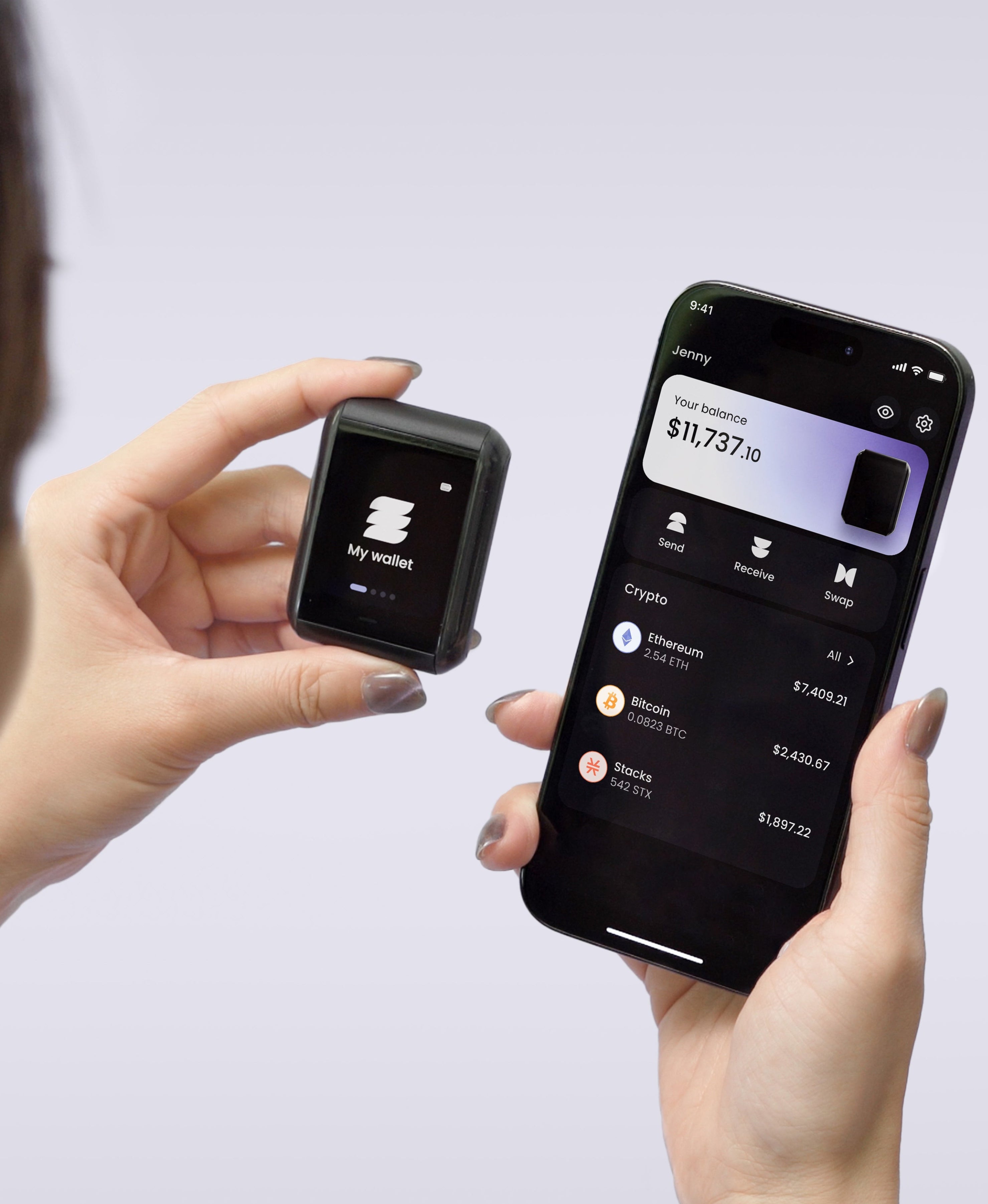
Ryder One supports Bitcoin, Ethereum, Solana, and a growing list of top ERC-20 and SPL tokens. For a holder running a Bitcoin-dominant portfolio with smaller altcoin positions, the device handles the full portfolio without juggling multiple wallets.
The EAL6+ Infineon SLC38 secure element holds private keys for every supported asset. Every transaction is verified on the device's 1.6-inch AMOLED touchscreen with a physical button press. TapSafe Recovery splits the backup across hardware and people you trust.
The bottom line
Bitcoin dominance at 63% in June 2026 is a four-year high, sustained by ETF flows, institutional adoption, and regulatory clarity that favors BTC specifically. The pattern has implications for portfolio construction (Bitcoin's relative weight in crypto allocations keeps growing) and for altcoin holders' expected returns (capital that historically rotated to alts isn't rotating). For holders making custody decisions, the dominance trend supports holding Bitcoin directly through self-custody, with altcoins handled by the same multi-asset wallet.
Hold the dominant asset on the dominant security model. Ryder One supports Bitcoin, Ethereum, Solana, and major tokens, with every key on an EAL6+ secure element. See how it works.


Share: