

On Friday March 10, 2023, Silicon Valley Bank failed. Over the weekend, Circle disclosed that 3.3 billion USD of USDC's reserves were stuck at SVB and couldn't be moved until US regulators decided what to do. By Saturday morning, USDC was trading at 0.87 USD on Coinbase. By Monday, the Federal Reserve had guaranteed SVB depositors, USDC reserves were intact, and the peg snapped back to par. Holders who'd panicked over the weekend at 0.90 had locked in losses. Holders who'd done nothing got their full dollar back. That weekend was the most informative event for stablecoin holders in years. It clarified what backing actually depends on, how depegs behave under stress, and where self-custody matters more than most people realize. This piece walks through what a stablecoin depeg is, what happened with USDC in March 2023, the other depeg events worth knowing about, and what holders can do to position for the next one.
What a depeg actually is
A stablecoin's price is held to its target (usually one US dollar) by an arbitrage mechanism. Authorized institutional users can redeem the stablecoin for dollars from the issuer at par. If the stablecoin trades below par on secondary markets, arbitrageurs buy it cheap, redeem at par, and pocket the difference. The arbitrage closes the gap. If the stablecoin trades above par, the reverse arbitrage happens. The mechanism works as long as the redemption path is open and the market believes the reserves are real. When either condition breaks, the peg breaks too. A depeg, in practice, is the gap between secondary-market price and the peg target when arbitrageurs either can't redeem (the redemption is paused or impaired) or won't (because they don't trust the reserves). The gap is the market's discount on the issuer's promise.
What happened to USDC in March 2023
Silicon Valley Bank held a meaningful portion of Circle's reserve deposits. When SVB failed, those reserves were frozen pending FDIC resolution. Circle disclosed the exposure publicly on Friday night. The market reaction was immediate. On Saturday, USDC traded between 0.87 and 0.93 USD across major venues. Liquidity thinned. Several exchanges paused USDC deposits and withdrawals, partly to prevent runs and partly to manage their own treasury exposure. Holders who tried to redeem through Circle's institutional channel found the channel effectively closed for the weekend (Circle suspended new mint and redeem operations until the SVB situation resolved). Holders on exchanges couldn't move USDC out of the exchanges that had paused withdrawals. On Sunday evening, the Federal Reserve, FDIC, and Treasury announced a guarantee for all SVB depositors. By Monday morning, Circle's reserves were intact and the redemption path was open again. USDC's price recovered to within a fraction of a cent of one dollar within hours. The full peg break and recovery happened in roughly 60 hours. Holders who'd sold into the gap at 0.90 USD lost 10 cents per dollar. Holders who'd held their USDC waited a weekend and got everything back.
Other depeg events worth knowing
USDT, October 2018. Tether briefly traded to 0.85 USD during a period of banking-relationship instability. Recovered within a week. The depeg was driven by market skepticism about reserves rather than a specific reserve failure, and it foreshadowed years of similar (smaller) wobbles. TerraUSD/UST, May 2022. Algorithmic stablecoin pegged through arbitrage with a sister token (LUNA). The peg broke when a coordinated set of withdrawals overwhelmed the arbitrage capacity. UST never recovered. LUNA collapsed in parallel. Roughly 40 billion USD of value was destroyed in days. The lesson: algorithmic stablecoins without real reserves are a different animal from reserve-backed stablecoins, and history has not been kind to the algorithmic model. BUSD, 2023. Paxos was ordered by the New York Department of Financial Services to stop minting BUSD. The token didn't depeg, but the loss of issuance and the wind-down trajectory made it less useful as a holding. By 2024, BUSD had effectively been replaced by USDC and FDUSD in most use cases. Smaller stablecoin depegs. Various smaller stablecoins (sUSD, USDD, others) have wobbled over the years. The pattern is similar each time: reserves get questioned, the redemption path slows, the gap widens, the gap either closes (if reserves were real) or doesn't (if they weren't).
What holders learned
Four lessons stand out from the depeg history. Reserve composition matters during a crisis. USDC's reserves were largely in cash and Treasuries, with the SVB exposure as the weak link. UST's reserves were largely in LUNA. The reserve composition determined whether the depeg was a temporary liquidity problem or a permanent insolvency. The redemption path matters more than the secondary-market price. Holders who could redeem with the issuer at par recovered. Holders who could only trade on secondary markets during the panic took the worst prices. Exchanges sometimes make depegs worse, not better. Several exchanges paused USDC withdrawals during the March 2023 weekend. Holders couldn't act on their own positions until the exchange decided it was safe to lift the pause. Those holders effectively lost the optionality their positions were supposed to give them. Panic-sellers lose more than holders. In every reserve-backed stablecoin depeg that recovered, holders who held got their dollar back. Holders who sold into the gap locked in the loss. The exception is the algorithmic case (UST), where the peg didn't recover. The reserve-backed cases historically have.
Why self-custody matters most during a depeg
The asymmetry holds: when stablecoins are stable, holding on an exchange is convenient and low-risk. When stablecoins are unstable, holding on an exchange means waiting for the exchange to decide what you're allowed to do with your position. In self-custody on a hardware wallet, you can move, swap, or hold during a depeg on your own timeline. You can sell into the gap if you think it won't recover. You can hold through if you think it will. You can swap to a different stablecoin or to ETH or to Bitcoin if you want a different exposure. The exchange isn't in the path of any of those decisions. None of this changes the issuer risk. If Circle truly becomes insolvent, your USDC drops regardless of where it's held. What self-custody removes is the second layer: the exchange that might pause withdrawals at the worst possible moment, leaving you with the issuer risk plus a frozen account.
What to actually do
Three habits worth setting up before the next depeg. Don't concentrate stablecoin holdings on a single exchange. If most of your USD-pegged crypto is on Coinbase, you're exposed to Coinbase pausing withdrawals during a stress event. Split holdings between self-custody and exchanges if you need the exchange for trading, but don't park large positions on the exchange long-term. Know the reserve composition of any stablecoin you hold. Circle publishes monthly attestations of USDC reserves. Tether publishes quarterly. Smaller stablecoins vary widely. Read the latest attestation before holding a large position. Have a plan for the next depeg before it happens. If a stablecoin you hold drops to 0.90 USD, would you sell, hold, or swap? Decide in advance. The worst moment to make this decision is when prices are moving fast and exchanges are pausing.
The bottom line
Stablecoin depegs are infrequent but informative. USDC's March 2023 weekend showed that reserve-backed stablecoins can drop hard and recover fast, and that the decisions you can act on during the gap depend on where your stablecoins are held. Holding in self-custody preserves the optionality. Holding on an exchange that might pause withdrawals removes it. The depeg moment is when that difference matters most.
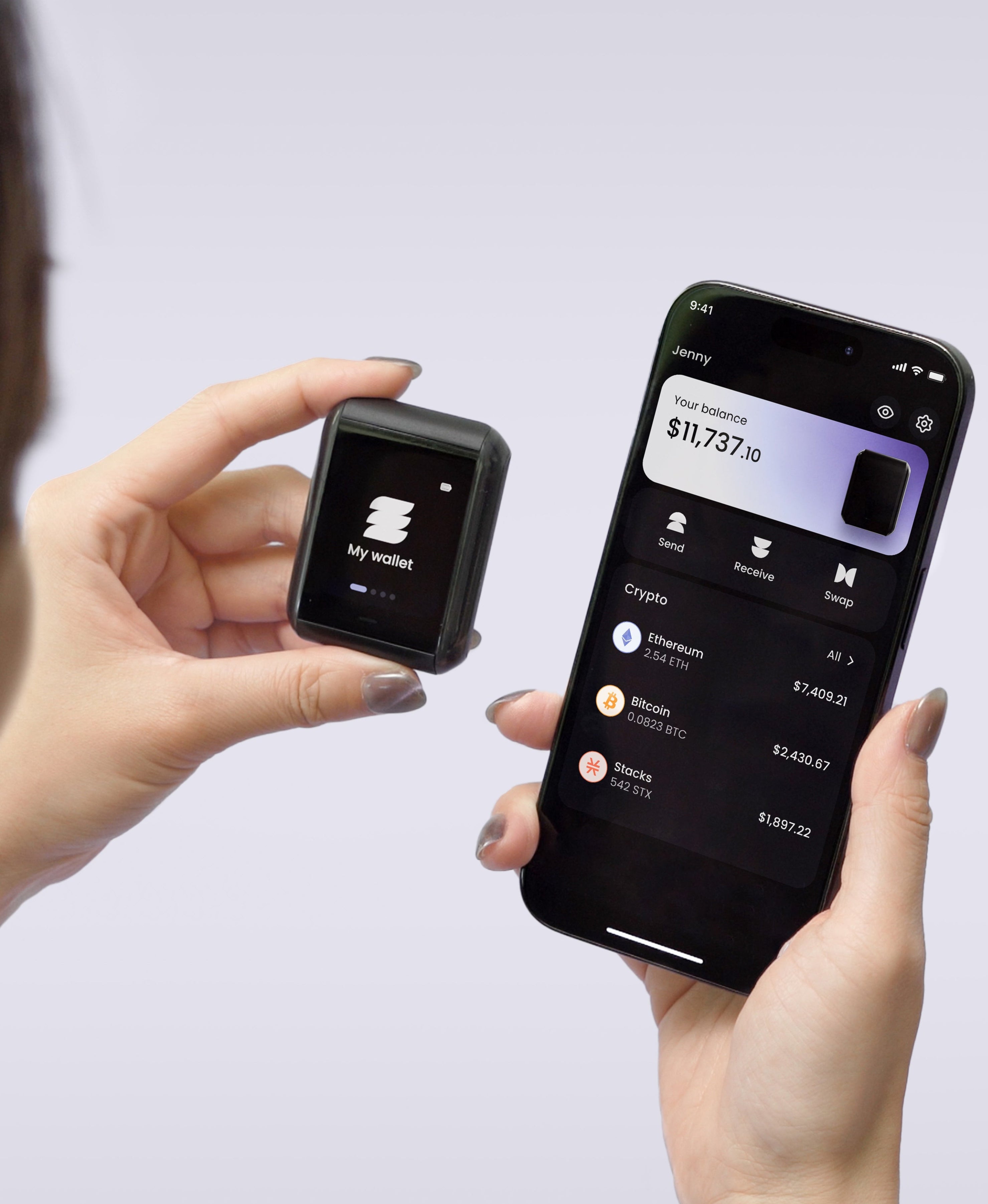
Hold the dollar, not someone else's promise of access to it. Ryder One keeps your stablecoins in cold storage on an EAL6+ secure element, so you can move them on your timeline during a depeg, not the exchange's. See how it works.


Share: