

Exchange failures usually arrive as a story about a bad week. A hack, a bank run, a leveraged bet that went the wrong way, and the money is gone in days. Orionx, a Chilean exchange that began closing permanently on 3 September 2026, is a different shape of failure, and the timeline is the part that should stay with you.
What happened at Orionx
Orionx suspended withdrawals and announced its closure on 3 September 2026 after a forensic audit compared the balances recorded in its internal systems against the assets sitting at the addresses it controlled. The two did not match. More than 7 million USD of customer assets had moved to wallets outside the company's custody, spread across bitcoin, ether, XRP and Polygon, leaving over 100,000 registered users waiting to hear what they might get back.
The company filed a criminal complaint on 2 September naming two founding partners, Joaquín Díaz and Roberto Zibert, and alleges the transfers happened between 2018 and 2021. Orionx has said it will try to return as much as it can, as fairly as circumstances allow, while acknowledging it cannot promise everyone will be made whole. Chile's Financial Market Commission has declined to supervise the closure or the restitution process.
The gap is years older than the audit that found it
Read that date range again. If the allegations hold, customer assets began leaving the exchange's control in 2018, and the shortfall was not discovered until 2026.
For somewhere between five and eight years, people logged into Orionx and saw a number. The number was correct in the sense that it matched what the company's own systems said. It was also, for a growing share of those customers, a description of coins that were no longer at the addresses backing the account. Nobody who checked their balance during those years could have known, because checking your balance on an exchange means reading a row in that company's database and nothing more.
This is the failure mode people underrate. The dramatic collapse is easy to picture and easy to react to; a quiet mismatch that sits unnoticed across eight years gives you no signal at all, no bad news day to respond to, no moment where a careful person would have moved their coins.
A licence was never what stood between you and this
Chile's Financial Market Commission rejected Orionx's authorisation application in June 2026, confirming the platform had been running without the licences its Fintech Law requires. That is worth knowing, and it is tempting to file the whole episode under "unregulated venue, avoidable mistake" and move on.
The problem with that reading is the timing. The alleged transfers ran from 2018 to 2021 and were caught by an audit in 2026, five years after they stopped, and a licence application in 2026 is what put the company under enough scrutiny to look. Regulation raises the odds that someone eventually opens the books; it does not put coins back at an address, and it did not stop this from running for years. Orionx also carried outside investment, including a round Tether joined in June 2025, which is the sort of credential a customer reasonably reads as reassurance.
Reading a balance is not the same as holding coins
An exchange balance is a claim on a company. It is an entry saying you are owed a quantity of something, and its worth depends entirely on that company holding the assets, staying solvent, and staying honest. When you hold coins in your own self-custody wallet, the coins sit at an address whose key you control, and anyone can check that address on a public ledger in about ten seconds.
That difference is the whole argument, and Orionx is a cleaner illustration of it than most incidents, because there was no hacker and no market crash to blame. There was a set of transfers, a gap where assets should have been, and years of customers seeing a screen that could not tell them anything true about what stood behind it.
Getting coins off an exchange, and the step people skip
Moving crypto out is the easy half: pick the asset, choose withdraw, paste the address from your own wallet, send a small test amount first, then send the rest once it lands. Ten minutes of work, and the crypto exchange stops being a counterparty you have to keep trusting.
The step people skip is deciding what protects the wallet on the other side. Plenty of people move coins into self-custody, write a recovery phrase on the card that came in the box, put the card in a desk drawer, and consider the job finished. They have swapped a company that might quietly lose their assets for a single sheet of paper that a flood, a house move, or a visitor could take away just as quietly.
What your backup has to survive
A sensible test is to imagine the next ten years and ask what your arrangement does when things go wrong in ordinary ways: a burst pipe upstairs, a house move where three boxes never arrive, a relative who needs to reach the coins once you cannot. Paper fails all three. Steel handles the water and the heat, which is why plates get recommended so often, and it still leaves your holdings resting on one object in one place that a thief only has to find once.
TapSafe Recovery removes that single point of failure rather than hardening it. Recovery on Ryder One splits through a custom implementation of Shamir's Secret Sharing, with half on the Recovery Tag and half as an encrypted share in your iCloud or Google Drive, so neither piece opens the wallet by itself and losing your phone costs you nothing. Recovery Contacts can hold a quarter each, which answers the question of what happens if you are not around, and they never see anything about your holdings. The seed phrase stays available on the device under the BIP-39 standard as a last resort.
Where this leaves you
Nobody with coins on Orionx did anything careless. They used an exchange with outside investors, in a country writing rules for the sector, and the thing that went wrong had already gone wrong years before they signed up. The only defence against a database that quietly stops matching reality is to stop depending on somebody else's database.
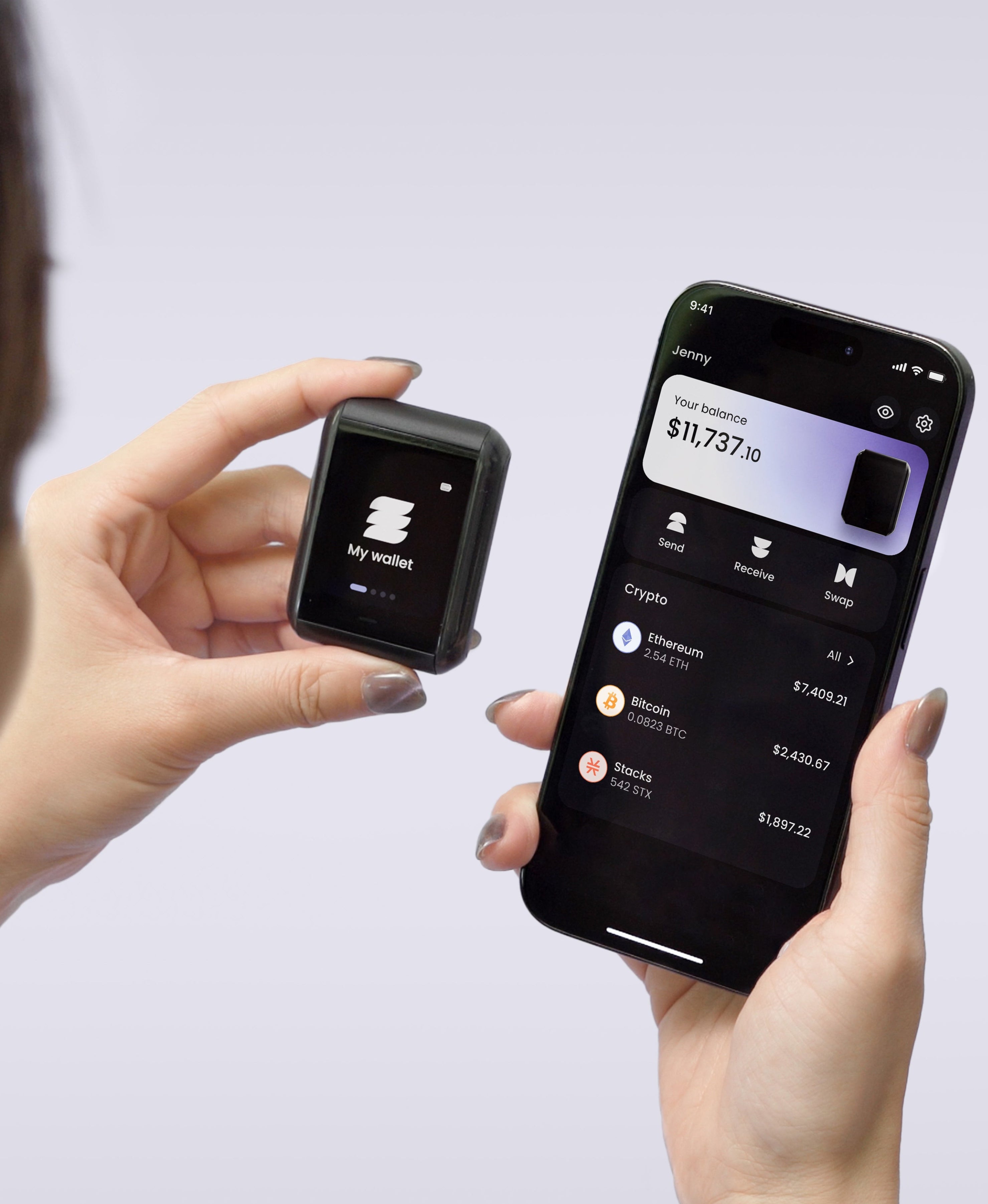
Ryder One is 149 USD for the Starter Combo and 179 USD for the Super Safe Combo. Setup takes under a minute, every transaction is verified on the 1.6-inch screen before you approve it, and the firmware has been audited by Halborn. Have a look at the device.
Meta description: Orionx shut down in September 2026 over a 7 million USD custody gap allegedly opened between 2018 and 2021. What five silent years say about exchange balances.


Share: