

A regular crypto wallet needs one signature to send a transaction. A multisig wallet needs several, configured as a threshold like two of three keys or three of five. The keys can be held by different people in different places, and no single one of them can move funds on its own. For high-value Bitcoin holdings and corporate treasuries, multisig has been the gold standard for nearly a decade. For most retail holders, it's overkill. Knowing where the line falls is worth the read. This piece walks through how a multisig wallet works in practice, who uses one today, and when the operational overhead is worth what you gain.
What multisig is, in plain terms
A multisig wallet replaces "one key controls the funds" with "N of M keys control the funds, where N is less than or equal to M." A 2-of-3 wallet has three keys and requires any two of them to authorize a transaction. A 3-of-5 wallet has five and requires three. The threshold is set when the wallet is created. On Bitcoin, multisig is native to the protocol. The wallet address is derived from a script that encodes the threshold and the public keys involved (Pay-to-Witness-Script-Hash, or P2WSH, is the most common modern format). Anyone can verify on-chain that a transaction came from the right combination of keys; nobody on the outside can tell from the address alone which specific keys signed any individual transaction. On Ethereum and EVM chains, multisig is implemented as a smart contract. The most common one is Safe (formerly Gnosis Safe). The contract holds the funds. When a transaction is proposed, the signers each approve it; once the threshold is met, anyone (often a bot) can execute the queued transaction. The two models are different under the hood but achieve the same property: no single key compromises the wallet.
Why multisig matters
The core benefit is structural: there is no single point of failure. If one key gets compromised by malware, that key alone can't move funds. If one key gets lost, the remaining keys can still recover. For amounts where a single mistake matters, this property is the entire point of the setup. Secondary benefits stack on top. Keys can live in different physical locations, so a single fire, flood, or burglary can't take down the whole wallet. In a corporate context, no single executive can move funds alone, which satisfies the financial-controls policies treasury operations require. And the structure can include an executor or attorney key that activates only when the primary keys can't sign anymore, giving the wallet a built-in succession path.
Who uses multisig in practice
Three categories. Corporate treasuries: Public companies, exchanges, DAOs, and crypto-native firms that hold significant on-chain reserves. Custodian-grade multisig setups (Casa Business, BitGo, Anchorage Digital, or in-house) anchor most of the on-chain treasury operations in 2026. Family offices and large individual holders: Holders with eight-figure or larger crypto positions usually run multisig either through a collaborative-custody service or in a self-managed configuration with hardware wallets as cosigners. Casa offers a 2-of-3 Standard plan around 250 USD/year and a 3-of-5 Premium plan at higher tiers, and Unchained Capital offers comparable collaborative-custody multisig structures for high-net-worth holders. Technically inclined retail Bitcoin holders: A smaller group with five- to seven-figure positions runs their own 2-of-3 or 3-of-5 setups using Sparrow Wallet, Specter Desktop, or Caravan, with hardware wallets as the cosigners. These setups are entirely self-managed and involve no service provider. The pattern across the three groups: multisig matches well when the amount at stake justifies the operational complexity, and when there's a process or person available to run the procedures.
What multisig costs you in practice
Multisig is operationally heavy. The trade-offs add up. Slower transactions: Every transaction needs multiple signatures. Coordinating signers across time zones, devices, and availability adds friction. A single-sig wallet sends a transaction in seconds; a 3-of-5 multisig wallet can take hours if the signers aren't all in one place. Setup complexity: Generating cosigning keys correctly, distributing them, documenting the configuration, and testing the recovery flow takes hours of careful work the first time. Mistakes at setup are often invisible until you need to recover, at which point invisible mistakes become very visible. Tooling fragmentation: Bitcoin multisig works best with desktop software (Sparrow, Specter) that not every signer wants to install. Smart-contract multisig on EVM chains works well in browsers but assumes signers can interact with smart contracts confidently. Neither flow is as smooth as a single-sig mobile wallet. Reduced compatibility with apps: Many DeFi apps don't support multisig signing well, especially time-sensitive flows like swaps or perpetuals trading. Multisig works well for holding and poorly for active trading.
When multisig is worth it
A reasonable test: would you be willing to spend several hours every month doing recovery drills, signer rotations, and configuration audits, in exchange for the no-single-point-of-failure property? For a corporate treasury managing tens of millions of dollars, the answer is clearly yes. For a family office allocating Bitcoin as a long-term holding, the answer is usually yes. For a retail holder with a 50,000 USD position they touch a couple of times a year, the answer is usually no: a hardware wallet with a well-designed backup model achieves most of the same security property at a fraction of the operational cost. For the in-between case (a high-six-figure or low-seven-figure holding with an active interest in DeFi), the increasingly common setup is a single hardware-wallet-signed wallet for daily activity plus a multisig wallet for the long-term cold storage. Hot and cold, with the cold side using multisig because the funds don't move often.
Where a hardware wallet fits
In every well-designed multisig setup, at least one of the cosigning keys lives on a hardware wallet. The wallet's job is the same as in a single-sig setup: keep the private key on a chip that never connects to the internet, and verify every signature on a screen the host can't draw to. The multisig contract or script provides the threshold logic; the hardware wallet provides the trustworthy signature. For self-managed multisig setups, hardware wallets as cosigners is the only reasonable approach. The threat model that multisig defends against (one signer compromised) doesn't help if the compromised signer was an EOA on a laptop that could be drained anyway.
TapSafe Recovery vs multisig
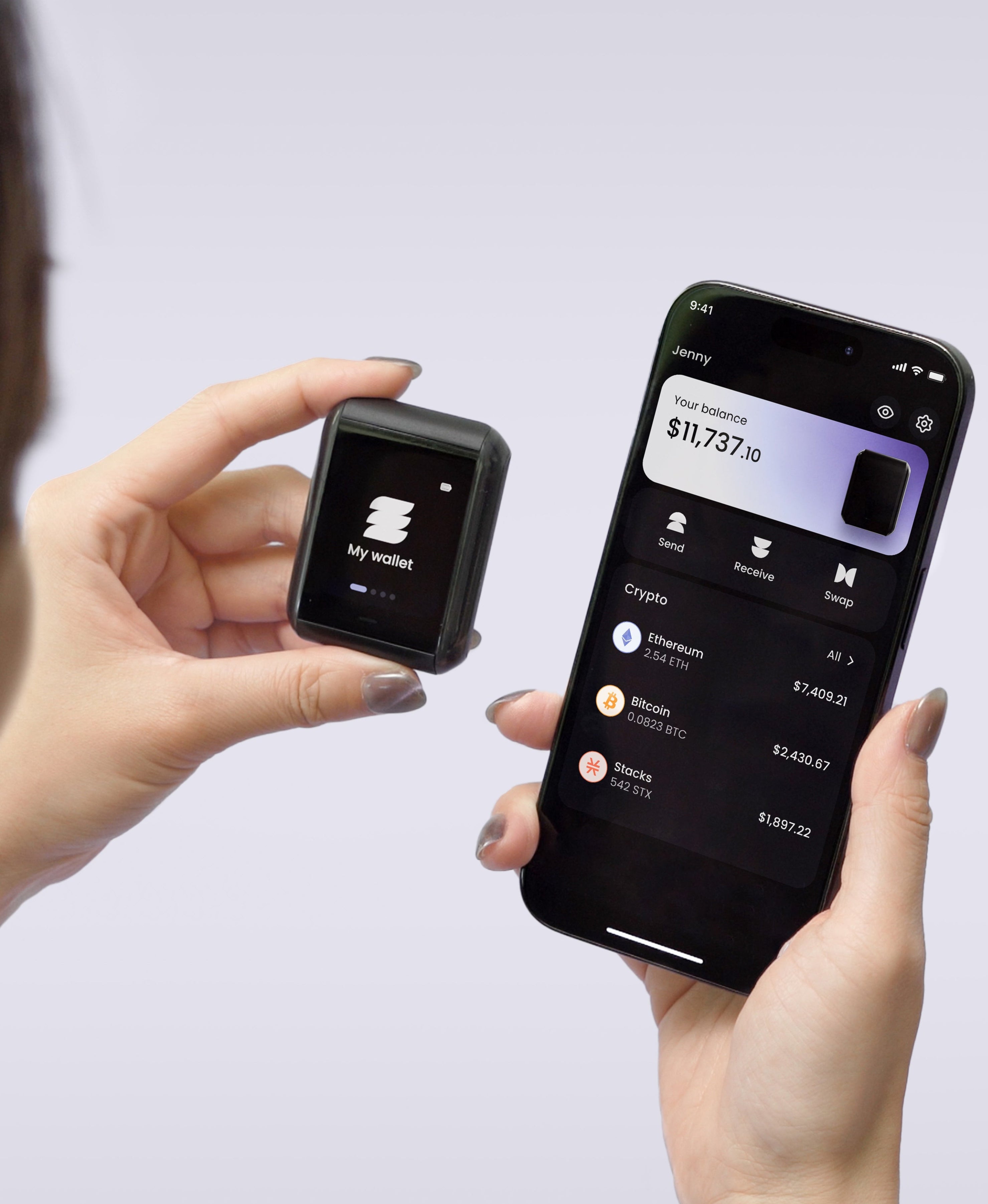
Ryder One ships with TapSafe Recovery as an alternative way to remove the single point of failure problem for retail holders. The wallet is single-sig (one signing key on the device), but the recovery material is split: 50% lives on the Recovery Tag (battery-free, NFC, IP69K rated), 50% lives encrypted in your phone's iCloud or Google Drive backup, with optional 25% per Recovery Contact you designate. The security property TapSafe provides is similar to what multisig provides for recovery, without the day-to-day operational cost. You sign with one device. The recovery is split across multiple parties or locations. For the use case most retail holders need (no single point of failure that wipes out their position), TapSafe handles it without the multisig operational burden. For users who need cosigner-style controls on every transaction (multiple people approving each spend), multisig is still the right tool. For users who need no-single-point-of-failure recovery and a single signer for ease of use, TapSafe is the cleaner answer.
The bottom line
Multisig wallets remove the single point of failure that every single-sig setup has, at the cost of meaningful operational overhead. They make sense for corporate treasuries, large individual holders, and technically inclined retail holders willing to do the work. For most retail holders, a hardware wallet with a structured recovery model achieves the same security goal without the operational tax. If you're sitting on a position large enough that any single failure mode would be catastrophic, multisig is worth a careful look. If you're managing a smaller position and your concern leans toward loss-of-access rather than loss-of-control, a hardware wallet with TapSafe Recovery covers the realistic threat model and stays easier to live with.
Get the structural backup without the operational tax. Ryder One ships with TapSafe Recovery as the default backup model, splitting your recovery across hardware and people you choose. See how it works.


Share: