

Importing a crypto private key into a trading app is only as safe as the app account it now lives behind, so treat any key you paste into one as a trading key and keep the coins you aren't trading under a different key that has never been typed into an app. That is the practical takeaway from the 24 November 2026 drain of a wallet belonging to Ansem, the crypto influencer, which he linked to his profile on Bullpen, a trading app where he says he had imported the wallet's Solana private key. Bullpen has confirmed unauthorized transfers from a small group of its oldest accounts, and the case for your own setup holds whichever way the open questions get settled.
Developing story, last updated 25 November 2026: this article was written on 25 November 2026 from Bullpen's statements as reported by Decrypt and Bankless, and from Bitquery's on-chain review. Still unconfirmed: how the affected accounts were accessed, the total taken across all of them, whether Bullpen will compensate users, and whether every transfer from Ansem's wallet was unauthorized, which some on-chain researchers dispute. We'll update this article as those details are confirmed.
What Bullpen and Ansem have said so far
Bullpen describes itself in its documentation as a non-custodial trading terminal for Polymarket prediction markets, Hyperliquid perpetuals and Solana tokens, and its wallet guide lets you bring an existing wallet by pasting in a private key or seed phrase. According to Decrypt, the app was co-founded by Ansem.
Here is how the reporting sorts out, as of 25 November:
- Confirmed by Bullpen, as quoted by Decrypt: "On November 24, we identified unauthorized transfers involving Bullpen accounts opened during our early beta between April and June 2024," with a preliminary count of 18 to 19 affected accounts, Ansem's included. Bankless reports that Bullpen took "the affected test service offline."
- Claimed by Ansem: in his original post on X, quoted by Decrypt, he wrote "Pump wallet is hacked" and that he believed it was "unauthorized access to my bullpen profile," which held the imported Solana key.
- Measured on-chain: Bitquery traced about 2.57 million USD in USDC to a new address on Arbitrum within four hours, with about 2.1 million USD coming from memecoin sales, while a Hyperliquid account holding about 373,000 USD was left untouched.
- Unknown: Bullpen hadn't disclosed the exact weakness, the total losses or any compensation plan when Decrypt published, and Bitquery notes that "the chain still cannot show how the key leaked."
Why some researchers doubt it was a hack
Not everyone accepts Ansem's account. An on-chain researcher known as MLM posted that "the onchain activity looks nothing like a hack," pointing to an older wallet he had labeled as Ansem's that funded the receiving address shortly before the selling, according to Decrypt. Bitquery found that the older wallet was itself emptied the same morning, which could explain that funding link, and it adds that the wallet's tie to Ansem rests on one analyst's label. Bankless reports that Ansem denies involvement, and sums up the limit of the evidence this way: "the chain can show which key signed, not who was using it."
For you as a reader, the two versions lead to the same place. If the transfers came through a taken-over Bullpen account, an imported key turned out to be exactly as safe as that account's login. If they didn't, Bullpen still says 18 or 19 early accounts saw unauthorized transfers, so the risk of keeping a key inside a trading app stands either way.
What importing a private key into an app does
A private key is the secret that signs transactions for an address, and whoever can use it can move everything at that address. When you paste it into an app, you hand a copy to that app's systems, and from then on the key can be used through whatever protects the app: your password, your Google or X login, the session on your phone, and the company's own infrastructure. Bullpen's sign-up page lists email and password, Google, X and wallet logins, and its docs explain how wallets it creates are held, but they don't say how an imported key is stored.
There's no way to take that copy back, because a private key can't be changed the way a password can. Deleting the wallet from the app removes it from your screen, while any copy already made stays wherever it was made, so the only clean exit for a key you no longer trust is moving the coins to a new address with a new key.
Is it safe to import a crypto private key into a trading app? A checklist
Use these questions before you paste a key into any trading app, wallet tracker or bot:
- Could you live with losing everything at this address tomorrow? If not, don't import it. Make a fresh wallet in the app and send it only what you plan to trade.
- Has this key ever held your savings, or does it still? A key that guards long-term coins shouldn't also be the key you trade with.
- Does the app say in writing how it stores imported keys? If the documentation is silent, as Bullpen's is on this point, assume the key is only as safe as your account.
- What protects the account itself? Use the strongest sign-in the app offers and a unique password, and treat a shared social login as one more way in.
- Do you have old accounts holding imported keys? The affected Bullpen accounts were opened in an early beta more than two years ago, so look through apps you signed up for during past runs and empty any imported addresses you no longer use.
If you've already imported a key
Moving the coins is more reliable than deleting the key. Create a new wallet whose key has never been pasted anywhere, send the coins you aren't trading to it, and keep only a trading balance at the old address or in a fresh app wallet. Don't import the old seed phrase or key into a hardware wallet as your fix, because the old copy keeps whatever exposure it already had; a hardware wallet protects a key it generates itself. Our related guide, How Many Crypto Wallets Should I Have?, walks through the general split between a spending wallet and a savings wallet.
Where coins you aren't trading should sit
Bullpen's own documentation gives the same advice we would: "Use a hardware wallet for large holdings." A hardware wallet creates the key on a separate device and asks you to approve each transaction there, so a stolen app login or a hijacked phone session can't sign for those coins on its own. That only holds while the key stays on the device, which is why its recovery words should never be pasted into a trading app, including for convenience on a busy market day.
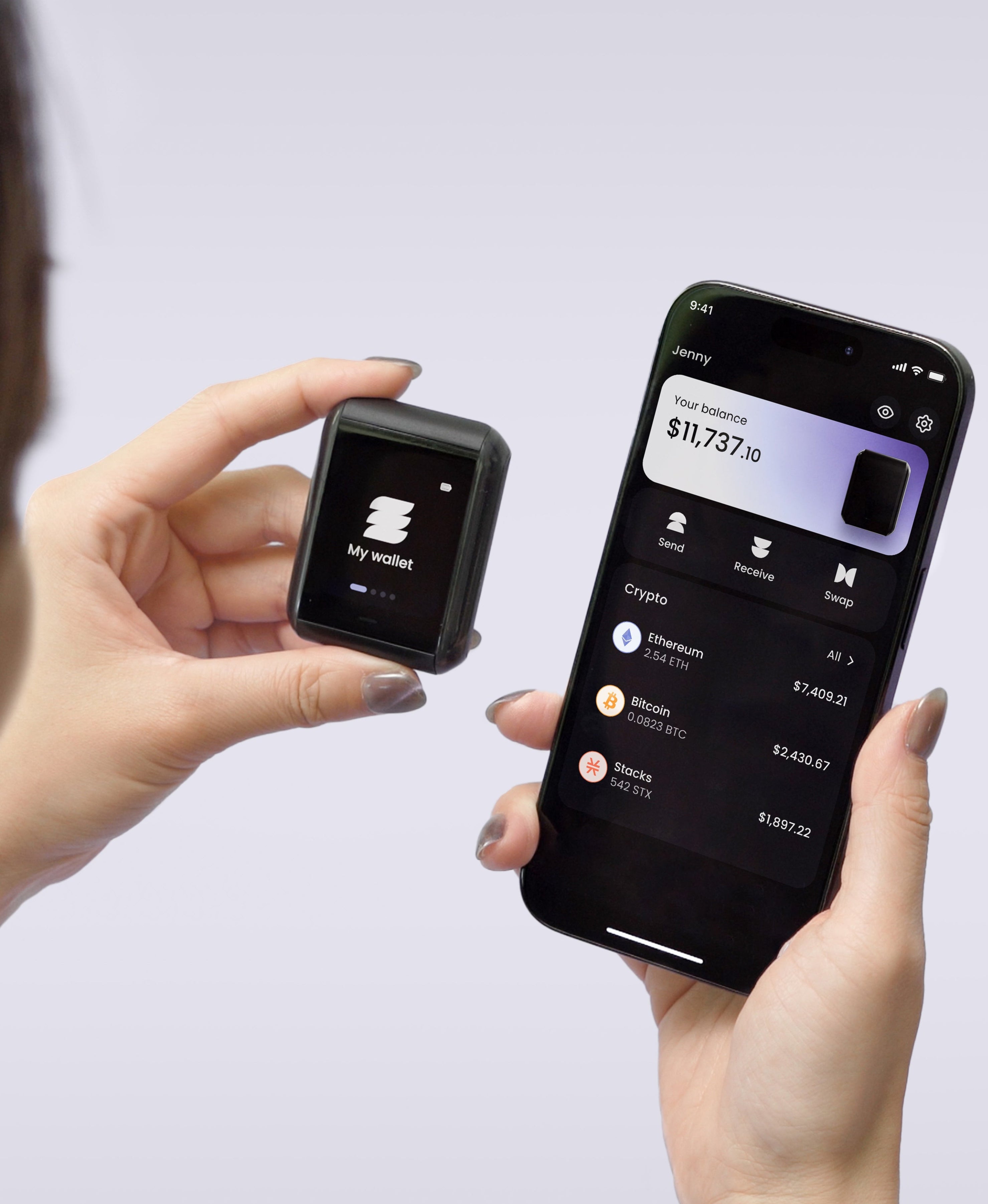
As a hardware wallet maker we have a stake in that advice, and the checklist above works with any reputable device. On the Ryder One, private keys are generated and stored inside an EAL6+ secure element and never leave the device, and every transaction appears on its color display before you approve it. It supports Bitcoin, Ethereum and Solana, including SOL and USDC on Solana, the network where this wallet's coins were held. Nothing in a hardware design would protect a key that was also imported into an app, which is why the split matters more than the brand you choose.
We'll revise this page when Bullpen publishes a root cause or a compensation decision, or if the dispute over Ansem's transfers is settled.


Share: