

How many crypto wallets should I have is a question where the number matters less than the reason behind it. Two is the right answer for most people, and it has nothing to do with spreading bets across brands the way you might spread an investment portfolio. It comes down to the fact that a wallet you touch every week and a wallet holding money you intend to keep for a decade are being asked to do two jobs that work against each other.
The question underneath the question
A wallet is a set of keys plus the software that signs with them, and the risk to those keys depends almost entirely on what you do with them. Connecting to an unfamiliar protocol, approving a token allowance, signing a message you skimmed rather than read: each one is a small exposure, and none of them is unreasonable when the amount behind the keys is modest.
Those same habits become hard to defend when the keys control your savings. That tension is what sits inside a single wallet holding everything you own, and separating the two is how you settle it.
How many crypto wallets you should have: two, doing different jobs
The first is a hot wallet on your phone or in your browser, holding an amount you would be irritated to lose rather than damaged by losing. It signs often, meets new contracts, and lives on an internet-connected machine, which you accept as the cost of using it. Treat it roughly the way you treat the cash in your pocket.
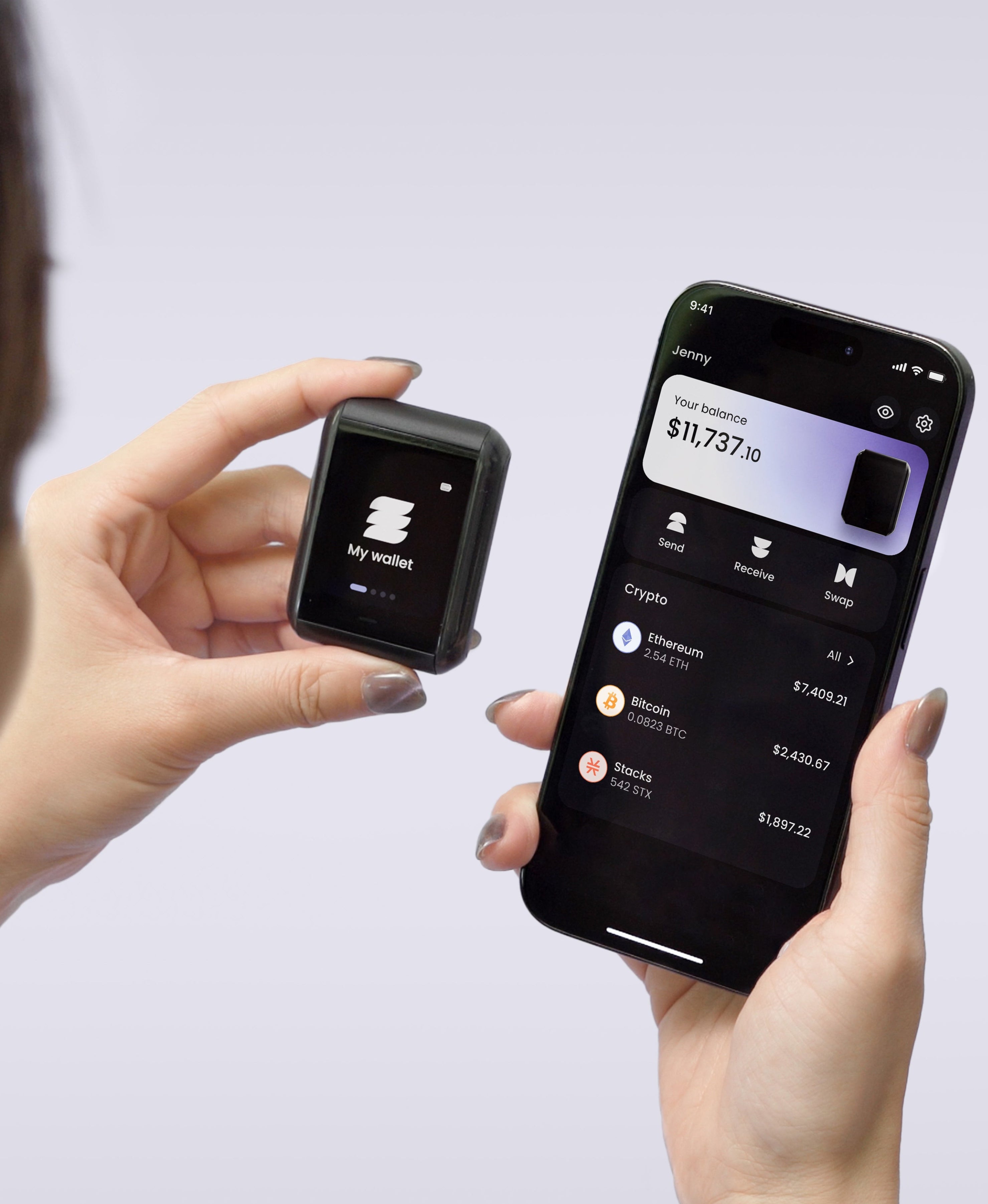
The second is a hardware wallet holding everything else. Keys are generated inside a chip and never leave it, approvals happen on a device in your hand, and it stays disconnected from the internet for all but a few minutes a year.
That split delivers most of what people are hoping to get from owning five wallets. A careless approval in the hot wallet cannot reach coins whose keys have never been near a browser, and drawing that boundary is the whole exercise.
When a third one earns its place
Three situations justify another wallet, and each one has a specific thing it protects you from.
You are active in DeFi and want an address you would be willing to walk away from. Repeated approvals across new protocols accumulate permissions you will struggle to audit later, so keeping that activity inside a wallet you have written off in advance limits what a bad contract can reach.
You are looking after money for somebody else. Funds held for a partner, a parent, or a child deserve their own keys and their own written instructions, because mixing them with yours turns an already hard week for your family into a forensic exercise.
You have reached a size where one manufacturer's mistake would change your circumstances. This argument used to be theoretical and stopped being so on 30 July 2026, when attackers began draining Coldcard devices. A build error in firmware released back in March 2021 had left affected units falling back to a weak software random number generator instead of their hardware entropy source, and TRM Labs recorded roughly 1,816 BTC, close to 116 million USD, taken from more than 5,200 addresses across four waves. Effective key strength had collapsed from the intended 128 bits to as little as 40, so nobody needed to touch a device to empty it. If a repeat of that would reshape your life, two devices from two manufacturers is a defensible answer; below that level the extra complexity tends to cost more than it returns.
Why more wallets can leave you worse off
Every wallet you add is another secret to protect, another set of words to keep away from the others, and another thing somebody has to find and make sense of if you are not there to explain the arrangement. Once the obvious attacks are handled, complexity is where the losses start coming from.
Most self-inflicted losses have no attacker in them at all. They involve somebody who could not work out which of four sets of words opened the wallet with the money in it, or who kept two backups in one drawer and lost both to a single break-in. Four wallets whose backups share a room behave as one wallet from the point of view of whoever gets into that room.
What your backup plan has to survive
Here is the test that decides whether a setup is sound, and the wallet count barely features in it. For each wallet you hold, ask whether it survives the loss of any single thing: the device, the written words, the building they sit in, or you.
Paper fails three of those four. Steel plates answer fire and flooding and are the sensible step up, though they leave the underlying problem where it was, since one object still grants full access to anyone who reads it and total loss to you if it disappears. Adding more wallets multiplies that object rather than solving it.
TapSafe Recovery takes the single point of failure out instead of duplicating it. The Recovery Tag carries half of the recovery. Your paired phone carries the other half, encrypted in your own iCloud or Google Drive rather than on the handset, so a lost or replaced phone does not cost you the share. The two together restore the wallet, and on its own neither one gives up anything. Optional Recovery Contacts hold a quarter share each and can see nothing about your balances, which is the tidiest answer available to the question of what happens to your holdings if you are not around to open them. Your seed phrase stays reachable on the device as a last resort under the BIP-39 standard, so you keep the freedom to leave for other hardware whenever you want.
A rule of thumb
Two wallets, divided by the job they do rather than by the logo on the box: one hot wallet carrying what you expect to spend over the next month, one hardware wallet carrying what you are keeping. Add a third when you can name the specific failure it prevents, and stop adding before the number of secrets outgrows your ability to keep track of them all.
Ryder One is 149 USD for the Starter Combo, and the Super Safe Combo is 179 USD. Private keys are generated inside an EAL6+ certified Infineon SLC38 secure element and never leave the chip, the device communicates over NFC only with no Bluetooth, no Wi-Fi and no USB data path, and the firmware has been audited by Halborn with the full report published. Setup takes about sixty seconds.
Meta description: How many crypto wallets should I have? Two for most people, split by job rather than by brand. When a third earns its place, and when more leaves you worse off.


Share: