

A crypto deposit address you saved weeks ago is only safe to reuse for as long as the service behind it still controls the keys to it, and you can't see that from a screenshot or a chat message. DFX, a Swiss service for buying and selling crypto, learned this the hard way on 18 November 2026, when an attacker copied the private keys of its hot wallets; the company now tells customers not to send crypto to any deposit address received from DFX before 18 November 2026. The habit worth keeping, whichever service you use, is to copy a fresh deposit address from the live app every time you send.
Developing story, last updated 25 November 2026: this article is based on DFX's incident page as of 20 November 2026. DFX hasn't said how the administrator's GitHub account was accessed, whether anyone sent coins to the old addresses after the incident, or what happens to coins that did arrive there. We'll update this page as those details are confirmed.
What DFX says happened on 18 November
Everything in this section comes from DFX's own incident page, so it's the company's account rather than an independent investigation. DFX says an attacker got into the GitHub account of one of its administrators and used it to run a deployment to DFX's production servers at around 01:00 Swiss time on 18 November. The attacker then searched the server for passwords and private keys and, in DFX's words, managed "to copy all private keys of our hot wallets." DFX puts the amount withdrawn at slightly less than CHF 50,000.
An administrator noticed the access at around 07:00 that morning and cut the server off from the network. DFX says the attacker didn't obtain any customer data, and that customer accounts and incoming bank transfers are safe. Since then it has stopped automated GitHub deployments, now requires an administrator with a dedicated SSH key to approve every production deployment, and says it's evaluating a two-administrator approval rule.
The detail that matters for customers is the cleanup. DFX says all of its hot wallets were compromised and replaced, and that this included "the individual customers' deposit addresses for crypto deposits." Those old addresses, it says, must no longer be used.
Why a crypto deposit address can go stale
When a service gives you a deposit address, it's handing you an address in a wallet the service runs, and whoever holds that wallet's private key can move whatever lands there. Normally that's the service, which credits your account when the coins arrive. Once a key has been copied, though, the service can no longer be sure it's the only party able to spend from that address, which is why DFX replaced the addresses rather than keep using them.
Nothing about an old address changes on the blockchain when this happens. It still looks valid, your wallet will still accept it, and a transfer to it will still confirm. The only place the change shows up is in the service's own app, help pages or emails, so the version of the address that you saved in a note, a chat with yourself or your wallet's address book has no way of knowing it's out of date.
A key theft is the rare and costly reason for a service to retire its addresses, and whatever the reason, the only reliable protection on your side is to take the address from the service at the moment you send.
What this incident does and doesn't mean for you
If you've never used DFX, nothing in its notice touches your coins. The keys taken were for DFX's hot wallets, the online wallets a service keeps for day-to-day deposits and withdrawals, and DFX says customer data wasn't taken. Nothing in the notice involves a flaw in any hardware wallet or in the coins people hold in their own wallets.
If you have used DFX, the instruction is specific: don't send anything to a deposit address you got from DFX before 18 November 2026, and get a new one from DFX before your next deposit. DFX also says it can finance the damage from its ongoing operations. Its page doesn't say what happens to coins a customer may have sent to an old address after the incident, so if that's you, contact DFX directly rather than relying on this article.
The broader point applies to any crypto exchange, broker or on-ramp. A deposit address is something the service can withdraw from you at any time, while a receive address generated by your own wallet belongs to keys only you hold, so a breach at a service doesn't change it.
A five-step check before you send to any deposit address
This is the routine we'd use for every transfer from a wallet you control to a service, whether you're selling, topping up a trading balance or paying for something.
- Copy the address from the live app or website, every time. Don't reuse one from an old message, screenshot, email or your wallet's transaction history, even if it worked last month.
- Check the service's status or security page if anything looks off. DFX published its warning on a dedicated incident page; most services post notices in the app, on a status page or by email.
- Match the network and any memo or tag. The same coin can live on several networks, and some services need a memo to credit your account.
- Send a small test first when the amount matters. Wait for the service to credit it before you send the rest.
- Compare the address on your wallet's screen with the one in the app. Check the first and last several characters at minimum, because malware that swaps copied addresses can change what you paste.
The fifth step is where a hardware wallet earns its keep. The device shows you the destination before you approve, on a screen that the computer or phone can't rewrite, so you're confirming what you're about to sign. It can't tell you whether a service still uses that address, which is why the first step still matters.
Checking the address on Ryder One
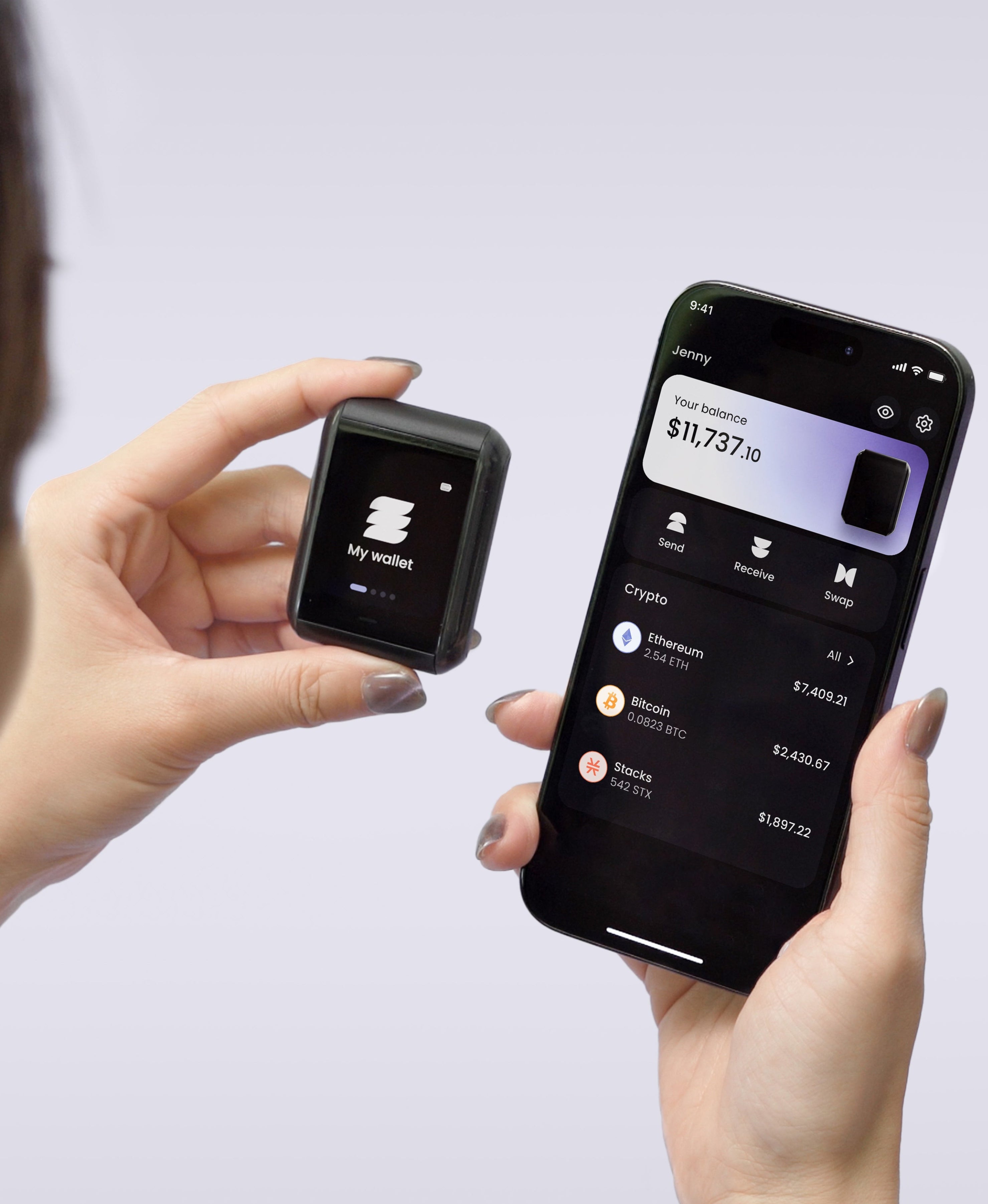
We make the Ryder One, so weigh this paragraph with that in mind. It talks to your phone over NFC only, with no Bluetooth, Wi-Fi or USB data connection, and every transaction is confirmed on the device itself before it's signed. That covers step five. It doesn't change the rest of the list: no wallet can know that a service retired an address, so the fresh copy from the live app is still your job.
If you're moving coins off a hardware wallet to sell them, our guide on how to sell crypto from a cold wallet walks through the whole route back to cash, including getting a new deposit address for each sale. DFX's incident is a good reason to make that step automatic, even with a service you've used for years.


Share: