

A paper wallet is the oldest form of crypto cold storage. A user generates a private key offline, prints it onto paper along with the corresponding address, and the paper becomes the wallet. The concept is appealingly simple: nothing digital, no software to fail, no device to break. For Ethereum specifically, paper wallets carry trade-offs that don't apply to Bitcoin paper wallets, and the practical case for using one in 2026 is narrower than the marketing makes it sound. This piece walks through what an Ethereum paper wallet is, why they're still used, the specific problems they create on Ethereum (versus Bitcoin), and the modern alternatives that solve the same problem more durably.
What an Ethereum paper wallet is
An Ethereum paper wallet is a printed document containing a private key and the corresponding Ethereum address, generated offline on a clean computer using a tool like MyEtherWallet's paper wallet generator (run offline) or a similar utility. The user prints the wallet, sends funds to the address, and stores the paper somewhere secure. Spending from the wallet requires importing the private key back into a software or hardware wallet. The setup carries no electronic attack surface during storage. The paper isn't connected to anything, can't be hacked over the internet, and doesn't depend on software updates. The simplicity is the entire pitch.
Why people still use them
Three reasons drive continued use. 1. Cost. A paper wallet costs nothing beyond the printer and the paper. Compared to a hardware wallet's purchase price, the paper wallet is free. 2. Trust minimization. Some holders prefer a setup with no vendor in the trust chain. A paper wallet generated with open-source tools removes the manufacturer and the supply-chain considerations that come with buying a hardware device. 3. Long-term storage. For amounts intended to sit untouched for decades, a paper wallet (or a metal-engraved equivalent) is a low-maintenance option. No firmware to update, no battery to charge, no vendor that might go out of business. For specific use cases (a Bitcoin-style "deep cold" position, a gift to a younger family member meant to be opened in 20 years), paper wallets still make sense. For most active holders, the trade-offs are heavier than the benefits.
The Ethereum-specific problems
Bitcoin paper wallets and Ethereum paper wallets share most of the same fragility issues. Ethereum adds a few of its own. Gas is mandatory. Sending funds out of an Ethereum address requires ETH to pay gas. If your paper wallet holds USDC, USDT, or any other ERC-20 token, you can't move them out without first sending some ETH to the address to pay gas. The gas requirement adds an operational step that Bitcoin paper wallets don't have. Smart contract interactions are complex. A Bitcoin paper wallet handles one operation: signing a send transaction. An Ethereum paper wallet that needs to interact with a smart contract (claim an airdrop, vote in a governance proposal, redeem a token) requires the user to import the private key into a wallet that supports the specific contract interaction. The complexity is much higher than just sending funds. Token approvals create lingering exposure. If you ever imported the paper wallet's private key into a software wallet to interact with a contract and granted any approvals, those approvals persist on-chain. The paper wallet isn't fully isolated from past activity; the approvals you granted earlier remain active until revoked. ERC-20 sends use more gas than ETH sends. Moving USDC out of a paper wallet costs more gas than moving ETH out. For small balances, the gas cost can exceed the value of the funds. The private key has to leave the paper to be used. Every time you spend from the paper wallet, you import the key into a software wallet (typically by typing it in or scanning a QR code), exposing the key to any malware on the device used for import. Bitcoin paper wallets have the same issue, with lower frequency of use meaning the exposure happens less often.
What goes wrong in practice
A few failure modes show up repeatedly. Lost paper. The most common failure. Moves, divorces, floods, fires, and "I'm sure I put it somewhere safe" all account for paper wallets being lost. The funds remain on the chain forever, accessible to no one. Faded ink. Paper wallets printed on standard ink can fade enough over years that the key becomes unreadable. Archival-quality printing helps, though it's an extra step most users skip. Single point of failure. One paper, one location, no backup. If anything happens to the paper, the wallet is gone. Key exposure during use. Importing the key into a software wallet to spend funds creates the exposure window. Malware on the import device can capture the key and drain the wallet. Privacy degradation. Once you import the key into a software wallet, the wallet's metadata (IP addresses, browser fingerprints, transaction patterns) gets associated with the address. The "cold storage" property is partly undone by the import.
The modern alternative: hardware wallet plus split-share backup
The structural answer in 2026 is a hardware wallet that holds the key on a dedicated chip, with a split-share backup that survives single-object loss. A hardware wallet handles the key-storage and signing problem cleanly. The private key never leaves the chip, signing happens on the device, and the host machine never sees the key. Smart contract interactions, ERC-20 transfers, and DeFi positions all work without ever importing the key into a software wallet. A split-share backup model removes the single point of failure that paper wallets have. TapSafe Recovery, Shamir's Secret Sharing, or multisig setups all distribute the backup across multiple objects or parties so no single loss takes the wallet down. The combination handles every failure mode the paper wallet does, with strictly fewer exposure windows and strictly better durability.
When paper wallets still make sense
Three narrow cases remain. Ultra-long-term storage of Bitcoin. Bitcoin's protocol changes slowly, the signing format is stable, and a paper wallet generated today should still work in 30 years. For amounts intended to sit untouched for decades, a metal-engraved version of a paper wallet is a defensible setup. Note: this is Bitcoin specifically. Ethereum's protocol has changed enough times that 30-year-old wallets may need migration. Gifts to recipients without technical capacity. A paper wallet handed to a relative who doesn't know what crypto is can sit in a drawer until they're ready to learn. The recipient doesn't need to interact with anything until they choose to. Holders who explicitly distrust any vendor. The paper-wallet-only setup removes every counterparty from the security model, at the cost of every operational benefit hardware wallets provide. For most holders, the trade is bad; for a small group with specific threat models, the trade makes sense.
How to migrate from a paper wallet to a hardware wallet
The migration process is a single transaction. Import the paper wallet's private key into a software wallet temporarily. The import exposes the key to the device, so use a clean machine if possible. Send the entire balance from the paper wallet's address to a fresh address on your hardware wallet. Verify the destination address on the hardware wallet's screen before signing. Wait for the transaction to confirm. The paper wallet is now empty. If the paper wallet held ERC-20 tokens, ensure the address has enough ETH for gas before sending. If it doesn't, send a small amount of ETH first, then transfer the tokens. Once the migration is complete, the paper wallet should be physically destroyed (shredded, burned) so the private key isn't recoverable from the paper after the funds have moved.
Where Ryder One fits
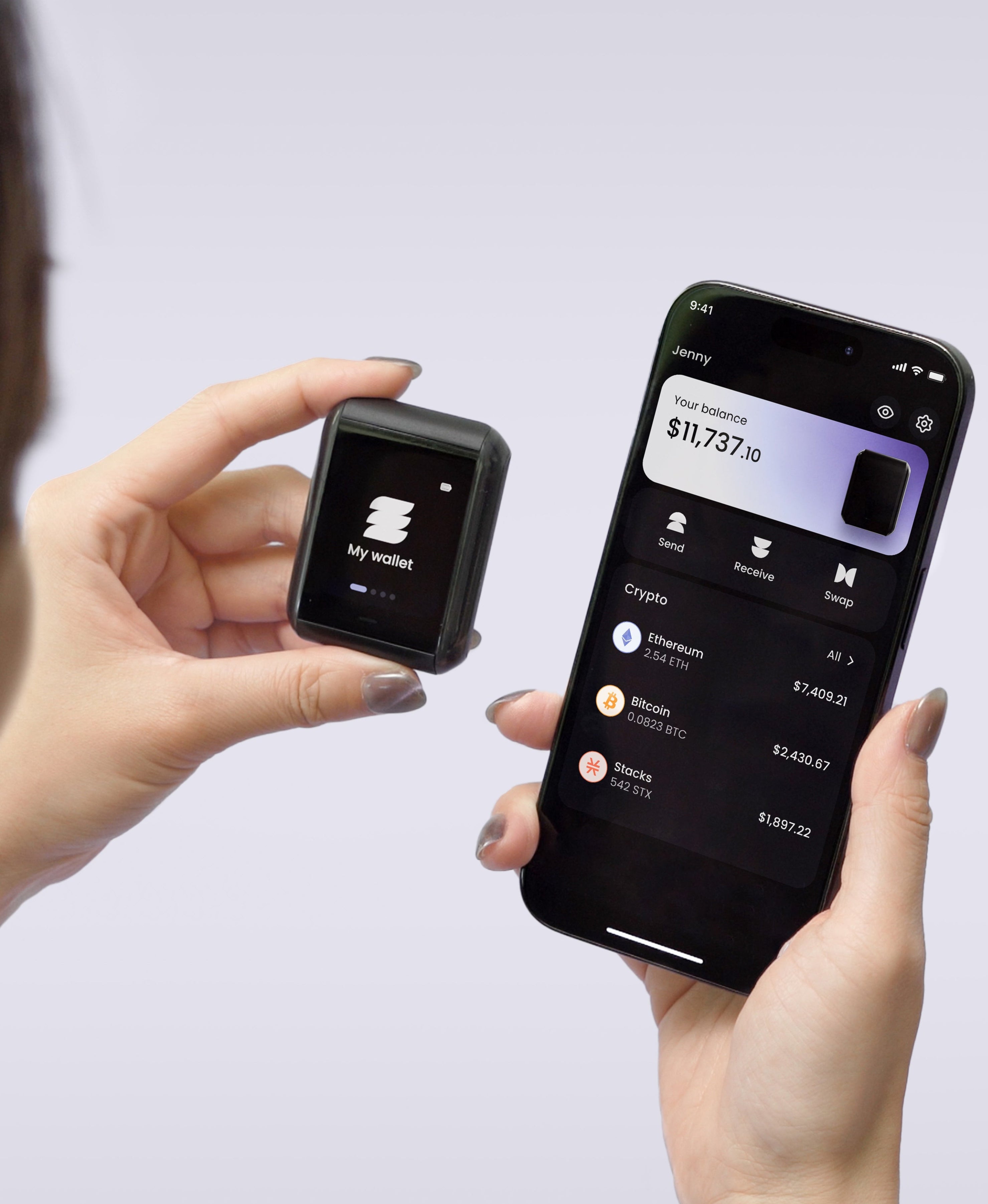
Ryder One replaces the paper wallet model with a structural setup that handles the same use case more durably. The EAL6+ Infineon SLC38 secure element holds the private key without ever exposing it. Every transaction (including Ethereum smart contract interactions and ERC-20 transfers) is verified on the 1.6-inch AMOLED touchscreen and signed with a physical button press. TapSafe Recovery splits the backup across hardware and people you trust, removing the single-object failure point that paper wallets carry. For Ethereum holders specifically, the device supports ETH, ERC-20 tokens, and the standard signing operations needed for DApp interactions, with on-device verification of the contract calls and approvals you're authorizing. You can even import your seed phrase from a separate wallet.
The bottom line
Ethereum paper wallets work in principle and have the appeal of simplicity. In practice, they carry single-point-of-failure risks that grow with each ERC-20 token, smart contract interaction, and import operation the wallet has to handle. For amounts intended to sit untouched for decades on Bitcoin, paper wallets remain a defensible option. For active Ethereum use, the hardware wallet plus split-share backup answers the same questions more durably and with fewer exposure windows.
Cold storage without paper's fragility. Ryder One holds Ethereum, ERC-20 tokens, and Bitcoin on an EAL6+ secure element with TapSafe Recovery as the structural backup. See how it works.


Share: