

Former Ripple CTO David Schwartz said this week that his XRP holdings have fallen from around 26 million to around 3 million over the years, because he's "very uncomfortable with risk." For an ordinary XRP holder, his sales say little about where the price goes next. What's worth copying is how he sells: on a written plan set at least 30 days ahead. The other question his posts raise is where your own XRP should live while you decide what to do with it.
We make a hardware wallet, and we'll say up front that Ryder One doesn't support XRP today. This article covers how to hold XRP safely in general, and nothing here is advice to buy or sell it.
What Schwartz said
In replies on X on 9 and 10 November 2026, Schwartz said he sold about 2.5 million XRP in 2025 and put his holdings at around 3 million, down from a high of around 26 million. Crypto.news reported that he also cut his bitcoin and ether to token amounts and still holds a sizeable stake in Ripple stock, which he said already carries more risk than he'd like. He explained that each XRP sale runs on a written plan agreed with an attorney at least 30 days in advance, so nobody can accuse him of trading on private information such as a ledger bug.
Many XRP holders took the news badly, since it landed with XRP trading near 1.05 USD and down close to 20% over the week. On the other side of the argument, Santiment has tracked a steady rise in wallets holding 10,000 XRP or more, which bulls read as whales buying the dip.
What a regular holder can take from it
One founder selling tells you about his own risk tolerance and tax situation; it doesn't show you the ledger's future. The habit behind it is useful, though. Schwartz decides when to sell long before the moment arrives, which takes emotion out of the decision. You can do the same with a short note: the price or date at which you'd sell some, the share you'd keep, and what would change your mind. Write it before the next big move, while you're calm.
The second takeaway is about custody. A lot of XRP still sits on exchanges, and an exchange balance is a claim on that company, which can pause withdrawals or freeze accounts under its terms. If you plan to hold XRP for years, moving it to a wallet where you control the keys removes that dependence and makes you responsible for the backup.
How to hold XRP yourself
XRP runs on its own blockchain, the XRP Ledger, so you need a wallet that supports it natively. A wallet that only handles Bitcoin, Ethereum or Solana assets can't hold native XRP, even if it supports thousands of other tokens, so check the wallet's supported-asset list for XRP Ledger support before you buy.
Two XRP Ledger details catch new self-custody users. Every account has to keep a minimum balance, and the XRP Ledger's documentation currently lists a base reserve of 1 XRP plus 0.2 XRP for each object the account owns, such as a trust line. That reserve can't be sent while the account is open. Exchanges also often ask for a destination tag when you send XRP to them, because many customers share one deposit address; leaving it out can delay your deposit or need a support ticket to fix.
As with any coin, send a small test amount first, confirm it arrives, and write down your recovery phrase on something that survives a spill or a fire. Keep that backup separate from the device.
Where Ryder fits
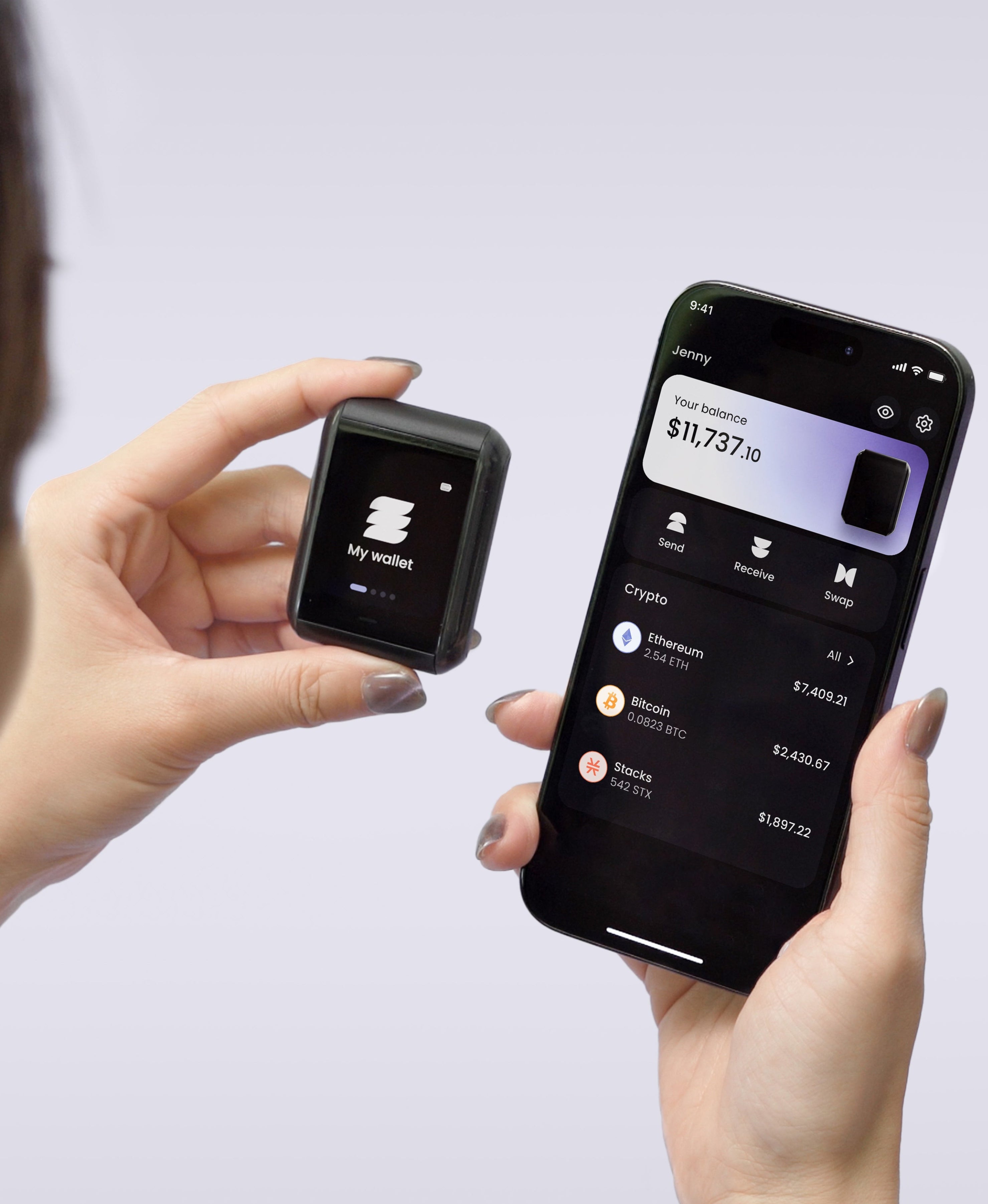
Ryder One supports Bitcoin, Ethereum, Solana and their tokens, and it doesn't hold native XRP, so if XRP is most of your portfolio, a hardware wallet with XRP Ledger support is the right pick for that part. Plenty of XRP holders also own bitcoin or ether, and for those coins Ryder One keeps keys in a secure element, shows every transaction on its screen, and backs up through TapSafe with the seed phrase available as a last resort. For more on XRP itself, our explainer on what the CLARITY Act changed for XRP holders covers the regulatory side.


Share: