

Crypto prices move on geopolitics, and in 2026 they've moved on Iran talks, chip-war stories, inflation prints and fights over who gets to regulate crypto firms. You can't predict those headlines, so the useful way to prepare is to decide in advance which of your coins can ride out a bad week on an exchange and which should sit in a wallet you control, with a backup plan that doesn't depend on any single company, country or cloud account.
We make a hardware wallet, so we have a view on that second group. This article is general information rather than investment advice, and it doesn't try to call where prices go next.
How headlines have moved crypto in 2026
The clearest example in 2026 has been the back-and-forth over Iran. On 23 March, Bitcoin climbed after President Trump gave five days for negotiations, and in June it neared 66,000 USD when he said a peace deal was done, even as officials on both sides contradicted each other. Each statement moved prices within hours, and several of those moves reversed just as fast.
Other pressures run on a calendar. The monthly inflation report from the Bureau of Labor Statistics can shift expectations for interest rates, and crypto tends to trade alongside other risk assets on those days. Bitcoin sat near 75,000 USD on 10 November 2026, according to CoinGecko, down from above 80,000 USD in October.
Then there's tech and policy. Nvidia fell about 4.3% on 9 November after its board opened an inquiry tied to a US-China security concern, a reminder of how closely markets now watch the chip rivalry. In Washington, Senator Elizabeth Warren has argued that the bank regulator's approvals of national trust charters for crypto firms are illegal, which shows how unsettled the rules around crypto companies still are.
Why platform risk rises when headlines get loud
Volatile weeks put the most strain on the companies in the middle. Exchanges see waves of withdrawals, attackers time phishing campaigns to scary news, and support queues stretch out just when people want answers. In October, Binance paused withdrawals after a hot wallet attack and reopened them in stages, which left customers waiting on one company's timeline while prices moved.
Policy fights add a slower kind of risk. Rules about who can hold customer crypto, and on what terms, can change after an election, a court case or a regulator's decision, and every change lands first on assets that sit with a company.
A headline-risk plan for your crypto
The plan that holds up best is boring and decided ahead of time. Split your holdings into a trading balance you're comfortable leaving on a regulated exchange and long-term savings you move to self-custody, so a paused exchange or a policy change only touches the part you were prepared to expose.
Next, spread your backup across places that don't fail together. If your recovery depends on one house, one country or one cloud account, a fire, a move abroad or a locked account can take it out in one go, so keep at least one recovery piece somewhere separate from the device. Write down what to do if a scary headline lands at 3 a.m., and make the first step "check the official source" before "sell" or "move everything", because rushed transfers to pasted addresses are where scams catch people.
Where Ryder One fits
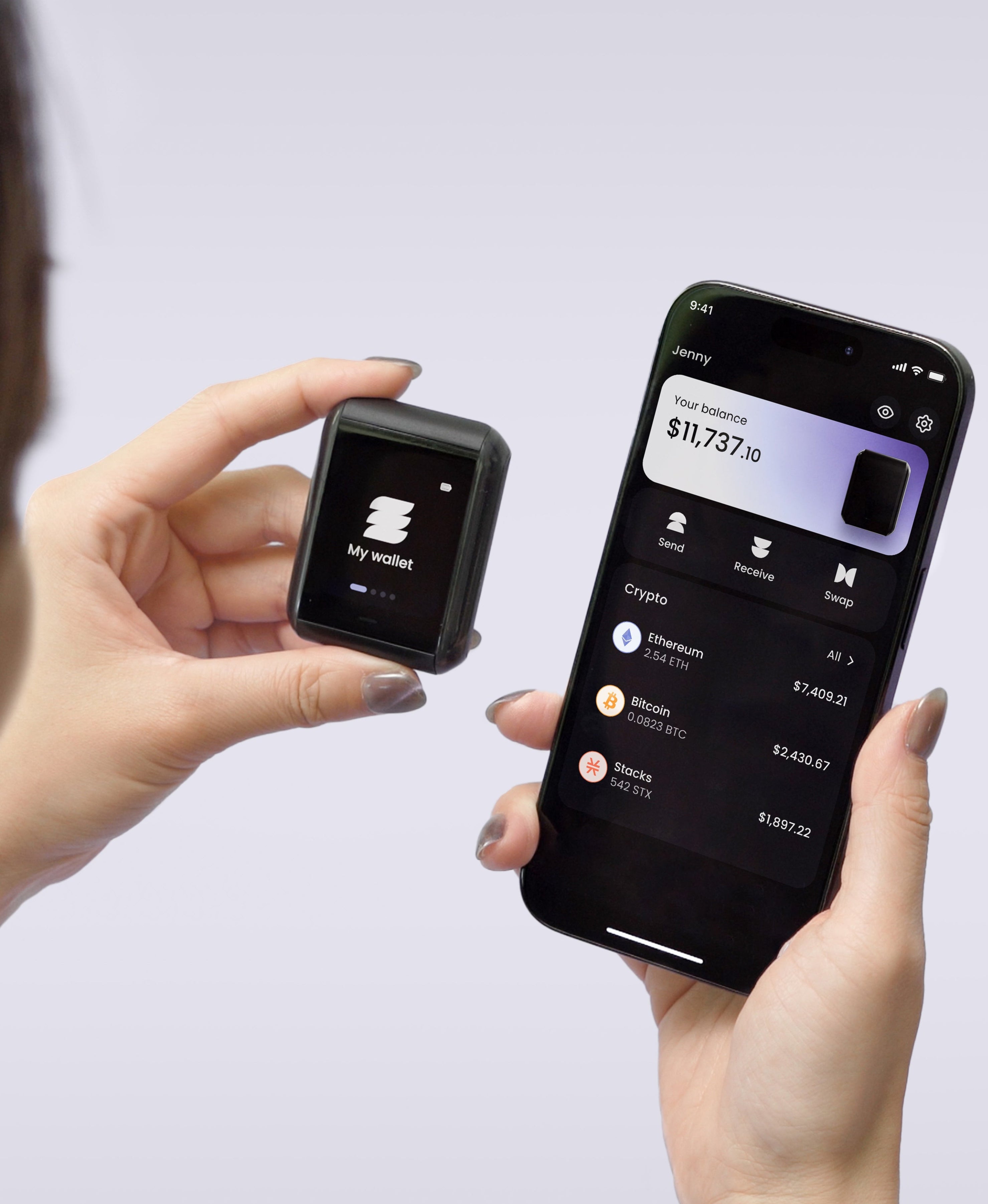
Ryder One keeps your keys inside its secure element and connects to your phone only over NFC, so there's no exchange account or company server between you and your coins. Its backup system, TapSafe, splits recovery between a Recovery Tag you can store in one place and an encrypted piece in your iCloud or Google Drive, and you can add Recovery Contacts if you want a third option, so no single location holds everything. Headlines will keep moving prices whatever wallet you use; the point of a plan like this is that they can't also lock you out.



Share: