


# Altcoin Season 2026: The Three Signals That Confirm It
Every cycle brings a new wave of "altseason is here" tweets, and every cycle most of them are wrong. Blockchaincenter's Altcoin Season Index reads 35 as of mid-2026, which puts the market in mixed territory rather than a broad rotation out of Bitcoin. Bitcoin dominance is holding around 55.5% on TradingView's BTC.D chart, and Bitcoin.com's news desk reports that traders are watching for a sustained break below 55% to trigger a rotation.
In other words, the setup is close but the trigger hasn't fired. Knowing which numbers to watch, and which to ignore, is what turns "altseason" from a Twitter mood into a decision.
In this piece
- What altcoin season means
- Signal 1: The Altcoin Season Index
- Signal 2: BTC dominance below 55%
- Signal 3: The ETH/BTC ratio breakout
- What the noise looks like
- Where Ryder One fits
- The bottom line
What altcoin season means
An altcoin season is a defined window where the majority of top altcoins outperform Bitcoin. The standard measure is Blockchaincenter's threshold: if 75% of the top-50 non-stablecoin altcoins beat BTC's return over the trailing 90 days, the market has flipped into altseason. Anything under 25% counts as Bitcoin season, and the middle band is transition.
The number sounds academic until you compare cycles. During the spring 2021 rotation, CoinGecko's cycle analysis shows large-cap altcoins delivered about 174% returns while BTC returned roughly 2% over the same February to May window. Altseason isn't about "some coins going up." It's about capital moving out of Bitcoin and across the rest of the market at scale.
That distinction matters because most self-declared altseasons are single-coin pumps dressed up as a broader rotation. A meme coin doing a 5x while BTC drifts sideways is not the same event as a hundred alt-caps rerating together, and the two produce very different risks for anyone holding through them.
Signal 1: The Altcoin Season Index
The Blockchaincenter index is the sharpest single reading available. It updates daily, uses a 90-day lookback, and outputs a value from 0 to 100. A print above 75 signals altseason, below 25 signals Bitcoin season, and anything in between is transition territory.
Historical peaks give a sense of what a live altseason looks like on the index. On April 16, 2021 the index printed 98, the highest reading in its history, at a moment when BTC dominance had already fallen from 70% at the start of the year toward 40%. The 2017-2018 rotation was more extreme: BTC dominance collapsed from around 65% in December 2017 to under 40% by January 2018, and altcoin gains ran into the thousands of percent for individual names.
The current print near 35 puts 2026 well behind those setups. CoinMarketCap's own version of the index tracks a slightly different basket and has read closer to 46 through mid-year, but the story is the same: this is a mixed market with alt strength concentrated in a handful of narratives (RWA tokenization, DePIN, perpetual DEX volume), rather than a broad-based rotation.
The rule of thumb worth internalizing: the index has to close above 75 and stay there for weeks, not spike above 75 for a single day. Spikes fade. Sustained reads mean capital is moving.
Signal 2: BTC dominance below 55%
Bitcoin dominance is the share of total crypto market cap that sits in BTC. When BTC is the trade, dominance rises. When capital rotates out, dominance falls. As of July 2026, BTC.D is around 55.5%, which analysts have called the inflection line for this cycle.
The reason 55% matters is that BTC dominance has been building a range between roughly 58% and 60% since late 2025. A confirmed break below 55%, with weekly closes rather than a single wick, would be the first structural signal that altcoin bids are absorbing new capital faster than Bitcoin is. Below 50% is where prior altseasons ran, and the 2021 low of about 38% is what a full rotation historically looks like.
One caveat that keeps burning new traders: BTC dominance can fall in two ways. It can fall because altcoins are outperforming, which is bullish for altseason. It can also fall because Bitcoin is dropping faster than altcoins are, which is a bear signal in disguise. Watch the direction of BTC's own trend alongside the dominance number. Falling dominance in a rising BTC tape is the setup traders want to see.
Signal 3: The ETH/BTC ratio breakout
The ETH/BTC ratio is the price of ether measured in bitcoin. It's the sharpest live read on whether capital is willing to leave BTC for the next largest asset in the market, and by extension whether it's willing to move further down the risk curve into smaller alts.
As of April 2026 the ratio prints around 0.031, per Ainvest's cycle analysis, which is a long way below the 0.055 to 0.07 band where prior altseasons opened. The mechanical logic: if ETH can't outperform BTC, smaller altcoins almost certainly won't either, because ETH holds the deepest liquidity in the ex-BTC market and typically leads a rotation.
A breakout above 0.055 on ETH/BTC, held for a few weekly closes, has historically preceded broader alt outperformance. Watch that number alongside the dominance chart and the index; when all three flip in the same direction over the same window, the rotation is closer to firing than any single indicator would suggest.
What the noise looks like
Most of what circulates as "altseason confirmed" content is noise. A few common tells:
- A single coin printing a 5x in a week and being framed as broad market strength. One name rerating is one name rerating.
- Twitter accounts calling altseason every time BTC has a red day. A single-day BTC drawdown reads as a data point rather than a regime change.
- Screenshots of the index breaching 75 for a few hours before mean-reverting. The threshold matters, and so does the duration.
- "This narrative is next" posts that recycle the same three or four sectors. Narrative rotations happen, but they don't equal a broad altseason.
The reason the noise matters is behavioral. When retail piles into alts on the belief that season is here, exchanges see order-book stress, withdrawal queues build up, and the coins most likely to be paused for maintenance are the smaller alts that just rerated the hardest. If you're holding on an exchange during the volatility that comes with a real rotation, the risk isn't just price. It's whether you can move your position at all when it matters.
Where Ryder One fits
Altseasons are quick and messy. The 2021 rotation saw multiple exchanges pause withdrawals for specific coins during peak volatility, and the pattern repeats every cycle. If your alt position is on an exchange when a withdrawal freeze hits, you're locked in until the venue decides you can leave.
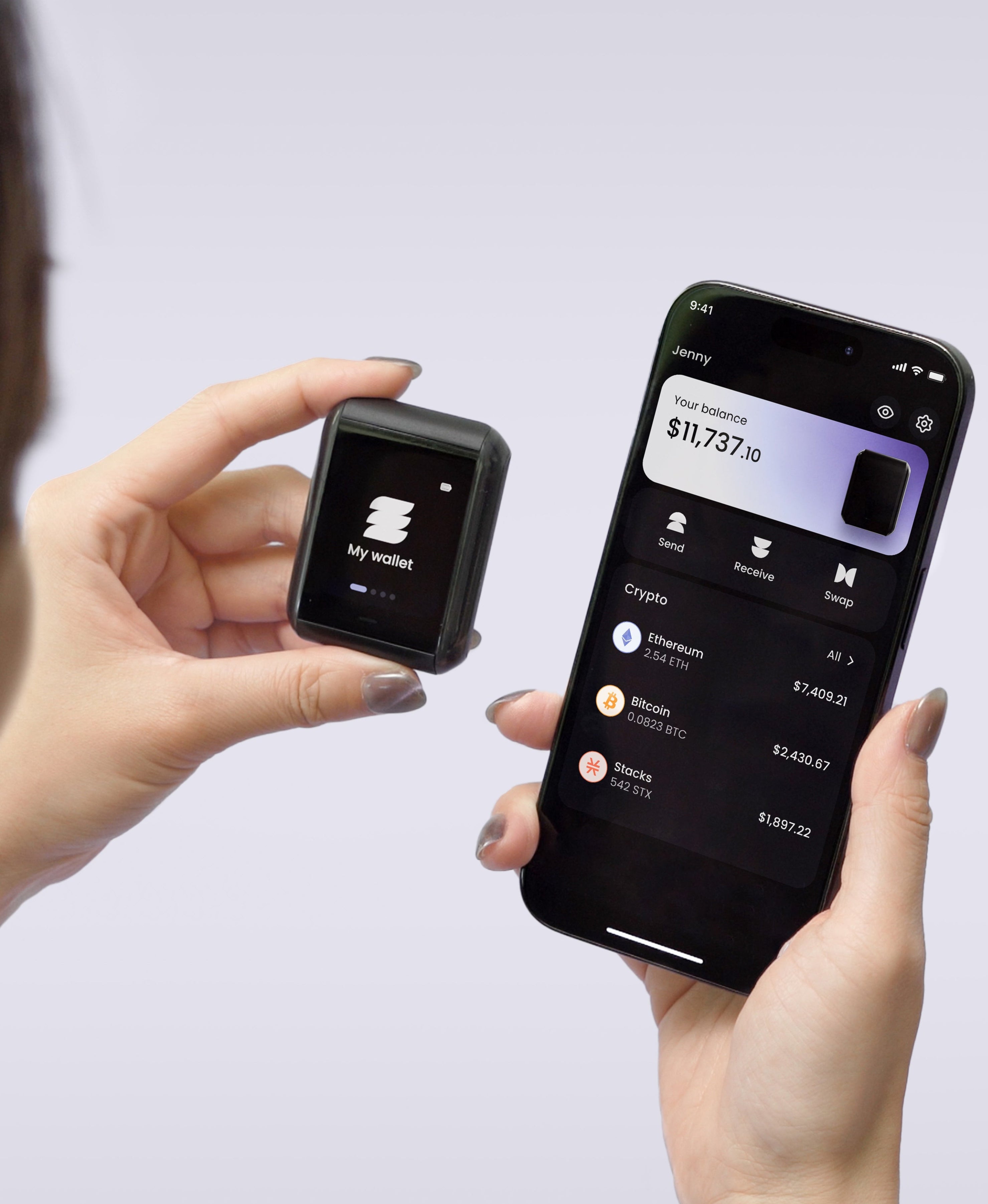
Self-custody is the answer to that lockout risk. Ryder One keeps your private keys inside an EAL6+ secure element, and every transaction gets verified on the 1.6-inch AMOLED screen before you sign. That matters during a rotation because the failure mode of a fast-moving market is signing something you didn't mean to sign: a wrong address, a spoofed contract, an inflated fee. On-device verification is the layer that catches those before they turn into a loss.
Ryder One supports Bitcoin, Ethereum, Solana, and a growing list of top ERC-20 and SPL tokens, which covers most of the assets that rerate hardest in an altseason. For backup, the seed phrase is always available on-device as a last resort and meets the BIP-39 standard, so you're never locked to Ryder hardware. TapSafe Recovery splits the wallet across a Recovery Tag and an encrypted phone backup, with each layer holding 50 percent of the recovery data. Tag plus phone equals full recovery, and no single object equals full access. During a market moving that quickly, having a redundant backup layer is the difference between an inconvenience and a lost position.
The bottom line
Altcoin season 2026 hasn't arrived by any of the three signals that matter, and the current mid-year snapshot makes that clear. The Blockchaincenter index reads around 35 against a 75 trigger. BTC dominance holds around 55.5% with the confirmed-breakdown line at 55%, and the ETH/BTC ratio prints near 0.031, well under the 0.055 breakout zone. Any one of those on its own is a data point; taken together, they describe a setup that's close but hasn't yet fired.
When the trigger does fire, the move tends to happen quickly, and the exchange rails that felt solid during the quiet months come under stress. The holders who navigate rotations best are the ones who set custody up ahead of time, so the only decision left when the tape moves is which asset to rotate into. The layer you control with certainty is the private key. Everything else, including the exchange holding your position, is a counterparty you're trusting on the fly.
Take the next step
If you're holding altcoins in size and they're sitting on an exchange or a hot wallet, altseason is when the counterparty risk stops being theoretical. Ryder One keeps your keys offline in an EAL6+ secure element, verifies every transaction on-device, and replaces the paper-seed-phrase problem with TapSafe Recovery. $229, 60 seconds to set up, and no more waiting on a withdrawal queue when the market moves.
SEO
- Target keyword: altcoin season
- SEO title: Altcoin Season 2026: The Three Signals That Confirm It (54 chars)
- Meta description: The Altcoin Season Index reads 35 in mid-2026. Here are the three signals that trigger altcoin season, and the self-custody play before it fires. (146 chars)



Share: