

On 1 July 2026 the transition window under MiCA, the EU's Markets in Crypto-Assets regulation, closed for good. Firms that had spent two years operating on old national registrations woke up to a rule with no soft edges: hold a licence, or stop serving European customers. Thousands of companies had been registered across the bloc before this. A fraction of them came out the other side, and the ones that didn't took their customers' access with them.
If you live in the EU and your crypto sits with a provider, this is the year that turned an abstract regulatory story into a question about your own funds.
What MiCA changed on 1 July 2026
MiCA created one licence, the CASP authorisation, for companies providing crypto-asset services in the EU: exchanges, brokers, and firms holding crypto on behalf of clients. Businesses already operating under national rules got a transition period to convert. That window ended on 1 July 2026.
The European Securities and Markets Authority spent the spring making sure nobody could claim surprise. In a statement published on 17 April 2026, ESMA set out that firms could keep operating only until the end of the applicable transition period, and no later than 1 July 2026, or until they were authorised. There was no grace period, no protected "application pending" status, and no fallback to the old national registration. An unlicensed firm serving EU clients after that date is breaking EU law and has to stop.
How many firms made it through
Fewer than most people expected. CoinDesk reported that of more than 1,200 firms holding national registrations across the bloc, roughly 210 had converted to full MiCA authorisation as the deadline arrived, leaving the large majority either mid-application with no legal standing to trade, or already gone. Poland alone had accounted for well over a thousand registrations in the old system.
Two things are worth separating here. Plenty of those registrations belonged to shell entities and dormant companies that were never going to convert, so the headline attrition rate overstates how much live business vanished. What remains true is that a working, licensed provider is now a much shorter list, and the compliance cost of that licence is high enough that small firms had a rational reason to walk away rather than apply.
What happens to customers when a provider exits
An exit is rarely a disaster. It's a process, and the process has dates in it. A firm winding down stops new deposits, sets a final trading day, tells customers to withdraw, and eventually closes the doors. That's the same shape as the BitMEX and BitMart wind-downs announced in July 2026, and it plays out the same way: the money is there, the deadline is published, and the people who lose out are the ones who weren't reading their email.
The friction shows up in the details. Withdrawals during a wind-down get slower as everyone arrives at once, identity checks and sanctions screening add steps, and a customer whose verification lapsed years ago can find themselves proving who they are under time pressure. None of that is malice. It's what an orderly exit looks like from the inside, and it is the best case.
The dependency MiCA makes visible
Here's the part that outlasts the news cycle. Regulation of this kind governs companies that provide services with your crypto, and the strongest version of that service is custody: the firm holds the keys and you hold a claim. A licence regime works on the firm. When the firm loses, surrenders, or never obtains the licence, the thing being switched off is your access.
That dependency existed before MiCA and will outlive it. What the deadline did was make it legible, by converting a diffuse worry about counterparty risk into a specific date on which a specific company had to stop serving you. Anyone who has kept coins on a platform for years now has a concrete picture of what someone else's paperwork can do to their portfolio.
What self-custody changes here
A hardware wallet sits outside that chain of dependency for a structural reason: nobody is holding anything on your behalf. Keys are generated inside the device and stay there, so there's no custody relationship to authorise, suspend, or wind down. A company can stop selling you hardware. Nothing about that reaches the coins already under your control.
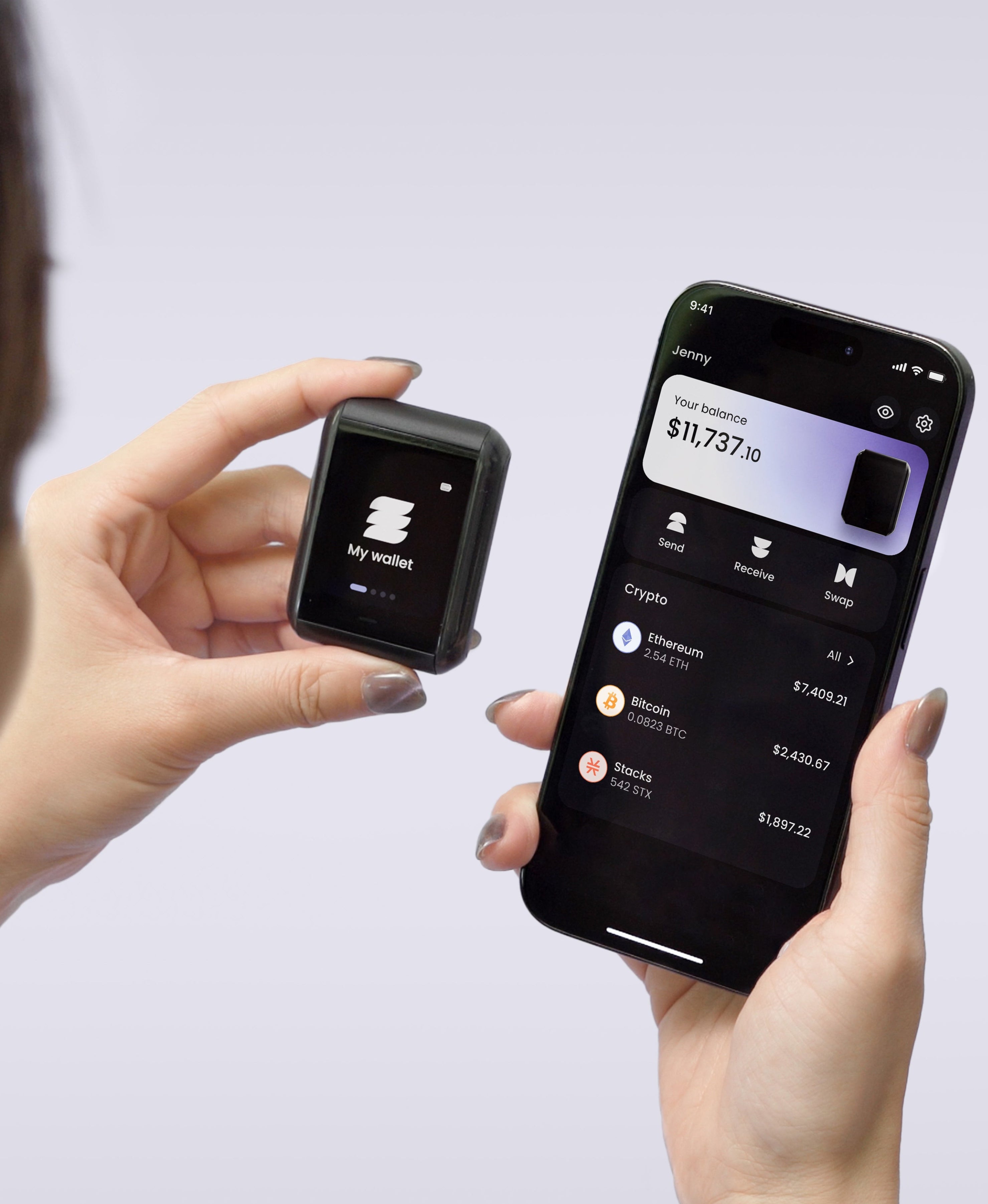
We designed Ryder One so that independence doesn't come with a homework assignment. The EAL6+ Infineon secure element generates and holds your keys, every transaction is shown in readable detail on the device's 1.6-inch AMOLED screen before a button wired straight to that chip can sign it, and setup takes three NFC taps and under 60 seconds. TapSafe Recovery spreads your backup across a Recovery Tag holding 50%, your paired phone holding 50% encrypted in your own iCloud or Google Drive, and optional Recovery Contacts at 25% each, so losing any single piece costs you nothing. The seed phrase stays on the device as a last resort and meets the BIP-39 standard, which means it restores into other wallets and you're never tied to us either.
Independence cuts both ways, and that's the point. The same design that stops a regulator's deadline from reaching your coins also means no support desk can reverse a mistake for you, which is why on-device address verification and a recovery model that survives a lost phone matter more than they sound.
If your provider is winding down, do this now
Check whether your provider appears on your national regulator's register of authorised CASPs, because a firm that's quiet about its status is telling you something. Read the emails you've been ignoring, since wind-down notices carry the dates that matter. Get your identity verification current before you need it, then withdraw to an address you control, verifying that address on the receiving device and sending a small test amount first. Export your transaction history while the platform still exists, because your tax authority will want it long after the site is gone.
MiCA didn't create the risk that a company can stop serving you. It set a date on it, in public, for an entire continent at once. Self-custody is the answer to the version of that question nobody warns you about in advance.
Ready to hold crypto that no licence decision can touch? Get your Ryder One, $149 for the Starter Combo with a Recovery Tag, wireless charger, and pouch in the box.


Share: