

When you buy crypto on Coinbase or Binance and leave it there, the exchange holds the keys; you hold an account balance, which is a claim on the crypto the exchange custodies for you. A self-custody wallet flips that arrangement, putting the keys directly in your hands and removing the intermediary from the chain of custody. That difference is the entire point of crypto's original design. Bitcoin was built so you could hold money without going through a bank. Self-custody is what that promise looks like in practice. This piece walks through what a self-custody wallet is, how it differs from a custodial wallet, what types exist, and what to look for if you're picking your first one.
What "custody" means in crypto
Custody is the legal and practical question of who controls the asset. In traditional finance, your bank custodies your money: the bank's database says you have 10,000 USD, but the bank technically holds the dollars on its balance sheet. If the bank fails, your claim becomes an unsecured creditor claim, with recovery depending on bankruptcy proceedings. Crypto changes the picture, because the underlying asset (Bitcoin, Ethereum, and so on) is controlled by whoever holds the private key. The key is the asset, in practical terms. Whoever holds the key can move the funds. In a custodial wallet, someone else holds the key on your behalf. In a self-custody wallet, you hold the key yourself.
What a self-custody wallet looks like
A self-custody wallet has three components: - A private key that controls a specific address on the blockchain - A way to store and use the key (a device, an app, or both) - A backup mechanism that lets you recover access if you lose the device The wallet software shows you balances and helps you build transactions. The signing happens with the key. The broadcast happens through a node connected to the relevant chain. None of that requires an exchange. Self-custody wallets come in two main shapes: Software wallets (hot wallets) run on a phone or browser. The private key lives on the device. Examples include MetaMask, Phantom, and Trust Wallet. They're free, fast to set up, and handle small balances well. The trade-off is attack surface: any malware or compromised app on the device can in principle reach the key. Hardware wallets (cold wallets) keep the private key on a dedicated chip that doesn't connect to the internet. Examples include Ryder One, Ledger, and Trezor. They're a one-time hardware purchase. Transactions are signed on the device with a physical confirmation, which removes most of the attack surface a software wallet has. Most holders who pay attention end up with both, using a software wallet for daily activity and a hardware wallet for the larger position.
What self-custody gives you
Three structural properties stand out. 1. The first is no counterparty risk. Your funds aren't sitting on someone else's balance sheet, so an exchange's failure doesn't affect your position. The FTX bankruptcy showed what counterparty exposure looks like at scale, and the customers who had moved their crypto to self-custody before the collapse weren't part of the creditor list. 2. The second is no permission requirements. A custodial exchange can pause your withdrawals, freeze your account, ask for identity documents, or close your access for reasons that don't involve you. A self-custody wallet works the same way at 3 a.m. on a Sunday as it does on a Tuesday morning. The blockchain doesn't have hours. 3. The third is the freedom to use crypto rather than just hold it. From a self-custody wallet, you can send funds peer-to-peer, pay for things directly, contribute to projects, run DeFi positions, or send money home to family in another country. From a custodial account, most of those actions require you to first move the crypto to a self-custody wallet anyway, so you've added a step.
What self-custody asks from you
The trade-offs are concrete. You hold the keys, which means you're responsible for backing them up. Lose the keys and the backup, and the funds are inaccessible. There's no support line that can recover them. You verify your own transactions. The wallet shows you what you're signing, but reading and understanding the transaction details is on you. The drainer attacks moving the most money in 2026 succeed when users don't read what they sign. You manage your own recovery plan. If you die without leaving heirs a path to the funds, the funds become inaccessible.
What to look for in your first self-custody wallet
Three things should top the list. - A clear recovery model. Seed phrase on paper is the legacy standard, and it works if you can keep the paper safe for decades. Modern wallets include split-share backups, social recovery, or hardware-backed redundancy that survives more failure modes. - Good on-device verification. For hardware wallets specifically, look for a screen large enough to read transaction details on, with a physical button required for every signature. - Audited firmware (for hardware wallets) or strong open-source review (for software wallets). The code that handles your key should be inspected by someone other than the vendor.
Where Ryder One fits
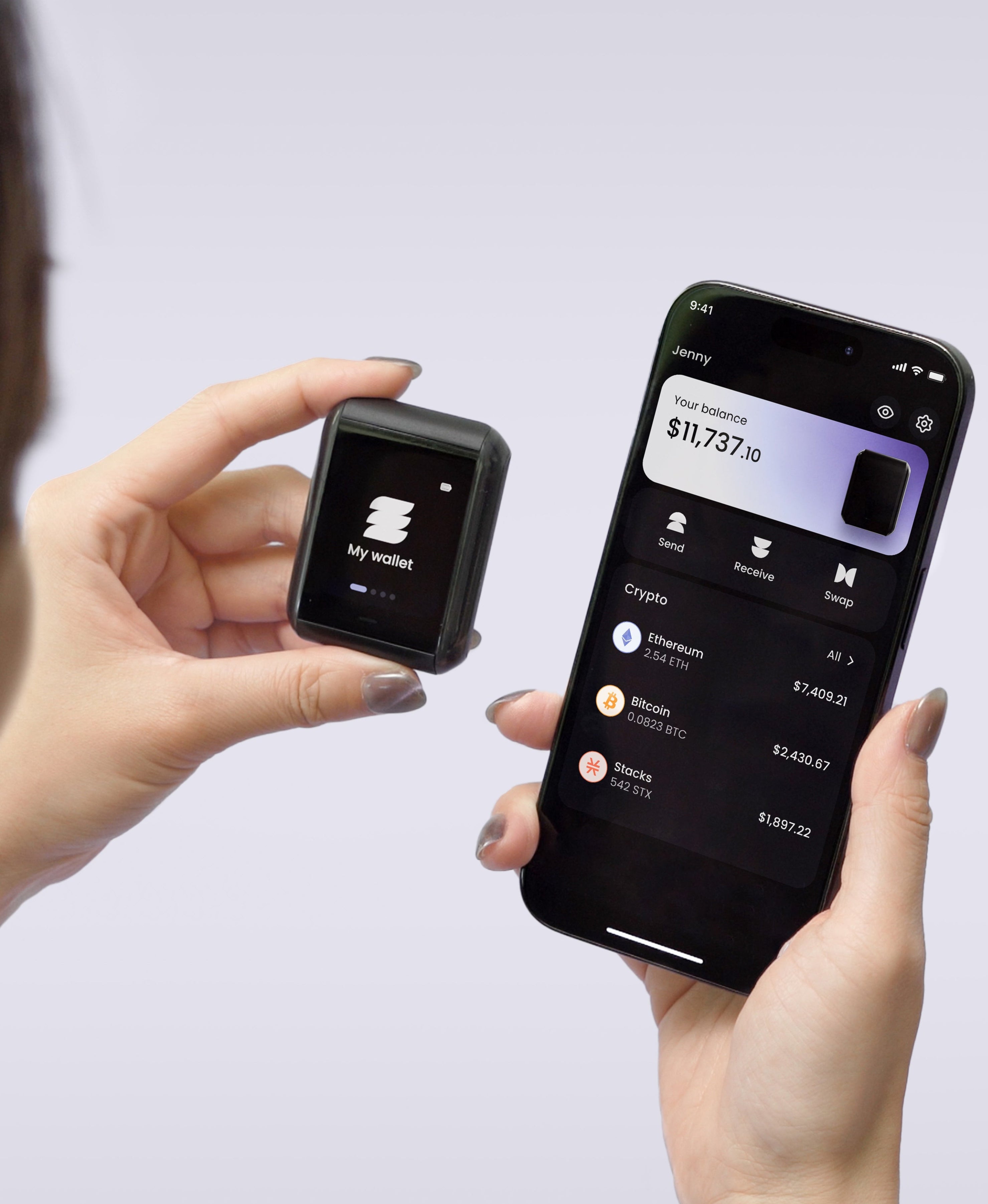
Ryder One is a self-custody hardware wallet. The private key lives on an EAL6+ Infineon SLC38 secure element. Every transaction is verified on the device's 1.6-inch AMOLED touchscreen with a physical button press required to sign that is linked directly to the Secure Element. Recovery runs through TapSafe Recovery: 50% on a Recovery Tag, 50% in your phone's iCloud or Google Drive backup, with optional 25% per Recovery Contact. The seed phrase stays accessible on the device as a last resort. The setup takes about 60 seconds. The day-to-day workflow involves opening the Ryder app on your phone, choosing what you want to do, and tapping the device to confirm.
The bottom line
A self-custody wallet is the answer to "how do I hold crypto without trusting an intermediary." The trade-off is responsibility: you hold the keys, and the consequences of losing access are on you. For amounts large enough that an exchange failure or account freeze would matter, the trade-off is worth taking. For amounts you're actively trading, a software wallet covers the use case. For the position you intend to hold, a hardware wallet with a well-designed recovery model is the standard.
Hold your crypto on your own keys. Ryder One is a self-custody hardware wallet with an EAL6+ secure element, on-device verification, and TapSafe Recovery as the structural backup. See how it works.


Share: