

On April 14, 2026, Tether launched tether.wallet, a self-custodial mobile wallet that holds USDT, USAT, XAUT, and Bitcoin across multiple networks including Bitcoin over Lightning. The world's largest stablecoin issuer is moving into the wallet stack, and the implications cut several different ways depending on what you wanted from a USDT custody approach. This piece walks through what tether.wallet does, why Tether is doing this now, and how it compares to holding USDT on a hardware wallet you already trust.
What tether.wallet is
tether.wallet is a self-custodial mobile wallet issued by Tether for users who want to hold Tether-issued assets without an intermediary exchange. The supported assets at launch are USDT (stablecoin), USAT (Tether's gold-pegged stablecoin variant), XAUT (Tether's gold token), and Bitcoin, with Bitcoin handled both on-chain and over Lightning. Networks supported include Ethereum, Solana, Tron, and Bitcoin/Lightning, covering the chains where USDT volume mostly lives today. The custody model is non-custodial: the user holds the keys, and Tether doesn't have access to balances. The app handles key generation, backup, and signing within the user's phone. It's a hot wallet, with the key living on the mobile device.
Why Tether is doing this now
Three forces stack on top of each other. Competition is the most visible driver. Self-custody wallets like MetaMask, Phantom, Trust Wallet, and others have become the default front-end for crypto for tens of millions of users. Tether owning the front-end means Tether captures the relationship with USDT holders directly, rather than through whichever wallet they happened to install. There's a regulatory pull underneath that. The post-MiCA, post-GENIUS-Act stablecoin world creates incentives for issuers to maintain a clearer relationship with end-users, and a first-party wallet gives Tether a direct channel for compliance disclosures, sanctions screening, and the user-identification flows regulators have been asking about. The platform play sits on top. A wallet creates a surface for Tether to ship features that exchanges have historically owned: in-app swaps, yield, payments, on-ramps. Each addition is a step further from Tether being a token issuer and toward Tether being a financial platform.
What this means for USDT holders
If you currently hold USDT on an exchange, tether.wallet is an upgrade in the most important sense: your funds aren't in someone else's custody anymore. If you currently hold USDT on a software wallet you trust (MetaMask, Phantom, and similar), tether.wallet is a roughly equivalent product with the difference that the wallet vendor is Tether itself. If you currently hold USDT in cold storage on a hardware wallet, tether.wallet is a hot-wallet alternative that gets you faster transactions but with a meaningfully larger attack surface. The trade-off comes down to where the key lives. tether.wallet keeps the signing key on your phone, where it has to interact with the operating system, network, and any other apps installed. A hardware wallet keeps the signing key on a dedicated chip that doesn't connect to the internet, with on-device verification of every transaction. For the USDT you move regularly, the phone wallet is convenient. For the USDT you're holding as a stable-asset position, the hardware wallet is the cleaner answer.
The issuer-as-wallet-vendor question
There's a structural question worth surfacing. When the issuer of an asset also operates the wallet you hold that asset in, the trust set narrows. Tether already has the ability to freeze any address holding USDT under court orders or sanctions compliance, and Tether has used that power many times historically. Adding the wallet to the stack puts the issuer in a position where they could in principle ship a firmware update that constrains the wallet's behavior, could decline to update the wallet to support a competing asset, or could change the wallet's terms in ways that affect how USDT users interact with their own funds. This isn't a critique specific to Tether. The same structural question applies to any issuer that ships a wallet: Circle could do this for USDC; PayPal does it for PYUSD. The point is that the trust model differs from using a neutral third-party wallet, and holders should know which trust set they're accepting when they choose where to keep USDT.
When tether.wallet makes sense
For day-to-day USDT activity (paying for things, sending remittances, moving small amounts across chains), tether.wallet is reasonable. The integrations with Lightning, Tron, and Solana cover the chains most users transact on, and the UX is built around stablecoin-specific flows. Holding USDT as a stable-asset position you don't touch often is a different use case. Here, the hardware wallet path is the better one. You give up some convenience to remove the issuer-plus-phone-plus-app trust stack and replace it with just the issuer. A mixed setup works well for users who hold both an active USDT working balance and a larger USDT position they don't touch: tether.wallet (or another mobile wallet) for the working balance, hardware wallet for the position. Hot for daily use, cold for storage.
Ryder One and USDT
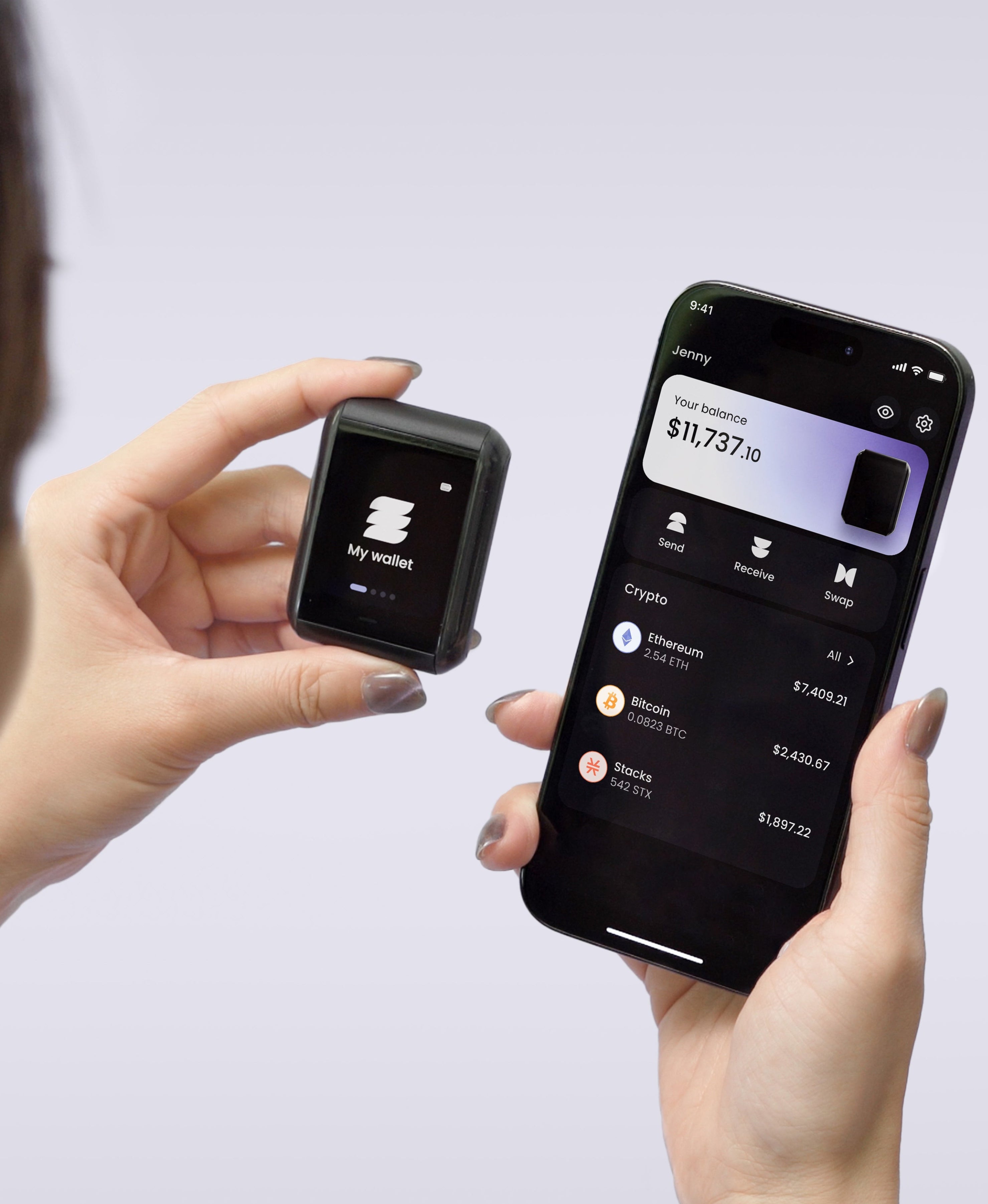
Ryder One supports Bitcoin, Ethereum, Solana, and a growing list of top ERC-20 and SPL tokens The flow is the same as for any other asset: receive to the wallet address, verify the address on the device's 1.6-inch AMOLED touchscreen, and sign with the physical button wired to the EAL6+ secure element. For stablecoin holders specifically, the upside has less to do with speed than with positioning. A hardware wallet isn't designed for rapid trading from cold storage; what it does well is keep the position outside any custodian's books, including the issuer's wallet stack. If a future regulatory or technical change affects how tether.wallet handles USDT, your Ryder One position is unaffected because the keys aren't in tether.wallet. TapSafe Recovery handles the backup side: 50% on the Recovery Tag, 50% in your phone's iCloud or Google Drive backup, optional 25% per Recovery Contact.
The bottom line
tether.wallet is a meaningful product launch. It moves USDT users off exchanges and into self-custody by default, which is structurally a good thing for the ecosystem. The wallet is a hot wallet, with all the security properties hot wallets have, and the wallet is also a Tether product, with the trust narrowing that implies. For USDT you move often, tether.wallet is reasonable. For USDT you're holding, a hardware wallet remains the cleaner answer because the trust stack is shorter: just the issuer, with no wallet vendor or phone or app in the middle.
Keep your USDT outside the wallet vendor stack. Ryder One holds USDT in cold storage on an EAL6+ secure element, with on-device verification for every transaction and TapSafe Recovery as the backup. See how it works.


Share: