


Strategy (formerly MicroStrategy) holds 845,256 Bitcoin as of June 8, 2026, after purchasing another 1,550 BTC for roughly $101 million during the first week of June. The position is worth about $53 billion at current prices.
For comparison, total Bitcoin held by national governments is estimated at roughly 250,000 to 300,000 BTC. The United States holds the most by far (~200,000 BTC, mostly from criminal asset seizures). The United Kingdom holds about 61,000 BTC. Bhutan holds approximately 13,000 BTC. El Salvador holds approximately 6,000 BTC as part of its national reserve experiment.
Strategy alone holds three times what every government on Earth holds combined.
This piece walks through how Strategy got there, what the holdings represent for Bitcoin's market structure, and what this concentration means for retail self-custody holders.
How Strategy got there
Michael Saylor announced Strategy's first Bitcoin purchase in August 2020: 21,454 BTC for $250 million. The company has not sold a single Bitcoin since. Every quarter since 2020, Strategy has issued some combination of debt and equity to fund additional Bitcoin purchases, with the cumulative position growing from 21,000 BTC to 845,000 BTC over six years.
The strategy is mechanically simple: issue capital, buy Bitcoin, repeat. The model works for as long as Bitcoin's price appreciates faster than the cost of capital, and as long as investors continue to fund the strategy.
Strategy's Q1 2026 financial results showed a $12.5 billion paper loss tied to Bitcoin's drawdown in that quarter (Bitcoin briefly traded below the company's average purchase price). The loss didn't stop the strategy; the company continued buying through Q1 and into Q2.
As of June 2026, Strategy's average cost basis is around $69,500 per BTC. With Bitcoin at $63,000, the position is roughly 9% underwater on a mark-to-market basis. Strategy holds the position regardless.
What the concentration represents
Bitcoin has a fixed supply of 21 million coins. Of that:
- ~19.7 million have been mined as of mid-2026
- ~3 to 4 million are estimated to be permanently lost (lost wallets, forgotten keys, Satoshi's untouched coins)
- ~15 to 16 million are theoretically circulating
Strategy holds 845,256 BTC, or roughly 5.2% of the circulating supply. Other corporate treasuries collectively hold another ~150,000 BTC. ETFs hold approximately 1 million BTC across all spot Bitcoin ETF funds. Sovereign holdings are ~280,000 BTC across all governments.
The structural implication: institutional and corporate holders now own a meaningful share of all Bitcoin that will ever exist. Retail self-custody holders collectively still own the majority, with the share trending toward concentrated holders accelerating.
What this means for retail holders
Three structural shifts follow from the concentration.
Reduced sell-side liquidity. When a position is held with multi-year conviction (Strategy's average hold time is 4+ years and counting), that Bitcoin isn't available for sale at typical market prices. The effective free float is smaller than the nominal supply.
Increased correlation to corporate balance sheets. When Strategy buys, Bitcoin gets a demand-side push. When Strategy's stock comes under pressure (paper losses, leverage concerns), the discussion of forced selling becomes a Bitcoin price factor. The asset that started as a way to opt out of corporate finance is now influenced by corporate finance.
Higher cost of accumulation for retail. Concentrated buying pressure from institutions and corporations means retail holders accumulating Bitcoin in 2026 are doing so at higher prices than they would have if institutional demand had not absorbed the supply.
None of these shifts change the fundamental case for self-custody. They do change what the case looks like in practice.
Where Ryder One fits
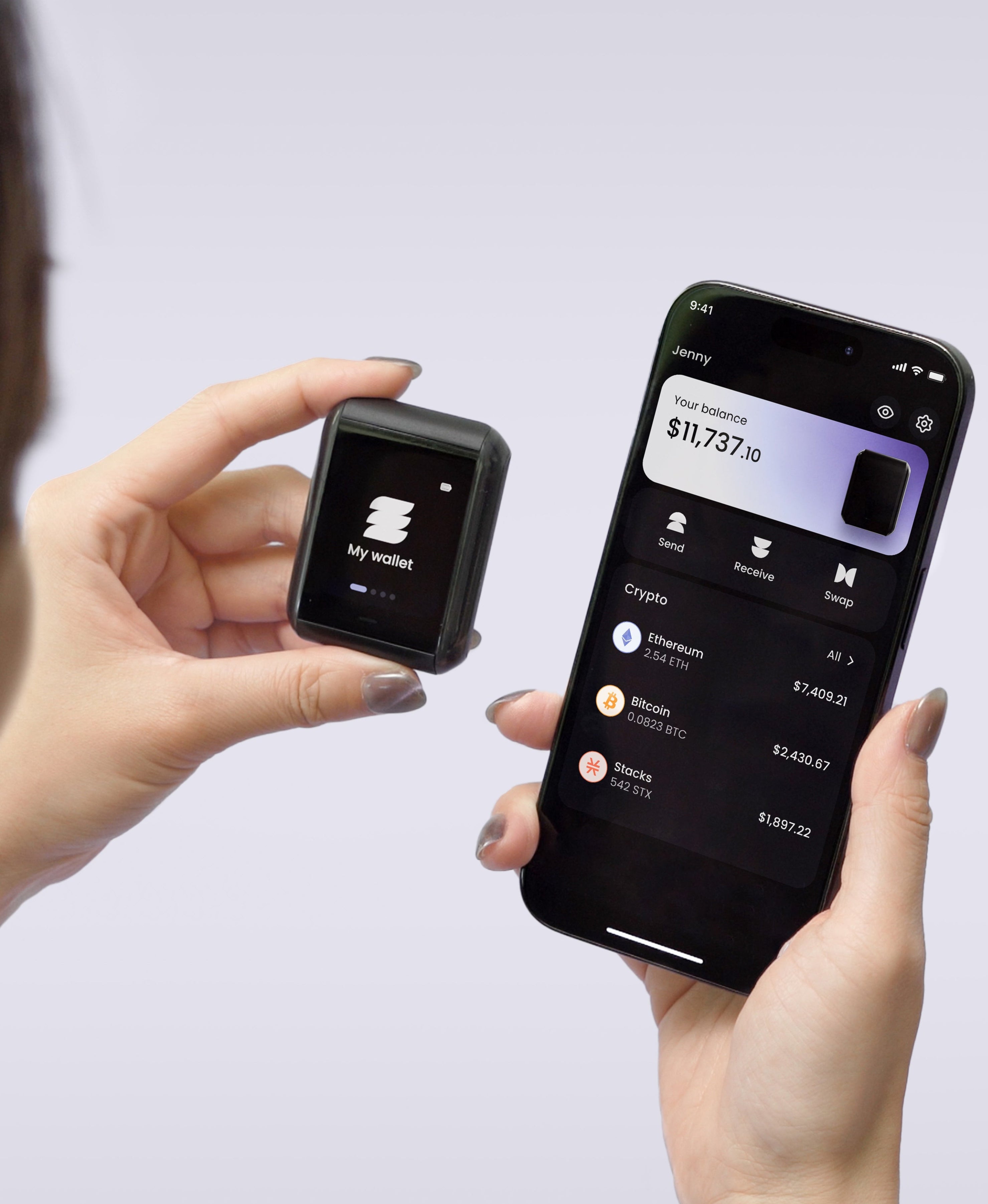
Ryder One is built around the case that retail holders should hold Bitcoin directly, without an intermediary. The EAL6+ Infineon SLC38 secure element holds the private key offline. Every transaction is verified on the device's 1.6-inch AMOLED touchscreen with a physical button press. TapSafe Recovery splits the backup across hardware and people you trust.
Strategy's position is institutional, leveraged, and visible on a corporate balance sheet. The retail holder's position can be the opposite: small, un-leveraged, and known only to the holder.
The bottom line
Strategy's 845,256 BTC position now exceeds the combined Bitcoin holdings of every government on Earth. The company's strategy (raise capital, buy Bitcoin, never sell) has compounded over six years into the largest single Bitcoin position in the world outside of the (likely lost) Satoshi-era coins. For retail self-custody holders, the takeaway runs through recognizing that Bitcoin's ownership structure has shifted, that institutional concentration continues, and that holding Bitcoin directly through a hardware wallet remains the cleanest way to keep your share outside of any company's books, any government's records, or any ETF's quarterly redemption flow.
Hold your share, outside of any company's books. Ryder One keeps your Bitcoin offline on an EAL6+ secure element, with TapSafe Recovery as the backup. Your position is yours, off the balance sheet, off the ETF, off the books. See how it works.



Share: