

Two methods promise to remove the single-point-of-failure problem from crypto self-custody. Shamir Secret Sharing splits one seed phrase into shares with a threshold for recovery. Multisig requires multiple separate signatures on every transaction. Both work. Neither is the right answer for everyone.
The choice between them comes down to how you think about three things: how often you transact, who else is involved in your security model, and how much operational complexity you can carry without dropping a piece of it.
What Shamir Secret Sharing is
Shamir Secret Sharing (SSS) is a cryptographic method that splits a single secret into multiple shares, with a threshold required to reconstruct. A 2-of-3 setup produces three shares; any two recover the master secret. Below the threshold, the math reveals nothing.
In crypto, SSS is implemented through SLIP-39, a standard published by SatoshiLabs in 2017. SLIP-39 is supported by Trezor (Model T, Safe 3, Safe 5), Keystone, and a small number of other wallets. The user generates one master seed at setup, splits it into the desired share configuration, and distributes shares across locations or trusted contacts.
For day-to-day use, the wallet behaves the same as any single-seed wallet. Shamir is invisible during normal transactions. It only becomes relevant during recovery, when you reassemble the threshold of shares to restore access.
What multisig is
Multisig (multi-signature) is a wallet configuration where multiple separate keys must sign every transaction. A 2-of-3 multisig means three independent keys exist, and any two of them must sign for a transaction to be valid. The keys can live on different hardware wallets, in different locations, or be held by different people.
Unlike Shamir, multisig isn't a backup method. It's a transaction signing model. There's no single master seed being split. There are independent keys, each generated separately, each capable of signing partial transactions. The blockchain itself enforces the threshold.
Multisig is supported natively by Bitcoin (through P2SH and P2WSH scripts) and by Ethereum (typically through smart contract wallets like Safe, formerly Gnosis Safe). It's the standard for institutions, treasuries, and high-net-worth holders.
How they compare at a glance
| Dimension | Shamir Secret Sharing | Multisig |
|---|---|---|
| What gets split | One master seed | Nothing, keys are independent |
| When the threshold matters | At recovery only | Every transaction |
| Day-to-day friction | None | Higher, must coordinate signers |
| On-chain footprint | None, looks like single sig | Visible, different address format |
| Coin coverage | Any coin the wallet supports | Bitcoin, Ethereum, a few others |
| Wallet support | Trezor, Keystone, limited | Bitcoin Core, Sparrow, Safe, Specter, Casa |
| Failure mode | Lose threshold of shares = funds gone | Lose threshold of keys = funds gone |
| Best fit | Holders wanting backup redundancy | Treasuries, families, frequent transactors |
When Shamir Secret Sharing wins
Shamir is the better tool when your threat model is centred on backup loss, you transact infrequently, and you want simplicity in day-to-day use.
A single holder who wants to remove the single-point-of-failure problem from their seed phrase backup is a textbook Shamir use case. Set up a 2-of-3 SLIP-39 backup, distribute the shares across three secure locations, and continue using the wallet as if nothing changed. The wallet signs transactions normally. Recovery only invokes the threshold logic.
Shamir also wins when coin coverage matters. Because SLIP-39 protects the master seed, any coin the wallet supports is protected by the same backup. There's no per-coin or per-chain configuration.
Where Shamir struggles: vendor lock-in. SLIP-39 isn't supported across most wallets, so if you switch hardware later, you may need to reconstruct your master seed and re-import under BIP-39. The advantage collapses temporarily during migration.
When multisig wins
Multisig is the better tool when multiple parties are involved in custody, when you want every transaction to require coordination, and when you can absorb the operational overhead of running multi-party signing.
Treasuries and DAOs are the obvious case. No single insider can move funds. Every disbursement requires the configured threshold of signers. The blockchain itself enforces it; there's no off-chain trust required.
Families with shared crypto holdings benefit similarly. A 2-of-3 multisig where two parents and one trusted lawyer hold keys means no one party can act unilaterally. Recovery scenarios (loss, death, divorce) are handled by the threshold rather than by an emergency seed phrase someone has to find.
High-frequency transactors with internal controls also lean multisig. Trading desks, custodians, and payment operations use multisig because every spend produces an on-chain audit trail of which signers approved it.
Where multisig struggles: complexity overhead. Each transaction requires coordination across signers. Some chains don't support it natively. Smart contract multisig (Safe) introduces contract risk on top of key management.
Where they overlap, and where they don't
Both methods solve the same high-level problem (single-point-of-failure removal) but at different layers. Shamir works at the seed-backup layer. Multisig works at the transaction-signing layer. You can run both at once: a multisig wallet where each cosigner backs up their key with Shamir. That's how some institutional setups work.
The thing they share: operational discipline. Both fail the same way, which is when the holder loses track of where the threshold of pieces lives over time. Shares get lost in moves. Cosigners forget passwords. Trusted contacts pass away. The math is bulletproof. The execution is where most holders break down, and the failure mode is identical: lose the threshold, lose the funds.
This is the part of the conversation that gets undersold. Both methods replace one operational problem (protect one seed) with a different operational problem (protect K of N pieces, indefinitely, across life events you can't predict). The tradeoff is sometimes worth it. Sometimes it isn't.
Where Ryder fits
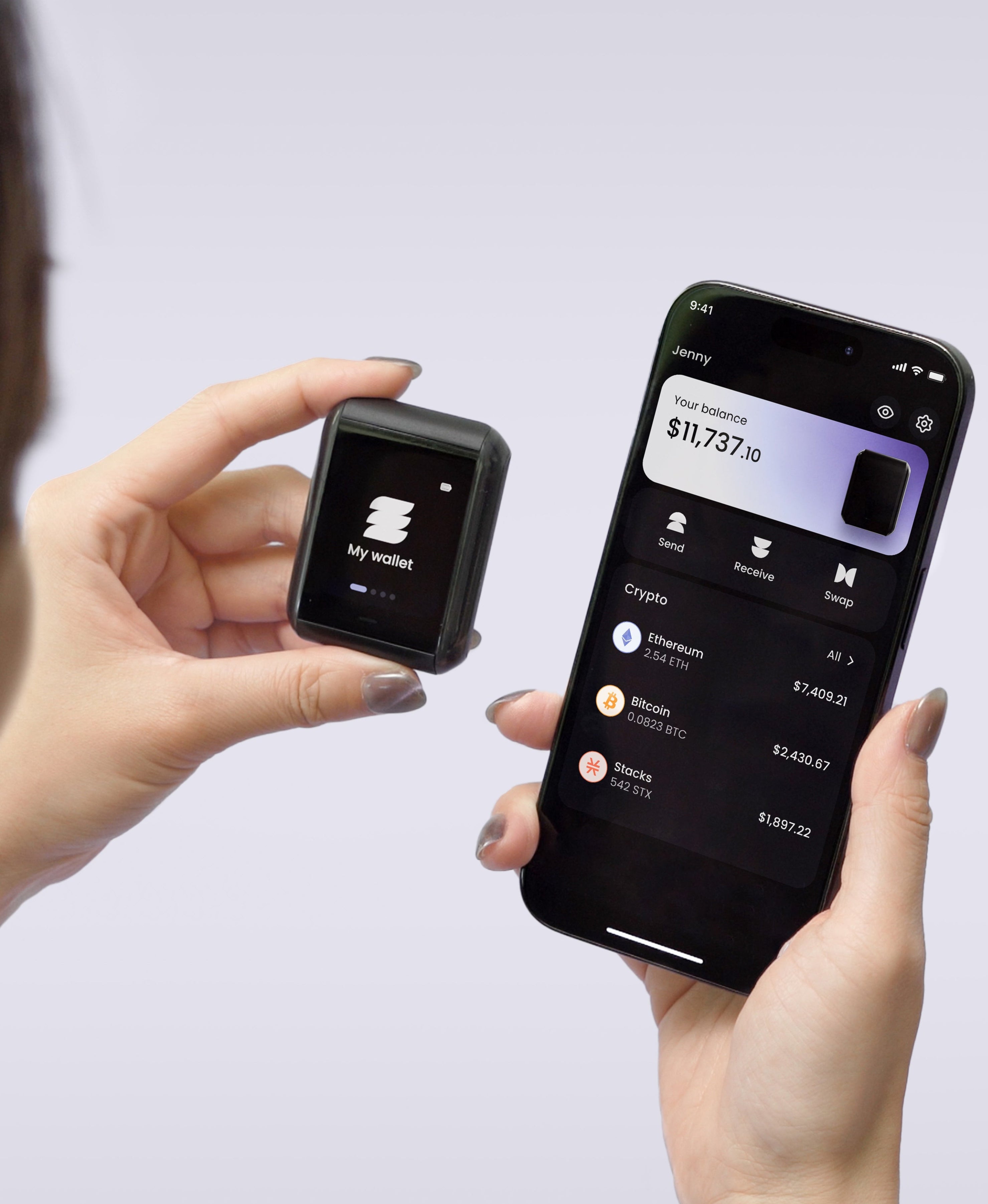
Ryder One is built for the holder who wants the structural benefit of removing the single point of failure without becoming a part-time backup administrator. We use BIP-39 under the hood (so you're never locked to Ryder hardware) and we built TapSafe Recovery on top.
TapSafe distributes recovery across three layers: a Recovery Tag you keep with you, a phone backup, and optional Recovery Contacts. No single layer alone gives access to your funds. It's not Shamir Secret Sharing in the cryptographic sense, and it's not multisig in the on-chain sense. It's a recovery architecture designed for the holder who wants the safety properties of both without running either system manually.
For holders who specifically need SLIP-39 (because the math guarantee matters for your threat model), Trezor or Keystone are the right tools. For holders who specifically need multisig (because multiple parties must approve every transaction), Sparrow or Safe are the right tools. For holders who want their backup to stop being a single object that can be lost, stolen, or burned, without taking on the operational weight of K-of-N share management, Ryder One is built for that.
The takeaway
Shamir Secret Sharing and multisig solve overlapping problems through different mechanisms. Shamir splits one seed across shares with a recovery threshold. Multisig requires independent signatures on every transaction. Choose Shamir for solo holders who want backup redundancy. Choose multisig for shared custody and transaction-level controls. Both demand discipline you'll need to maintain for years.
If neither setup matches the way you live with your crypto, Ryder One gives you single-point-of-failure-free recovery through TapSafe, with BIP-39 portability so you can leave at any time.



Share: