

The first time someone tries to send crypto, two things tend to surprise them. The first is that the wallet wants them to read a long address before confirming. The second is that there's a fee they didn't expect, calculated in a unit they don't recognize, and the fee changes between the time they start the transaction and the time they finish it. That fee is gas. It's one of those concepts that's easy once you've sent ten transactions and confusing the first few times. This is the plain-English version.
What gas is
A blockchain like Ethereum is a shared computer that processes transactions sequentially. Every transaction costs computational work: storage, hashing, verification, sometimes calling smart contracts that do their own work. The blockchain charges you for that work, and the unit it charges in is gas. A send is a small amount of work. A swap on a DEX is more work. A complex DeFi transaction can be much more. Each operation has a cost in gas units, and the total gas you pay is roughly your operations summed up. The price of each unit of gas is set by the market so when the network is busy, the price goes up. When it's quiet, it goes down.
The two numbers that matter
When you send a transaction, your wallet shows two things: - Gas limit: The maximum number of gas units you'll spend on this transaction. If the actual cost exceeds this, the transaction fails and your gas is consumed anyway. Most wallets estimate this for you. - Gas price: What you pay per unit of gas, denominated in gwei (one billionth of an ether). On Ethereum, the priority fee and base fee combine into the gas price. On Solana, fees are generally much lower and are quoted as a small number of lamports (fractions of SOL) per transaction, with optional priority fees when the network is busy. Multiply gas used by gas price and you get the total fee. The wallet usually shows that as a dollar amount, which is the only number most people care about.
Why fees vary so much
A few drivers: Network demand. When everyone wants to do something at once (NFT mints, big launches, market panic), the gas price spikes. Quiet periods bring it down. Transaction complexity. A token transfer is cheap, but multi-hop swap with multiple approvals is expensive. The same network condition can mean very different fees depending on what you're doing. The chain you're on. Ethereum mainnet is the most expensive. Layer 2 networks like Arbitrum, Base, and Optimism are usually 10x to 100x cheaper. Solana, Polygon, and many others have their own fee dynamics, often much lower. The time of day. Network congestion follows global activity. Weekends and off-peak US/EU hours tend to be cheaper.
EIP-1559, briefly
In 2021, Ethereum upgraded its fee model with EIP-1559. Instead of a single auction price, transactions now pay a base fee (set by the network and burned) plus a priority fee (a tip to the validator). The base fee adjusts up and down based on demand. For most users, this means fees are more predictable than they used to be. Big spikes still happen, but the wallet's estimate is closer to what you'll actually pay than it was in 2020.
How to estimate before you sign
A short routine: - Look at your wallet's estimated fee. That's a good starting point. - Cross-check with a public gas tracker (Etherscan's gas tracker, Blocknative, or your wallet's own dashboard). - For Layer 2s, check the L2 explorer's gas page; the dynamics differ. - If the fee feels high, wait an hour and check again. Most spikes pass. - For non-urgent transactions, the "Slow" or "Economy" speed option is fine and saves real money. The fee shown when you first open the transaction is rarely the fee you have to pay. The wallet often offers a faster or slower tier, and the slower tier is usually within 10% of the fast one in dollar terms.
How to keep gas costs down
Use Layer 2s for everyday transactions. If you're doing anything other than long-term holding on Ethereum mainnet, the L2s save dramatic amounts of fees. Batch where possible. Some wallets and dapps let you bundle approvals or transfers into a single transaction. Avoid peak hours when you can. A swap that costs \$40 at 3pm UTC on a Tuesday might cost \$5 at 5am UTC on a Sunday. Set token approvals to a finite amount. It's slightly more expensive each time, but the security benefit is worth it. "Approve unlimited" looks cheap but isn't. Pay attention to the fee on token approvals. They're often the highest-fee operation in a workflow because they touch contract storage.
What happens if a transaction fails
This is the part that surprises people most. If a transaction fails, the network still charged for the work it did before failing. You don't get the gas back. Common reasons: - The gas limit was too low - A revert condition was triggered (a slippage check, a deadline, an expected balance that wasn't there) - The market moved between submission and inclusion The fix is usually to retry with a higher gas limit or different parameters. The lost fee is the cost of learning the system.
Where the hardware wallet fits
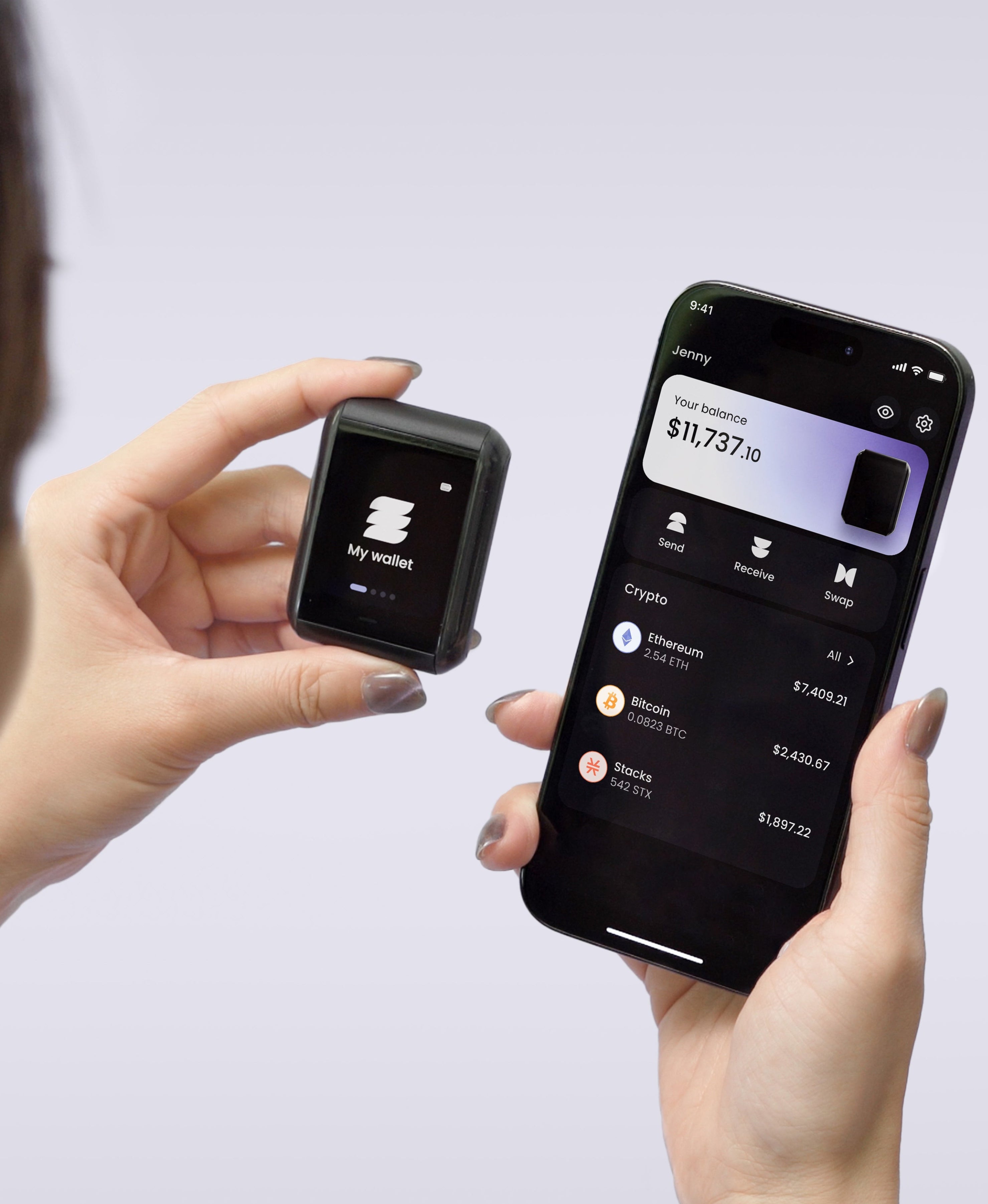
A hardware wallet doesn't change the fee. It changes whether you can trust the fee shown on the screen. Ryder One displays the gas estimate, the destination, the amount, and the function being called on its own AMOLED screen before signing. If a malicious dapp tries to inflate the fee to extract value, the device shows you what you're paying. The wallet's job isn't to make gas cheap. It's to make sure you know what you're paying.
FAQ
Why are some chains so much cheaper? Layer 2s batch many transactions into a single mainnet write, splitting the cost across users. Other chains use different consensus models that produce blocks faster and cheaper. The tradeoff is usually some combination of decentralization, security assumptions, and ecosystem maturity. Can I send a transaction with zero gas? No. Even sponsored transactions (where someone else pays the gas) still pay it; the user just doesn't see it. What's the cheapest time to transact on Ethereum? Variable, but generally low-traffic hours in major timezones. Weekday mornings UTC, weekends, and post-midnight US time tend to be cheaper. Check a gas tracker. Do I pay gas for receiving crypto? No. Gas is paid by the sender. Some dapps will charge a gas fee on actions you initiate that look like "receiving" (claiming an airdrop, withdrawing from a contract), because those involve a transaction.
Bottom line
Gas isn't a tax. It's a price for using a shared resource, set by demand. Once you know what's in the bill (the work, the price, the chain), the surprises drop and the fees become a parameter you can plan around like any other.



Share: