

Anyone who tells you crypto is all a scam is selling you a narrative. Anyone who tells you it is all legitimate is selling you a token. The full answer to is crypto a scam needs both of those sentences to be true at the same time. Learning to tell one category from the other is the only useful skill for anyone thinking about getting near it.
This post is for people who have watched from the outside, seen the crashes and the wins, and want to know which parts of the landscape are which before they decide whether to engage at all.
What “is crypto a scam” means
The word gets used loosely enough that it is worth being specific about what it is pointing at.
A scam is a project where the people running it know it isn't going to deliver what they are claiming, and they are taking value from the people who believe them. That covers:
- Rug pulls: where a team raises money or inflates a token and then disappears with the funds.
- Honeypots: where a smart contract is built to let people buy but not sell.
- Ponzi structures dressed up as yield products, where new deposits fund old withdrawals until they don't.
- Pump-and-dumps coordinated through paid social media campaigns.
- Fake exchanges that never process a withdrawal.
These exist in crypto. They exist in large numbers. A meaningful share of token launches in any given year fit one of those descriptions clearly enough that the label applies without any argument. The SEC's investor alerts page lists settled cases that match each of those patterns. The FTC's crypto scam page does the same from a consumer side.
Not a scam, even if you don't like it. A volatile asset that loses money. A project that tried something and failed. A speculative bet that didn't pay off, or even a community that overpromised and underdelivered. These are common in crypto, common in every other frontier market in human history, and different from fraud in a way that matters.
The cases where it clearly is a scam
The scam patterns are very consistent, and knowing the shapes means you spend less time wondering and more time filtering.
Celebrity-promoted token launches where the celebrity is paid and the launch is timed to peak attention. This has been a pattern since 2021: a well-known person posts about a new token, retail buyers pile in, the coordinated holders dump on the rally, the price collapses to near zero within days, the celebrity issues a vague apology weeks later. This has happened dozens of times with names you'd recognize. The SEC now has multiple settled cases specifically about it.
Yield products offering returns that don't match any underlying economic activity. This is the easiest pattern to spot once you know the shape: returns stay flat week after week, the mechanism gets described in vague terms (algorithmic trading, DeFi strategies, optimized yield), and withdrawals work right up until they don't. Terra and Luna's UST was a high-profile version of this, and the smaller ones keep running the same play of promising double-digit yields, paying from new deposits, and collapsing the moment deposits slow.
Projects that can't be told apart from five other projects launched the same week. When the website, the team bios, the roadmap, and the community messaging match twenty other projects launching that month, the odds that this one is the real one are low. Most aren't, and most were built specifically to be exited.
A quick five-minute filter against the patterns above catches most of these before any money moves, and the cost of those five minutes is much lower than the cost of skipping them, which is how most losses start.
The cases where it clearly isn't
Bitcoin isn't a scam. It's a 17-year-old monetary network with a public ledger anyone can audit, a fixed supply that nobody can inflate, and a track record of surviving multiple bank failures, exchange collapses, and government attempts to outlaw it. It has been the best-performing major asset of the last decade. It has known weaknesses (volatility, energy debates, legitimate questions about transaction costs), but it is a working system that does what it says. Bitcoin.org's overview walks through the basics.
Ethereum and a small number of other established networks are similarly not scams. They are computing platforms with thousands of developers, active usage by live applications, and economic activity that exists with or without people speculating about the token price. You can argue about whether they will hold their position, but the claim that they don't do anything real is just wrong.
Self-custody, the practice of holding your own crypto with your own keys on your own hardware, isn't a scam. It's the original point of crypto as designed, and the behavior that makes crypto different from a database at a bank. The people who still held Bitcoin after FTX collapsed in 2022 were almost all the ones who had moved their coins to self custody. The people who lost the most were the ones who had not.
Stablecoin rails for sending money across borders aren't a scam. Hundreds of billions of dollars settle through USDC and USDT every month for reasons that haven'thing to do with speculation. Remittances, business payments, payroll in currencies with unstable local banking. The use is substantive and growing. Wikipedia's entry on stablecoins has the background.
How most people end up sorting it
Most long-term participants end up in the same place: the asset layer is real, the speculation layer around it is mostly noise, and the scam layer exists because noise and low accountability always attract fraud.
Bitcoin held in self-custody for a clear reason isn't a scam. A random altcoin someone's pushing in a group chat with vague claims and unnamed founders almost always is, and almost always is close enough to always that the default should be to walk away. Stablecoins used on purpose for moving money aren't a scam either. A yield product promising 20% APY from a mechanism nobody can explain is one, or close enough that the distinction is academic once your money is gone.
The question "is crypto a scam" doesn't have a single answer because crypto isn't a single thing. It's a technology (real), an asset class (useful for specific cases), a speculation market (mostly overheated), and a fraud ecosystem (actively predatory on newcomers). Treating the whole thing as any one of those four misses the other three.
The version of engaging with crypto that works is the one where you pick what you're doing on purpose, know which category it falls into, and apply the right amount of doubt. Holding Bitcoin in self-custody for ten years is a very different thing from chasing memecoins, and the first doesn't deserve to be tarred by the second any more than the second deserves to be defended by the first.
How we built Ryder One for the real part of crypto
The answer here ends up the same as the answer to “is the stock market a scam.” Parts of it, yes. The core, no. Separating one from the other is the skill. Holding the legitimate part properly is what decides whether crypto works for you.
For the part that holds up (Bitcoin held in self-custody), the device you pick is the difference between owning your coins and hoping nobody else does. A hardware wallet that generates keys offline and signs on the device is the setup that still works a decade from now.
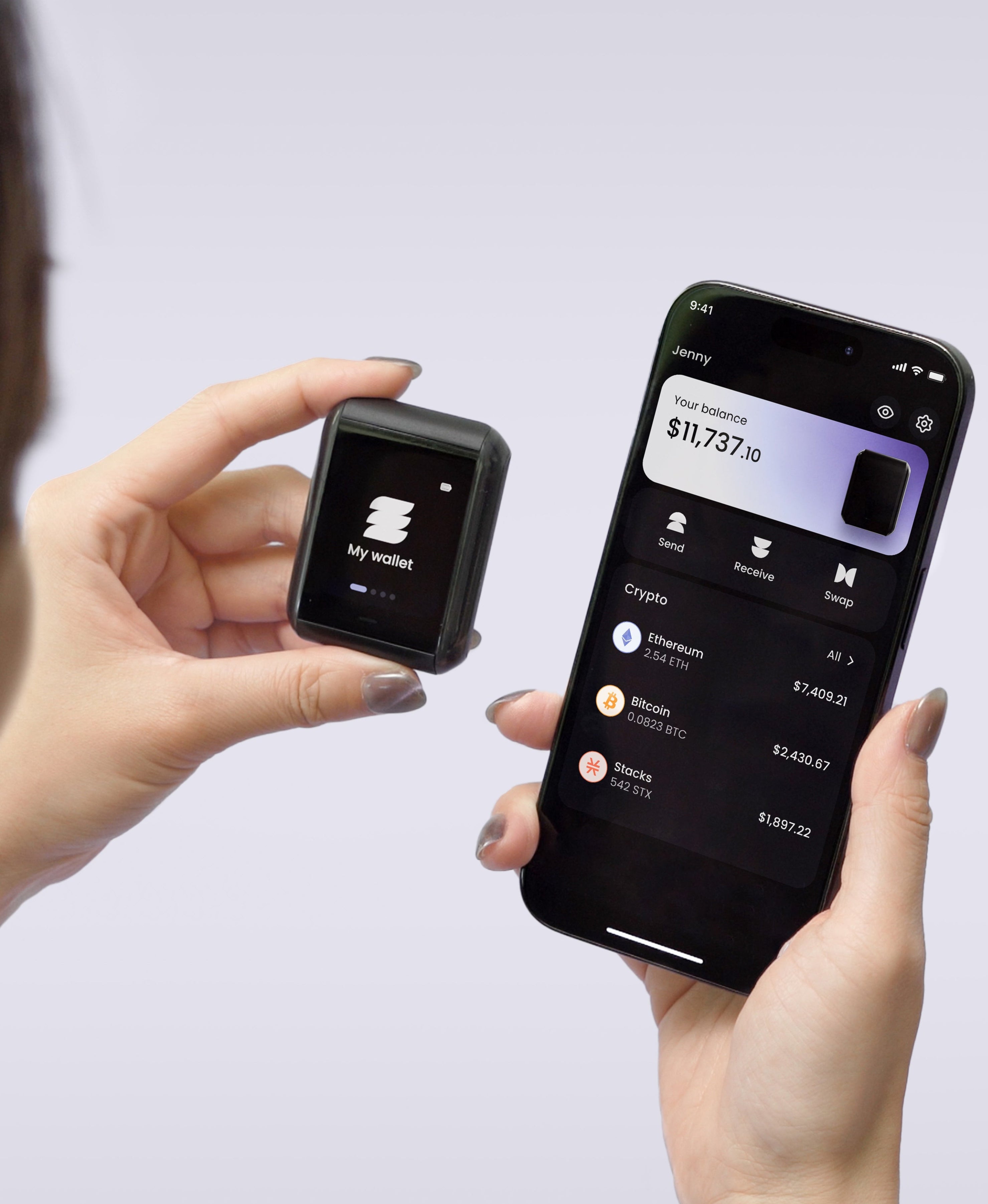
We built Ryder One to be that device. The keys live on a secure chip, transactions are signed on a 1.6-inch AMOLED display that shows the full destination address before you approve, and TapSafe Recovery splits the wallet backup across a battery-free Recovery Tag, your phone, and an optional circle of Recovery Contacts so the long-term setup doesn't depend on one piece of paper surviving everything.
If you have decided the real part of crypto is worth holding, Ryder One is the wallet we'd recommend to family. Full specs and pricing live at ryder.id.


Share: