


Hyperliquid processed over $1 trillion in cumulative perpetuals trading volume in Q1 2026, making it one of the largest derivatives venues in crypto by trading volume. The decentralized exchange runs on its own L1 chain (HyperEVM, EVM-compatible), supports cross-margin perpetuals on over 100 assets, and has captured a meaningful share of the perps market that used to flow through Binance, Bybit, and OKX.
For most Bitcoin self-custody holders, Hyperliquid won't matter. It's a perps DEX, optimized for active trading, not for holding. For users who do trade perps — or who hold the HYPE token (Hyperliquid's native token) — the platform has structural properties worth understanding before sending funds.
This piece walks through what Hyperliquid actually is, how it differs from centralized perps exchanges and other DEXs, what the risks are for users sending funds, and how self-custody holders should think about it.
What Hyperliquid is
A purpose-built Layer 1 blockchain optimized for one workload: high-throughput perpetual futures trading. The chain handles ~100,000 transactions per second with sub-second finality, which is what makes the trading experience feel comparable to centralized venues.
Three structural properties:
Self-custodial trading. Users connect a wallet, deposit collateral (USDC), and trade. The wallet retains custody. There's no Hyperliquid account holding user balances in the traditional sense — the protocol smart contracts hold the collateral, and users withdraw at any time.
Vault-based liquidity. Liquidity is provided by HLP (Hyperliquid Liquidity Provider) and user-deposited vaults. Users can both trade and provide liquidity. The model is structurally different from Binance-style order books (which depend on market makers running off-chain).
HYPE token economics. Hyperliquid's native token (HYPE) launched in late 2024. The token is used for governance, staking on the validator network, and is distributed to active users through a points-then-airdrop program. As of mid-2026, HYPE is one of the top 30 cryptocurrencies by market cap.
How Hyperliquid differs from centralized perps exchanges
Three direct comparisons.
Custody. Binance and Bybit hold user collateral in exchange-controlled wallets. Hyperliquid holds collateral in smart contracts. If Binance is sanctioned, freezes user accounts, or fails, the user's collateral is at risk. On Hyperliquid, the smart contract holds the collateral until the user withdraws.
Withdrawals. Centralized exchanges can suspend withdrawals (Celsius, FTX, sometimes regulated exchanges during compliance events). Hyperliquid withdrawals run through the protocol and aren't suspended by any single party.
KYC. Binance and most centralized perps venues require identity verification. Hyperliquid doesn't (though users in some jurisdictions are geo-blocked at the front-end).
The trade-off: centralized exchanges have higher trading volume, deeper liquidity on long-tail assets, and more sophisticated trading tools. Hyperliquid has the self-custodial property and lower fees but narrower asset coverage outside the major perps.
What the risks are
Three categories of risk worth knowing before sending collateral.
Smart contract risk. Hyperliquid's contracts have been audited, but smart contract risk is non-zero. A bug, an exploit, or an unexpected protocol behavior could lock or drain funds. The risk exists for any DeFi protocol; Hyperliquid is one of the more battle-tested.
Chain-level risk. Hyperliquid runs its own L1. A consensus failure, validator collusion, or chain-level halt would lock all funds until resolved. The chain has been stable since launch, but the risk pattern is different from running on a major L1 like Ethereum.
Concentration risk. HLP (the main liquidity provider) is concentrated in a small number of large depositors. A sudden withdrawal cascade could thin liquidity and widen spreads, affecting trader execution.
For users who only trade with small amounts they can afford to lose, these risks are manageable. For users putting significant capital on the platform, the risks compound and need to be weighed against centralized exchange counterparty risk.
What self-custody holders should think about
Two scenarios.
You don't trade perps. Hyperliquid doesn't matter. The platform is built for active trading. If your Bitcoin and Solana sit on a hardware wallet for long-term holding, Hyperliquid is outside your use case.
You do trade perps, currently on a centralized exchange. Hyperliquid is worth evaluating. The self-custodial property removes the counterparty risk that centralized exchanges introduce. The trade-offs (smart contract risk, chain risk, narrower asset coverage) are different from CEX trade-offs (account freeze risk, withdrawal suspension risk, KYC). Whether Hyperliquid is the better choice depends on how you weight these.
For users who hold HYPE token (either from the airdrop or by buying), the token is a separate consideration. HYPE on a hardware wallet behaves like any other ERC-20 (it's an HyperEVM-native token, but the custody mechanics are the same).
Where Ryder One fits
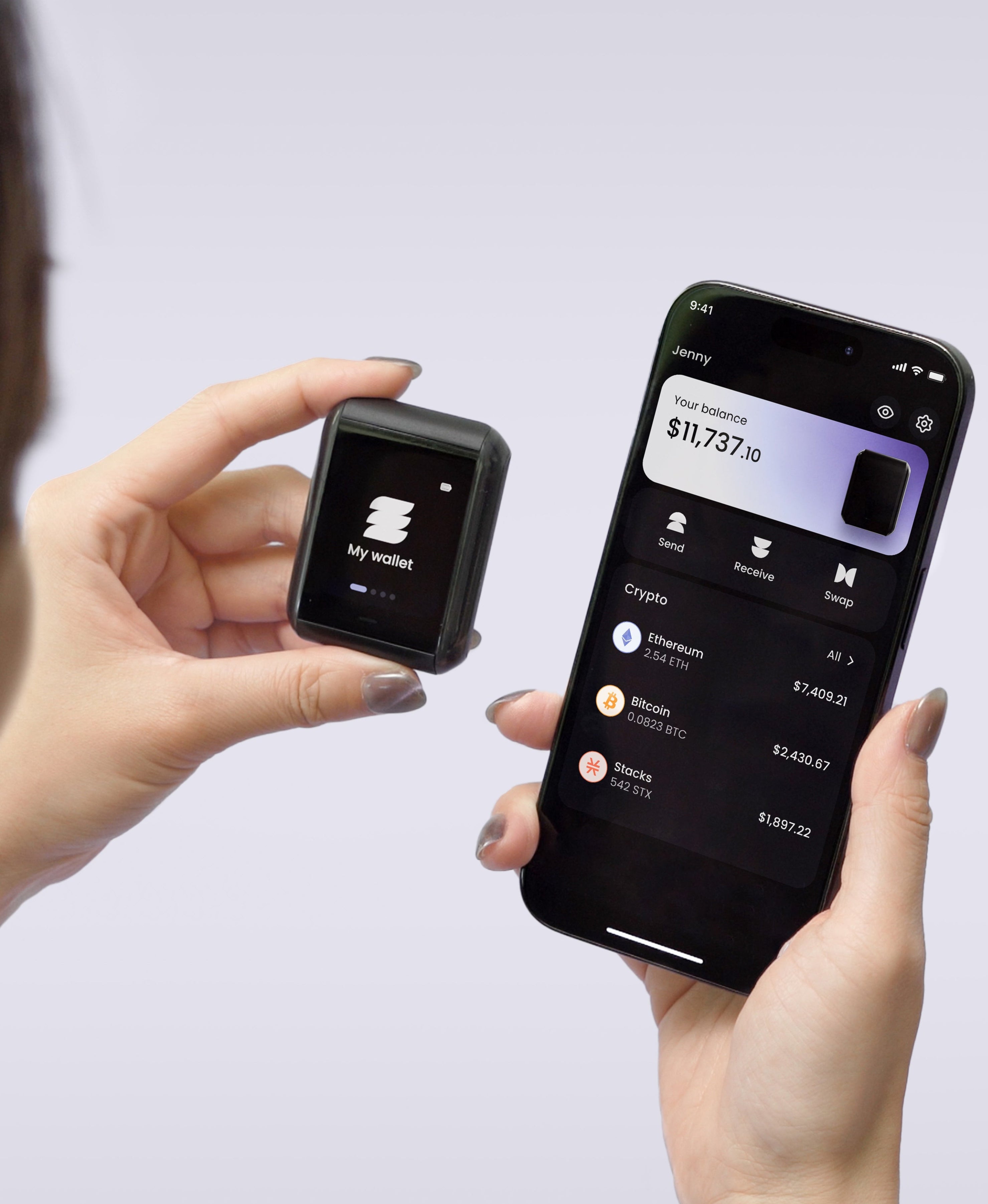
Ryder One holds Bitcoin, Ethereum, Solana, and major tokens on an EAL6+ Infineon SLC38 secure element. For users interacting with Hyperliquid, the wallet is used as the source of collateral — connect Ryder One to Hyperliquid through MetaMask or WalletConnect, sign the deposit transaction on the device's 1.6-inch AMOLED touchscreen with a physical button press, and the funds move from cold storage to the trading collateral.
The same device holds the long-term position that isn't being actively traded. The trading collateral comes from a separate sub-account (or a separate wallet) that's been funded for the trading activity. The long-term holdings remain isolated.
For HYPE token holders, Ryder One holds HYPE the same way it holds any HyperEVM-compatible token.
The bottom line
Hyperliquid is one of the largest perpetuals DEXs by trading volume in 2026, with structural properties (self-custodial, sub-second finality, smart-contract-held collateral) that meaningfully differ from centralized exchanges. For self-custody Bitcoin holders, Hyperliquid isn't a default destination — it's a tool for active perps trading, and most long-term holders don't trade perps. For users who do, the platform's self-custodial property is a real advantage over Binance/Bybit, with trade-offs (smart contract risk, chain risk) that need to be weighed against the centralized-exchange alternatives.
Trade on Hyperliquid. Hold long-term on your own keys. Ryder One handles the long-term position offline on an EAL6+ secure element, with TapSafe Recovery as the backup. Move only what you trade to the perps venue. See how it works.
SEO
- Target keyword: hyperliquid
- SEO title: Hyperliquid in 2026: The Perps DEX Self-Custody Holders Should Know (66 chars)
- Meta description: Hyperliquid processed $1T+ in perps volume in Q1 2026. Here's what it is, how it differs from CEXs, the risks, and how self-custody holders should approach it. (158 chars)



Share: