

Every few months a story goes around. Someone lost the password to a hard drive with hundreds of Bitcoin on it. Someone found an old wallet from 2013 and can't remember the seed phrase. The comments split into two camps: it's gone, move on; or you can recover it, people do this all the time. The truth is usually somewhere in between, and it depends entirely on what you've lost.
This is the honest version of how to recover a Bitcoin wallet, what's possible, and what isn't. If you still have a working wallet today, there's a section at the end that makes sure you never need to read this article again.
The four ways you can lose access, and which ones are recoverable
When someone says they've lost their Bitcoin wallet, they almost always mean one of four things. The recovery outlook is very different for each.
You lost the physical device, but you have your seed phrase.
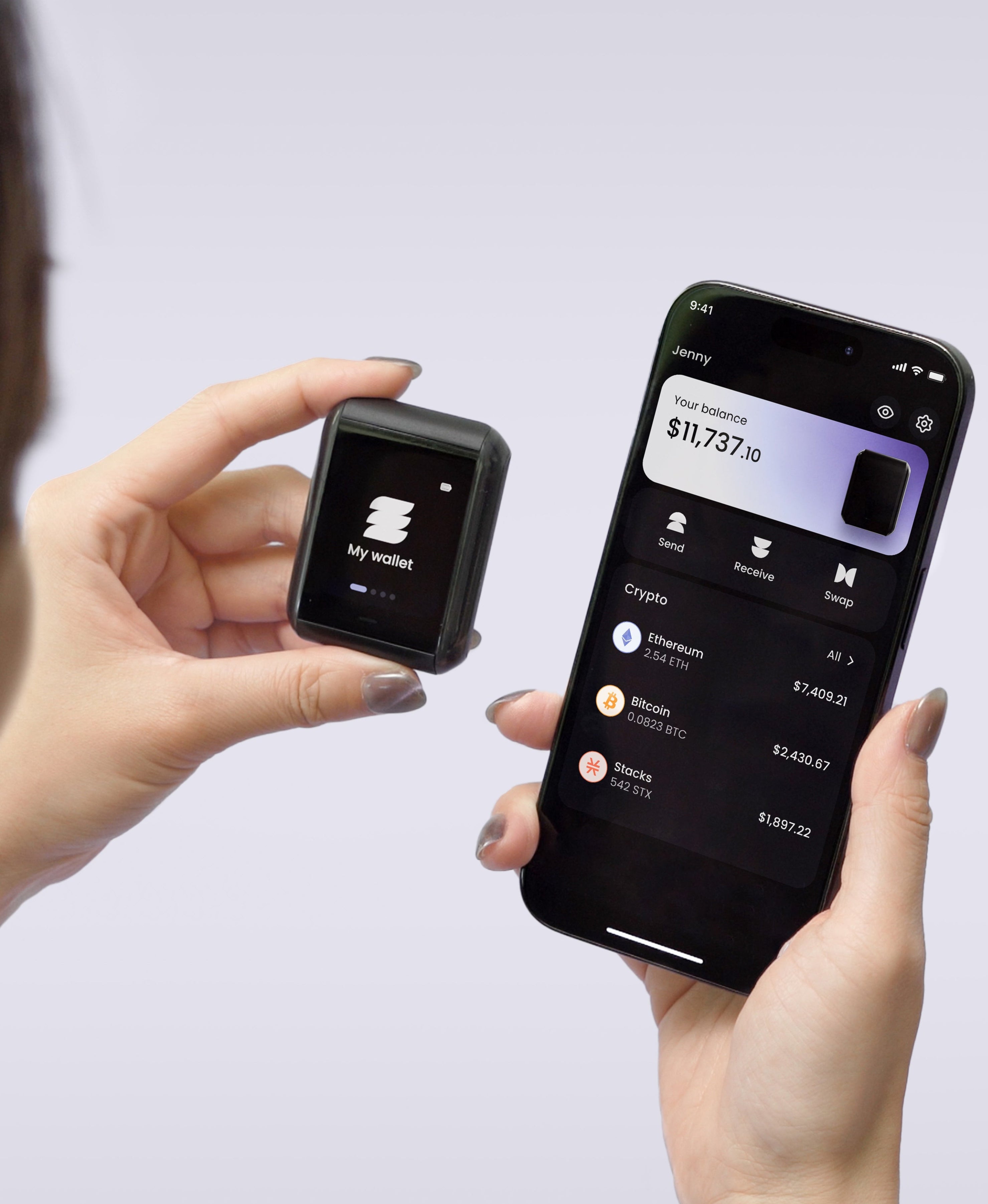
This is the best case, and it's exactly what a seed phrase is designed for. Buy a new hardware wallet. Any BIP-39 compatible device works, and we'd recommend a Ryder One. Choose restore from backup in the setup menu, enter your words in the correct order, and your balance appears within a minute. You don't need the old device, the old account, or any original software. All the information lives in those words.
If you're buying a replacement wallet, this is a good moment to rethink your setup. The Ryder One is built so that losing your device is a minor inconvenience rather than a crisis. More on that below.
You have the device but forgot the PIN.
Most hardware wallets wipe themselves after a set number of wrong PIN attempts. Once wiped, the device is blank, and you're back to the case above. You need your seed phrase to restore. If you've forgotten the PIN and don't have the seed phrase, you're in the hardest case.
You have the seed phrase but lost the device and forgot the PIN.
This isn't actually a problem. The PIN protects the device, not the wallet. Your seed phrase is the master key. Use it to restore on any compatible hardware wallet and you're back to full access.
You have an old wallet file or encrypted backup and lost the password or seed phrase.
This is the hard case. It's the one the news stories are about. Sometimes recovery is possible. Often it isn't. The rest of this article is mostly about this case.
What losing a seed phrase actually means
The seed phrase is the master copy of your wallet. If it's truly gone, no paper, no metal backup, no copy anywhere, the funds are gone with it. There is no reset button, no customer support line, and no backup server. This is the defining feature of self-custody, and it's the part that is completely unforgiving.
If you have most of the seed phrase, recovery tools can sometimes fill in the gaps. The best-known open source tool is BTCRecover on GitHub, free, public, and well-documented. It can handle several specific situations:
- You remember 11 of 12 words and know the position of the missing one.
- You remember all the words but not the exact order.
- You remember the seed phrase but not a secondary passphrase you set on top of it.
- You have a partial wallet file and a password you think is close.
If you're missing more than that, say 6 of 12 words, the number of possible combinations grows past what any computer can search in a realistic timeframe. The math gets ugly fast.
Old wallet files, encrypted backups, and lost passwords
The classic case where someone has an old wallet.dat file with a forgotten password is specifically what several recovery services advertise for. Some are legitimate. They run open source tools like BTCRecover against your file, use hints you provide to narrow the search, and charge a percentage of what's recovered if they succeed.
The rest are scams, and the pattern is consistent. They ask you to send the wallet file and the seed phrase for "analysis." Once you do, the wallet is no longer yours. The FTC's guidance on crypto scams flags this exact pattern.
The rule is simple: legitimate recovery never requires you to share your seed phrase, your private key, or the wallet file with anyone. The best tools are the ones you run yourself, or services that work on a read-only basis. Pay only from recovered funds, never upfront. Anyone who guarantees recovery and asks for payment in advance is running a scam.
Never post the details of a lost wallet in a public forum either. Within hours you'll receive DMs from strangers claiming to be recovery experts. They aren't. Report recovery scams to the FBI's IC3 complaint center.
What recovery usually looks like in practice
If you have most of the information: run BTCRecover yourself, or hire a reputable service to run it. Provide every detail you remember. Searches take hours to weeks depending on how much is missing.
If you have very little: the funds are probably gone. Spending months and thousands of dollars on a recovery with a 0.01% chance of success is almost never worth it. The better use of that energy is setting up a new wallet properly so this never happens again.
Before spending money on recovery services, check every physical place the words might be. A drawer nobody's opened in five years. An envelope a family member kept after a move. Lost seed phrases turn up more often than the news stories suggest, and the only tool you need is a flashlight.
Why Ryder users don't end up in this situation
The scenarios above share a common thread: a single point of failure. One piece of paper. One copy of the seed phrase. One device with no backup plan.
Ryder One was built specifically to break that pattern. TapSafe, our recovery system, distributes access across three layers so that losing any single one never means losing everything.
Recovery Tags are encrypted NFC tags you store in separate physical locations. Tap one to recover your wallet, no seed phrase required in normal use.
Recovery Contacts let you assign trusted people who each hold a piece of the recovery puzzle. No single contact can access your wallet alone. Recovery requires coordination, just like a proper backup plan should.
Phone Backup is a local encrypted backup on your phone as a final fallback.
Your seed phrase is still available as a last resort. It meets the BIP-39 standard, so your crypto is never locked to Ryder's hardware. But TapSafe means losing your device is an inconvenience, not a crisis. You tap, you recover, you move on.
For Ryder users, the question "how do I recover my Bitcoin wallet?" has a very short answer: tap a Recovery Tag.
Set up the backup that means you never need this article
If you have a working wallet today, the time to fix the backup is now. Two secure backups in two locations is enough for almost everyone. The cold storage approach that hardware wallets provide protects your keys from online threats, but only if the backup behind it is solid.
Ryder One is designed so that a fire, a flood, or a lost device becomes a straightforward recovery, not a disaster. The recovery post you should never need to read is this one.




Share: