


Of the roughly 19.7 million Bitcoin mined as of mid-2026, researchers at Chainalysis estimate that about 3.7 million BTC are likely lost forever: held at addresses with no recoverable private key, sitting in wallets whose owners can't access them, or buried in early-2010s blunders that predate any modern recovery awareness. At current prices, that's somewhere between $190 and $250 billion in lost bitcoin that exists on-chain and will never move again.
We want to walk through how the estimate is built, the major ways Bitcoin gets lost, the narrow paths where recovery is possible, and the lessons for anyone holding today.
How the estimate is calculated
Three on-chain signals do the work.
Coin age is the first signal. Bitcoin that hasn't moved in five or more years is presumed lost at increasing probability with each additional year. Coins untouched for a decade or more (Satoshi-era coins, miner rewards from 2009 to 2014) are widely assumed lost, with Glassnode's HODL-wave analysis showing how those bands have compounded over time. Chainalysis publishes its own age-based loss estimates that line up closely.
Known cold-wallet patterns add the second signal. Some wallets show the unmistakable signature of an abandoned address: a single deposit, no subsequent activity, no maintenance touches, no migration to a new address format when the network upgraded. Statistical models distinguish those from intentional long-term holding, where you'd see occasional consolidation or address hygiene.
Public loss disclosures supply the third signal. James Howells's hard drive went into a Welsh landfill in 2013 carrying around 7,500 BTC. Stefan Thomas's IronKey holds roughly 7,002 BTC behind a forgotten password. Various Mt. Gox-era wallets remain unrecoverable, along with a long tail of smaller documented cases. Together, these three signals point to approximately 3 to 4 million BTC permanently inaccessible, and the estimate has been remarkably stable across analytics firms over the last few years.
The major loss categories
Four patterns explain most of the lost supply.
Lost hard drives and devices from the 2009-2013 mining era make up the largest share. Early miners typically stored coins on whatever laptop or desktop was running the client. When the machine died, was sold to a friend, or had its drive reformatted before donation, the coins went with it. Mining was easy enough in those years that most early participants never tracked their holdings carefully.
Forgotten passwords and lost recovery information form the next bucket, and the pattern repeats with painful regularity across every wallet generation: encrypted wallets whose passwords were never written down anywhere, seed phrases on paper that got tossed during a move or a divorce, and recovery hints scribbled into a notebook that ended up in the recycling.
Exchange-era losses from failed platforms account for another sizable chunk. Mt. Gox lost around 650,000 BTC in the 2014 collapse, and only about 140,000 BTC have been recovered through the long-running rehabilitation process. The rest is gone. Later collapses (QuadrigaCX, FTX, and a string of smaller venues) added more.
Deaths without inheritance planning round out the four. Holders died, and the keys died with them. The wallet still sits on-chain, but without a transition plan or a trusted contact, the funds are stuck. Family members find a hardware device or a piece of paper after the fact and have no idea what to do with it.
Where recovery is sometimes possible
Most lost Bitcoin stays lost, and we want to be careful not to oversell the paths back. A small fraction is reachable through specific routes.
For forgotten passwords, recovery services like Wallet Recovery Services and KeychainX can sometimes brute-force the remaining variations if you remember most of the password. Success rates depend heavily on how much the user remembers, and the reporting on Stefan Thomas's locked IronKey shows how brutal the math gets when the device locks after a fixed number of attempts.
For partial seed phrases, if you have 21 of 24 words plus the correct order, tools can iterate through the 2,048 possibilities at each missing position. Success stays computationally feasible up to roughly three missing words; beyond that, the search space explodes.
Hard-drive recovery is another path. When the device exists but was reformatted or fails to boot, professional data-recovery shops can sometimes pull back the wallet file or keystore. Outcomes depend on how the drive was treated after the fault.
Estate searches matter for deceased holders. Sometimes recovery information surfaces in personal papers, email archives, or a forgotten password manager. Family members occasionally piece together access months or years after the fact, especially when the holder kept a habit of leaving small breadcrumbs.
None of these are guaranteed. Industry recovery rates land below 20 percent even with sustained effort, so anyone holding a meaningful balance today should treat recovery services as a last-ditch option rather than a backstop.
What this means for current holders
A few lessons we keep coming back to when we talk with new holders.
Single-object backups fail at higher rates than most people expect. The 3-to-4 million BTC number is the cumulative result of decades of single-object failures: paper got lost, drives died, passwords slipped from memory, and the math has consistently caught up with retail users. The odds that a single object survives a multi-decade horizon untouched aren't 100 percent, and the gap matters more than it looks.
Inheritance planning isn't optional once the position grows past pocket money. The wallet outlives the holder; without a plan, that wallet turns into a tombstone on-chain. Family members who don't know the holding exists can't recover from it. Anyone with a sizable position needs at least one trusted person who knows how to reach the backup, and that conversation goes far better when it happens before it's urgent.
The cost of solid backup is small against the cost of total loss. A modern hardware wallet costs $229 (in our case, with the Recovery Tag, charger, and pouch in the box). A layered backup adds at most another $50 to $100 in materials. Total loss of even half a Bitcoin runs well above $30,000 at today's prices, and the math heavily favors over-investing in backup infrastructure relative to the cost of the wallet itself.
How the loss curve might change
Three forces could nudge the per-year loss rate in the years ahead.
Better recovery infrastructure is already shipping. Modern wallets now offer multi-share recovery models (Shamir SLIP-39, TapSafe Recovery, and similar designs) that remove the single-object failure mode. As more users adopt those models, the per-user loss rate should fall, and the next decade of holdings should add far fewer coins to the lost pile than the last one did.
Quantum computing sits further out. If a sufficiently capable quantum machine ever arrives, it could derive private keys from addresses with exposed public keys. That wouldn't recover most lost Bitcoin (which sits at addresses where the public key was never revealed), but it might pull back some Satoshi-era P2PK coins. The timeline is at least a decade away by most credible estimates.
Estate-services maturation is the third lever. As specialist crypto-inheritance services like Casa and Unchained grow, more holders will end up with explicit estate plans for their crypto, which should chip away at the deaths-without-planning bucket over time.
Where Ryder One fits
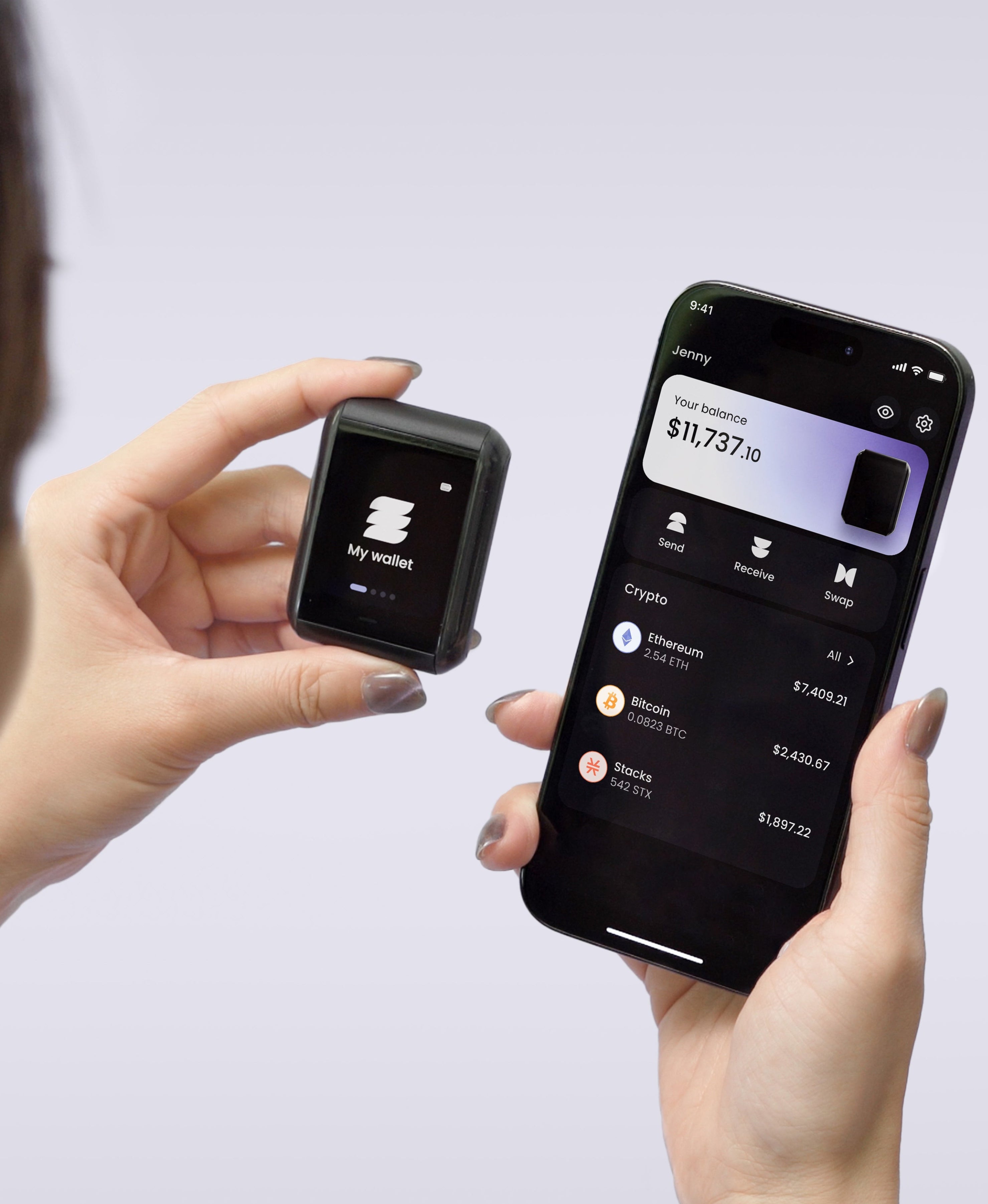
We built Ryder One around the case that the backup is what fails first for most users. The EAL6+ Infineon SLC38 secure element handles device-level security; TapSafe Recovery handles the backup so the wallet doesn't depend on a single piece of paper surviving thirty years. The split-recovery model means loss of any one component (Recovery Tag, phone share, or Recovery Contact) doesn't take the wallet down, and the BIP-39 seed phrase stays accessible on-device as the last-resort path.
Metal plates are the standard upgrade from paper, and we think of them as the bridge product. They survive the kitchen fire that paper doesn't, but the wallet still hinges on one object surviving every move, every burglary, and every quietly forgotten storage spot. We designed TapSafe Recovery to remove that single point of failure entirely, which is the structural answer to the loss patterns behind the 3-to-4 million BTC estimate.
The bottom line
Roughly 3 to 4 million Bitcoin sit permanently lost, worth $190 to $250 billion at today's prices. The losses cluster around lost drives from the early mining era, forgotten passwords, exchange failures, and deaths without inheritance planning. For current holders, the math is uncomfortable but clear: single-object backups fail at predictable rates over decade-plus horizons, and the cost of designing around that failure mode is small against the cost of total loss. Layered backup and inheritance planning aren't optional; the wallet outlives the holder, and the question worth sitting with is whether your keys are built to survive you.
A backup that's built to outlive a single piece of paper: Ryder One holds your Bitcoin offline on an EAL6+ secure element with TapSafe Recovery splitting the backup across hardware, phone, and people.
SEO
- Target keyword: lost bitcoin
- SEO title: How Much Bitcoin Has Been Lost Forever? The 4M BTC Question (60 chars)
- Meta description: Roughly 3-4M Bitcoin sit permanently lost, worth $200B+ at current prices. How the estimate is built, where it's gone, and what holders learn. (143 chars)


Share: