


On June 4, 2026, Nasdaq-listed Fold Holdings sold $45 million of Bitcoin at an average price near $71,000 per BTC. The proceeds wiped out $20 million in Bitcoin-collateralized debt and freed $25 million for growth. FLD shares jumped 140% in pre-market trading on the news.
For most of the past two years, the story of Bitcoin treasury companies has been a one-way trade: companies issue debt or equity, buy Bitcoin, hold it on the balance sheet, and let appreciation do the work. Fold's sale runs in the opposite direction. A Bitcoin-native company sold at what turned out to be the local top of this cycle (BTC peaked above $71K in late May, fell to $59K by early June, then partially recovered to roughly $63K), used the proceeds to remove its leverage, and watched its stock rally on the de-risking.
This piece walks through what Fold sold and why, what it signals about where corporate Bitcoin treasuries sit in the cycle, and what self-custody holders should take from the move.
What Fold did
Fold Holdings (NASDAQ: FLD) is a Bitcoin financial services company that runs a Bitcoin rewards debit card and other Bitcoin-adjacent consumer products. As of mid-2026, the company held roughly 1,500 to 2,000 BTC on its balance sheet as part of a corporate treasury strategy modeled on Strategy's approach.
On June 4, the company filed an 8-K disclosing it had sold approximately $45 million of Bitcoin at an average price of $71,000. The proceeds did two things:
- $20 million repaid all of the company's Bitcoin-collateralized debt, removing its leverage entirely
- $25 million was retained for "growth opportunities," per the filing
Investors reacted by sending FLD shares up nearly 140% in pre-market trading. The market's read: a Bitcoin treasury company de-leveraging at a local top is a stronger company than one carrying leverage into a drawdown.
What this signals about the cycle
Corporate Bitcoin treasuries grew rapidly through 2024 and 2025, with more than 60 publicly traded companies now holding BTC on their balance sheets. Most of those holdings were funded with some combination of equity issuance, convertible notes, and Bitcoin-collateralized loans. The model works as long as Bitcoin's price keeps rising. The model becomes precarious when prices fall sharply.
Bitcoin's June 2026 drawdown (roughly 18% peak-to-trough in five days) is the largest single move since the 2024 spring correction. For a treasury company with collateralized debt, that kind of move means margin call territory. Fold's filing language framed the sale as voluntary de-risking, and the market read it as decisive cycle management.
The signal for other treasury companies is plain. Companies with leverage in their Bitcoin holdings face a choice during volatility: ride out the drawdown and risk a forced liquidation at lower prices, or pre-emptively de-risk at higher prices and lose the upside on whatever they sold. Fold chose the second path. Strategy, with no Bitcoin-collateralized debt against its much larger holdings, has continued buying more than 845,000 BTC without selling any.
The implication for retail holders is that corporate treasury behavior can amplify Bitcoin's volatility in both directions. Leveraged treasuries become net sellers during drawdowns. Treasuries without leverage can ride through them.
Where this puts self-custody holders
If you hold Bitcoin without leverage of any kind (no margin loan against the BTC, no liquidation-eligible derivatives, no Bitcoin-collateralized borrowings), the events of the past two weeks haven't changed your position. The price moved; the keys are still yours; the wallet still shows the same BTC count it did at $71K.
The asymmetry matters. A leveraged holder has to think about price every day, sometimes every hour. A self-custody holder can hold for years without checking, and the wallet's behavior doesn't change.
Fold's sale says less about Bitcoin's direction and more about how leveraged Bitcoin strategies respond to drawdowns. Companies with margin loans against their BTC face different incentives than retail holders sitting on un-leveraged positions. That distinction matters when you're deciding how much of your Bitcoin to keep in a position that has margin attached versus a position that doesn't.
Where Ryder One fits
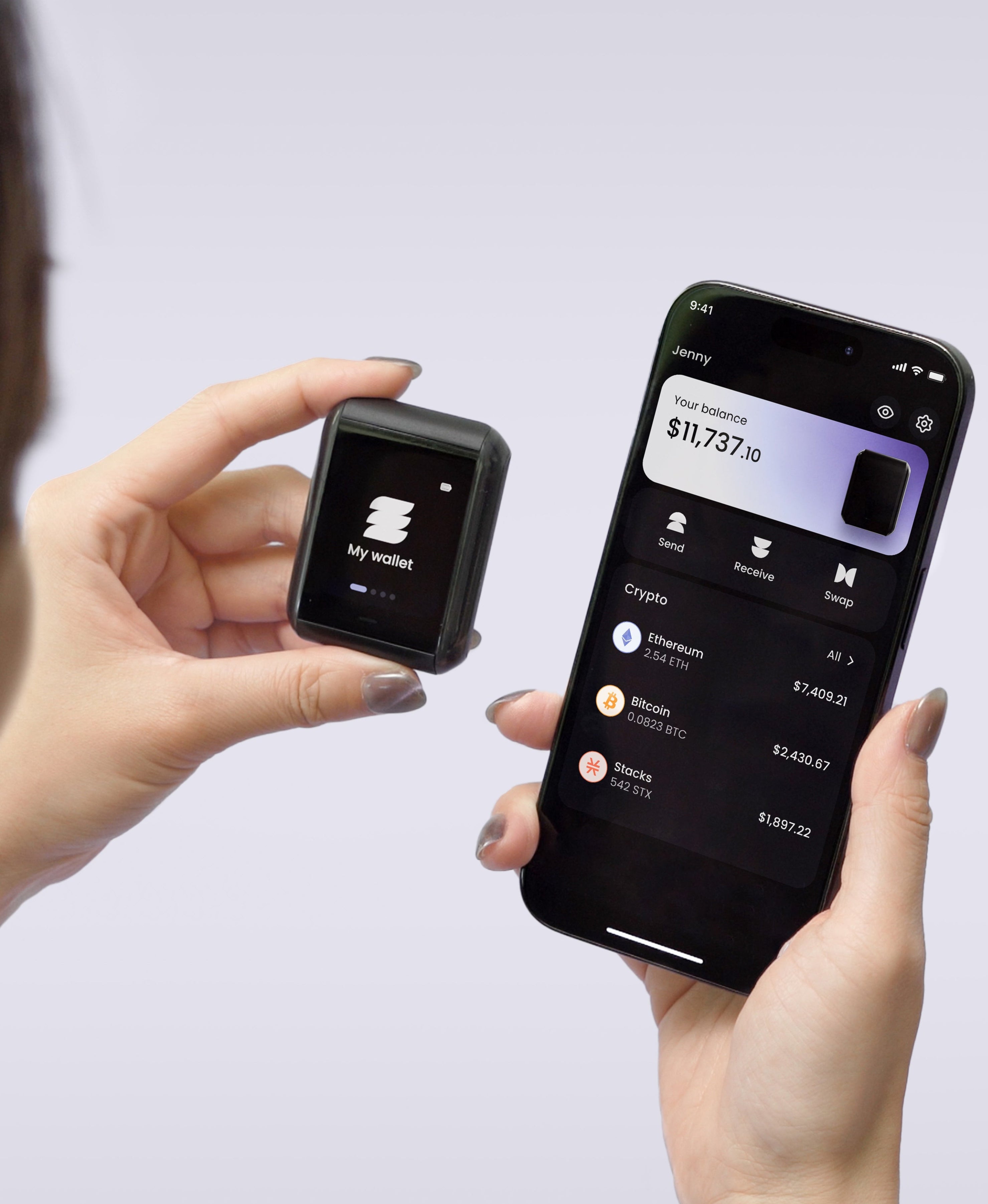
Ryder One is built around the un-leveraged self-custody case. The EAL6+ Infineon SLC38 secure element holds the private key offline. Every transaction is verified on the 1.6-inch AMOLED touchscreen with a physical button press. TapSafe Recovery splits the backup across hardware and people you trust, so a single failure (lost device, lost phone, lost paper) doesn't take the wallet down.
For holders watching corporate treasuries de-risk, the structural option is to hold Bitcoin in a form that has no creditor on the other side. The wallet doesn't care about price; it does what you tell it to do whenever you tell it to.
The bottom line
Fold's $45 million Bitcoin sale at $71,000 is the first significant de-risking move from a US-listed Bitcoin treasury company in this cycle. The market rewarded the decision with a 140% pre-market rally, which says more about how the market views leveraged treasury strategies in 2026 than it does about Bitcoin's price direction. For retail holders, the takeaway is about position structure: holdings without leverage behave differently in a drawdown than holdings with leverage, and self-custody is the cleanest form of un-leveraged exposure available.
Hold Bitcoin without a counterparty. Ryder One keeps your keys offline on an EAL6+ secure element, with TapSafe Recovery as the structural backup. No margin call, no creditor, no exchange in the path. See how it works.


Share: