

Hackers used to attack code. They'd find a bug in a smart contract, drain a liquidity pool, and disappear before anyone noticed. That era is over.
In 2024, private key compromises accounted for nearly 44% of all crypto stolen, roughly $964 million out of $2.2 billion total. In 2025, that figure climbed to over 69% of H1 losses according to CertiK, with TRM Labs reporting that infrastructure attacks (their term for private key and seed phrase compromises) made up over 80% of funds stolen in early 2025. By H1 2026, TRM Labs calculated that 76% of all financial losses came from private key leaks and administrative credential takeovers. $738.7 million in six months.
The pattern is not a coincidence. Hackers go where the money is easiest to take, and right now, the easiest target in crypto is you.
The Vulnerability No One Prepared For
For years, the crypto security conversation was about smart contracts: audits, bug bounties, protocol risks. That conversation was useful, but it missed the bigger picture.
Smart contract exploits require technical skill. Finding a vulnerability in code takes time, expertise, and luck. Stealing a private key or seed phrase is far simpler and can be done via a phishing email, compromised browser extension, a fake video conferencing link, or a poorly stored recovery phrase photographed by someone with access to your home. The attack surface is enormous and the payoff is catastrophic.
The Bybit hack in 2025 illustrated this at scale. $1.5 billion, gone, not because someone found a bug in the code, but because the private key infrastructure was compromised. The DMM Bitcoin hack in 2024 cost $305 million through the same vector. In H1 2026, Drift Protocol lost $285 million to an administrative private key compromise. Finally, Kelp DAO, who lost $291 million to an RPC exploit targeting private access controls.
These aren't edge cases, they've become the new normal.
Where Most People Are Exposed
If your crypto sits on an exchange, you don't hold a private key, the exchange does. Your balance is a number on their ledger, backed by a promise that their key management is secure. The hacks above prove what that promise is worth when it fails.
If your crypto sits in a hot wallet, your private key exists on an internet-connected device. Every time you connect to a dApp, sign a transaction, or install a browser extension, that attack surface area grows. Phishing attacks targeting hot wallet users hit record highs in 2025.
The seed phrase is the root of both problems. Whoever holds it holds everything. If it's stored in a screenshot, a notes app, a cloud backup, or a single piece of paper in a drawer, it's one event away from being gone.
This is the problem TapSafe was built to solve.
TapSafe: A Solution to the Root Problem
Most hardware wallets move your private key offline, which is a huge improvement over a hot or exchange wallet. However, it still leaves the root cause of the problem, the seed phrase, entirely in the users’ hands.
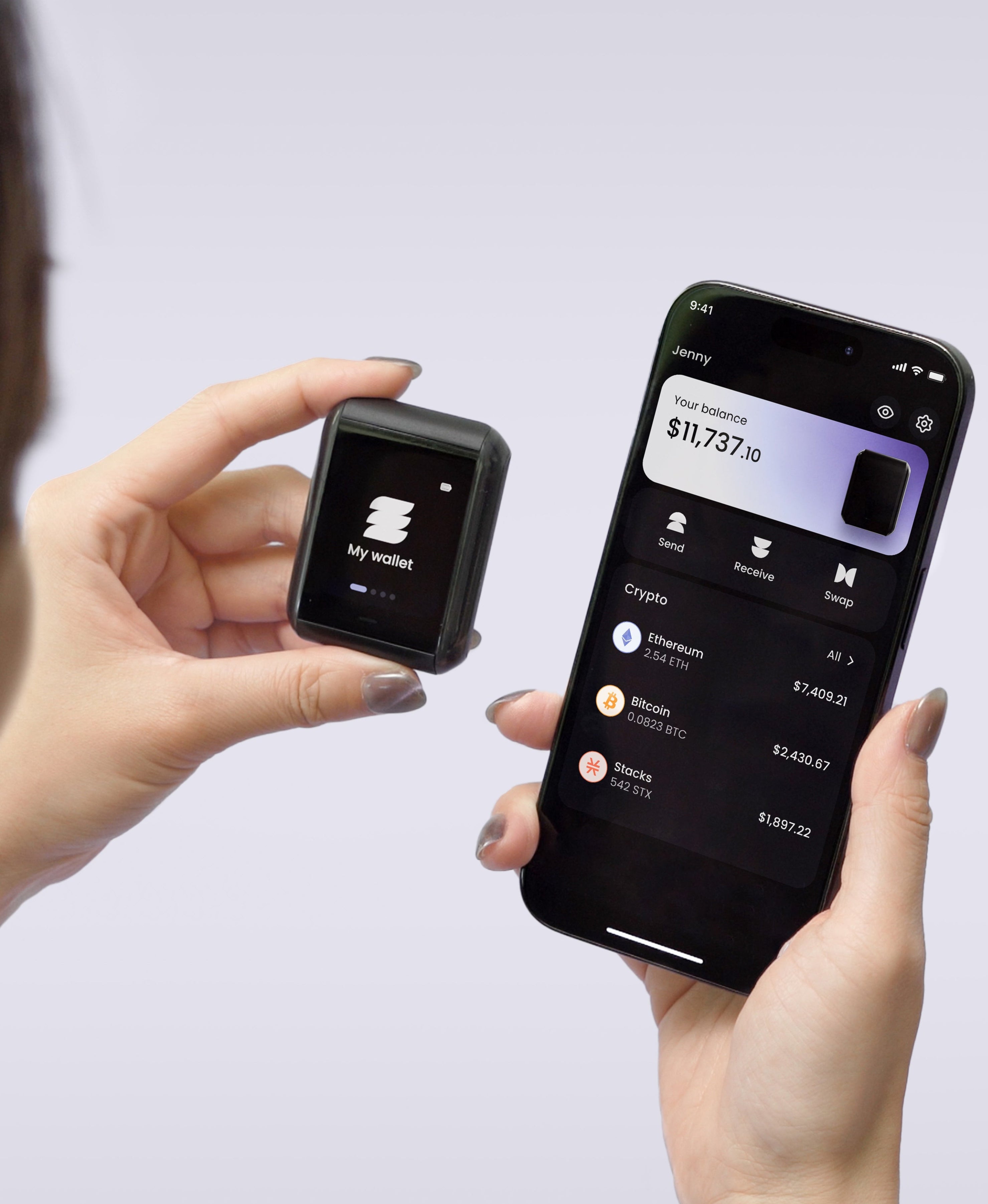
TapSafe Recovery is Ryder's answer to that gap. Instead of relying on a single point of failure, TapSafe distributes your backup across three layers: a Recovery Tag, your phone, and optional Recovery Contacts. No single layer gives anyone full access, and there is no master copy sitting in a drawer waiting to be found.
Your seed phrase still exists on-device as a last resort and follows the BIP-39 standard, so you are never locked to Ryder hardware. You just don't need to depend on it in normal use.
This matters because the data shows where attacks are going. Private key and seed phrase compromises are not a niche risk for institutional players. CertiK recorded 33 wallet compromise incidents in H1 2026 alone, averaging over $13 million per event. The frequency is rising even as smart contract exploits fall.
The Takeaway
Hackers are have gotten smarter about the most efficient way to make quick money. The data shows seed phrase exploits are not a major target. These are the vulnerabilities that cost the industry nearly $1 billion in the first half of 2026 alone.
Self-custody with a hardware wallet is no longer just a recommendation for power users, it’s the new standard of security. The seed phrase needs an upgrade, and Ryder has built it with TapSafe. Get your Ryder One here.
FAQ
Why are private key compromises more common than smart contract hacks now?
Smart contract auditing has improved significantly over the last few years, making code exploits harder and more expensive to execute. Private keys and seed phrases, by contrast, are often stored carelessly or held by third parties who become high-value targets. Hackers follow the path of least resistance, and right now that path goes through credentials, not code.
Does keeping crypto on a hardware wallet protect against private key theft?
A hardware wallet significantly reduces your exposure by keeping your private key on an offline device that never connects to the internet. However, it's not a silver bullet. Supply chain attacks, malicious firmware, and physical access are still vectors. But the most common attack by far is seed phrase exposure, which is why securing your backup matters as much as the device itself.
What makes TapSafe different from writing down a seed phrase?
A written seed phrase is a single point of failure. Anyone who finds it has full access to your wallet immediately. TapSafe distributes your backup across three layers, none of which gives complete access alone. The seed phrase still exists on-device as a last resort, but normal recovery doesn't depend on it.
How much crypto was stolen through private key compromises in 2026?
TRM Labs reported that infrastructure and private key compromises accounted for 76% of all H1 2026 losses, roughly $738.7 million out of $972 million total stolen in the first six months of the year.



Share: