

If you spend time in DeFi, you're signing transactions all the time. Swaps, approvals, deposits, governance votes, bridge moves. Each one is a payload your wallet sends to a chain, and each one is an opportunity to confirm something you didn't mean. Clear signing is the difference between confirming "this hash" and confirming "swap 1.2 ETH for at least 4,310 USDC on Uniswap v4 with a 0.5% slippage tolerance." The first one tells you nothing. The second one tells you everything you need. This is a practical guide to what clear signing is, what it requires, and how to set up your stack so most of what you sign is readable.
What clear signing does
A clear-signing flow has three properties: - The transaction payload is structured (typically EIP-712) so a wallet can parse it - The wallet recognizes the function being called or the message type - The hardware wallet's screen displays a human-readable summary you can verify before signing When those three line up, the screen tells you the truth. The laptop or phone could be compromised, the dapp's UI could be fake, the contract address could be unfamiliar. None of that matters if the device is showing you what you'd actually be signing.
What it doesn't do
Clear signing is not a guarantee that the transaction is safe. It's a guarantee that you know what the transaction is. If the screen says "Approve unlimited spend on USDC for contract 0x1234..." and you confirm, that's on you. The point is that the screen tells you the effect plainly, so you can make the call.
The protocols that make it work
A few standards do most of the heavy lifting: EIP-712: Typed structured-data signing. Lets dapps send messages with named fields and a domain separator instead of opaque bytes. Most modern wallets render EIP-712 messages in a human-readable form. EIP-2612 / Permit2: Token-approval signatures that work alongside EIP-712. Permit2 (from Uniswap) bundles approvals into a more uniform model that wallets can recognize. EIP-191 personal_sign: The older message-signing standard. Less safe for transaction-like operations because the message is unstructured. Most wallets now warn when a personal_sign payload looks like it could authorize value transfer. ERC-7730 (the metadata standard): A newer effort to let contracts publish display metadata that wallets can use to render transactions cleanly. Still rolling out, but the direction matters. As a user, you don't need to memorize any of these. You need wallets and dapps that implement them.
How to tell whether a flow is clear-signed
Four quick checks before you confirm: 1. Is the signing prompt structured? Does it show fields like Owner, Spender, Amount, Deadline? If yes, you're in EIP-712 territory. 2. Is the action plainly stated? Does it say "Swap" or "Approve" or "Vote"? If it says "Sign hash" or shows a pile of hex, you're blind signing. 3. Does my hardware wallet's screen match the dApp's claim? This is the critical step. The screen on the wallet is the only display you trust. 4. Are the amounts and addresses what I expected? Look at decimals. Look at chain. Look at the spender. Four seconds of attention here saves more money than any other habit in DeFi.
A practical setup for 2026
If you want as much of your signing to be clear as possible, here's a working setup: - A hardware wallet with on-device EIP-712 rendering and a screen large enough to show full transaction summaries - A dapp browser or wallet app that surfaces structured-data prompts (most major ones now do) - A bookmarked list of dapps you've used before, so you don't go searching from search engines and end up on lookalike domains - A separate hot wallet for new dapps you want to try, with a small balance you'd be willing to lose - A habit of treating any blind-signing prompt as a stop signal, not a friction to push through This isn't elaborate. It's a few defaults that, together, make the dangerous flows the exception instead of the rule.
Where Ryder One fits
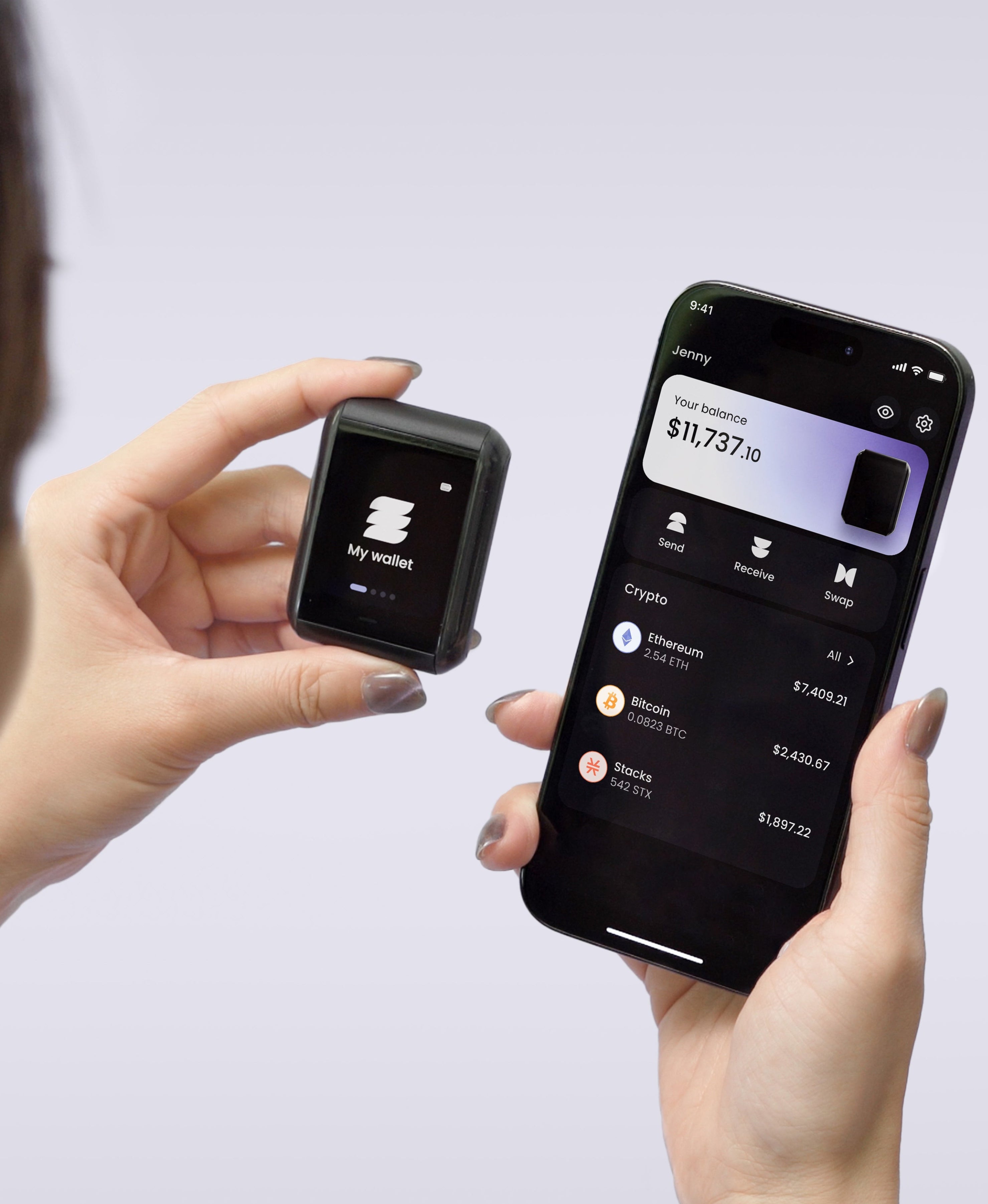
Ryder One was built with this in mind. The 1.6-inch AMOLED screen shows you messages, swap routes, and approval permits, with the field names and amounts visible. When a contract isn't recognized, the device explicitly flags the signature as blind and walks you through the raw payload before allowing confirmation. The goal isn't to make every transaction safe. It's to make every transaction legible. Once you can read what you're signing, the rest is your call to make.
What to do when you can't clear-sign
You'll still hit cases where the dApp doesn't support EIP-712, or the contract isn't covered, or the function is one your wallet doesn't recognize. Options, in order: 1. Skip it if the value is high: A transaction you can't read for a position you can't afford to lose isn't worth signing. 2. Use a small hot wallet: If you're comfortable losing the position, do it from a wallet that doesn't hold your savings. 3. Decode the calldata yourself: Block explorers like Etherscan can show you what a transaction will do, including the parameters. Slow and tedious, but possible. 4. Wait for support: Most major contracts get clear-signing metadata within a few weeks of launch now. Sometimes patience is the cheapest move. The option that's never the right answer: signing because you don't want to feel slow.
FAQ
Is clear signing standardized? The building blocks (EIP-712, Permit2, ERC-7730) are. The user-facing experience varies wallet by wallet. Pick one that handles it well. Do I need a hardware wallet for clear signing to matter? A hardware wallet's screen is what makes clear signing trustworthy. A software wallet showing you a summary on the same laptop that's running the dApp doesn't have the same guarantee. Why does this matter more in DeFi than in regular crypto use? Normal sends are simple: address, amount, fee. DeFi transactions can do almost anything. The risk surface is wider, so the readability of what you sign matters more.
Bottom line
Clear signing is the small detail that separates DeFi users who occasionally lose funds from DeFi users who don't. It's not a feature you have to think about every day. It's a default you set up once, then keep an eye on the few times your wallet tells you something doesn't look right.


Share: