

If you've ever clicked "Approve" on a transaction without knowing exactly what it does, you've blind signed. It's one of the quieter problems in self-custody. The hardware is locked down, the seed is safe, the secure element is doing its job. And then the user signs a payload they can't read, sent by a contract they can't see, and a wallet that should have been safe gets drained. This post is about why that happens, why it's been hard to fix, and what to do about it as a holder in 2026.
What blind signing is
When you send a regular transaction ("send 0.5 ETH to this address"), most wallets show you the destination, the amount, and the gas. You can verify it on the device's screen. The signature you produce matches what the screen says.
Many interactions in DeFi don't fit that pattern. You're calling a function on a smart contract. The transaction's payload is encoded calldata, which to most wallets looks like a hex string. The wallet doesn't know what 0x095ea7b3... does. The user definitely doesn't. So you're asked to sign "this transaction" without a human-readable description of what "this" is.
That's blind signing. The signature is cryptographically valid. It's just that you couldn't read what you signed.
Why it's still common
Three reasons, in roughly the order they matter: 1. Smart contracts are general-purpose: Any contract can define any function. Wallets that want to display a meaningful summary need either a built-in registry of known contracts or a way to interpret the contract's ABI on the fly. Both are non-trivial. 2. EIP-712 helps but isn't universal: EIP-712 is an Ethereum standard for signing structured, human‑readable typed data (instead of opaque hashes) so wallets can display what a user is authorizing. It lets dapps send structured, typed messages that wallets can render in plain English. Most modern dapps support it for signatures. Many older flows, custom integrations, and obscure contracts don't. 3. The convenience pressure is real: Asking users to read call data feels like friction. Asking them to sign blindly feels like progress. The first time blind signing causes a multi-million-dollar loss for a project they care about, the framing shifts.
What goes wrong in practice
The expensive blind-signing failures of the last few years tend to share a pattern. A user is on a dApp that looks legitimate. The dApp asks them to sign a message or transaction. The signature is for a token approval, a permit, or a wallet-control-handoff that the user wouldn't have authorized if they could read it. A few common species: - Unlimited token approvals: Signing a transaction that lets a contract spend your tokens, with no upper bound. The contract turns out to be malicious or upgradeable. - EIP-2612 / Permit signatures: Off-chain signatures that grant spend rights without an on-chain transaction. Particularly easy to phish because they don't show up as a normal transaction in your history. - Wallet-drainer contracts that masquerade as airdrops: "Connect your wallet to claim" pages where the connection prompt is followed by a signature request that does something different from what the page implies. - Multi-sig spoofing: Treasury wallets where a signer approves a routine-looking transaction that actually changes the signer set. The common thread is that the user signed something whose effect they didn't understand at the moment they signed it.
Why a hardware wallet alone doesn't fix it
A hardware wallet keeps the keys offline and asks you to confirm before signing. That's most of the security value. What it doesn't do, on its own, is interpret arbitrary contract calls into something you can read. A wallet that displays "Sign this hash?" on its screen isn't doing much for you. The hash matches the data the laptop sent. The data the laptop sent might be anything. You're back to trusting the laptop, which is the problem you bought a hardware wallet to avoid.
What clear signing changes
Clear signing is the term for transaction flows where the signing device displays the actual effect of the transaction in human-readable form. Not the hash or call data, but rather, the intent. The pieces that make this work: - The dApp uses EIP-712 or a structured-message standard so the payload is typed - The wallet recognizes the function being called - The device displays a summary you can verify on its screen - You confirm the summary, not a hex string When all three line up, you can tell what you're signing without trusting the laptop or the dApp's UI. The screen on the wallet is the ground truth.
Where Ryder One fits
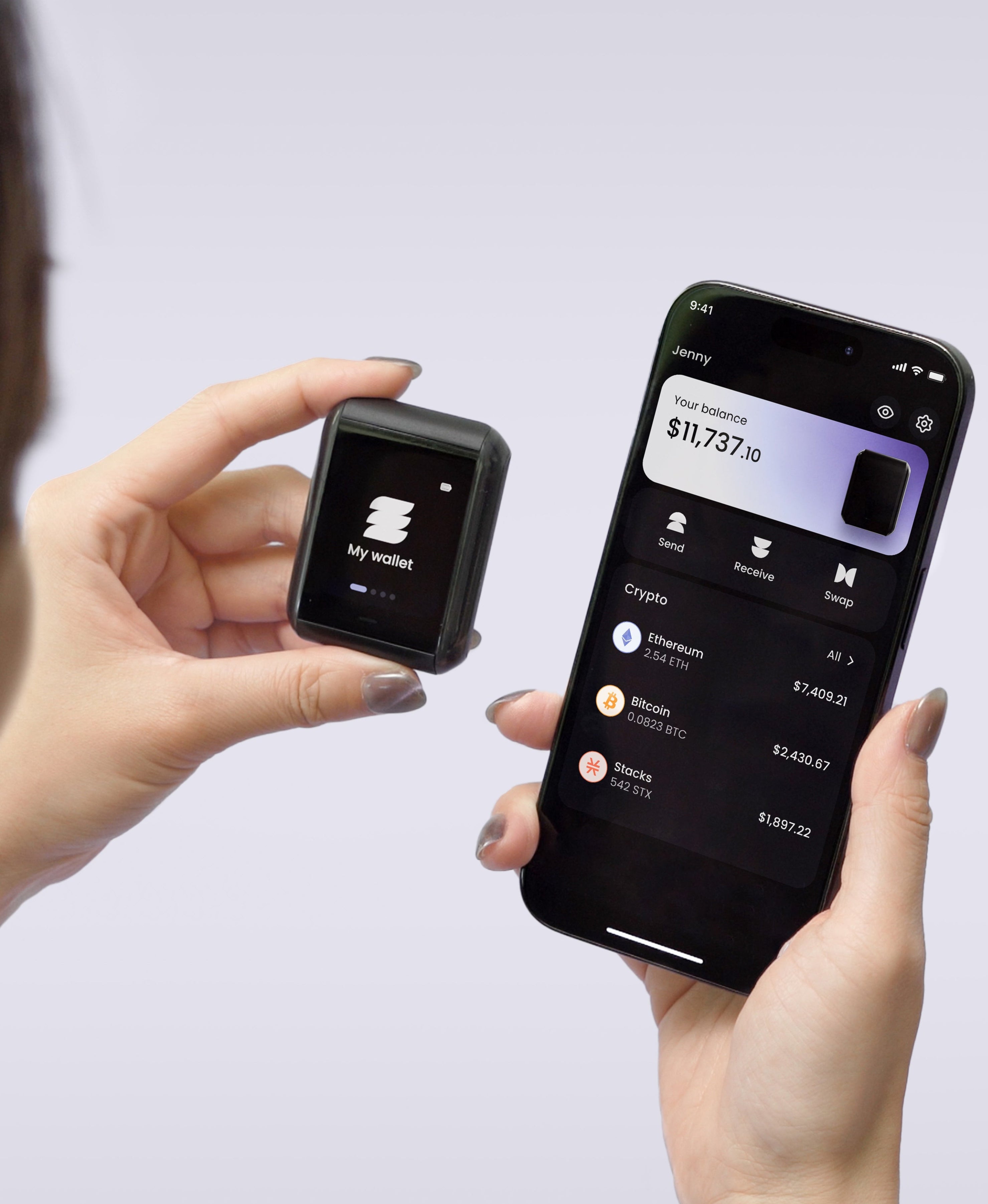
Ryder One is built around the assumption that the device's screen is the place a transaction can be trusted. The 1.6-inch AMOLED touchscreen displays full transaction details, with messages render in readable form, and the wallet supports clear signing for the major DeFi flows where it's been standardized. For the cases where a contract isn't recognized, the wallet flags the signature as a blind sign, makes you scroll through the raw payload, and warns you before allowing it. The friction is intentional. Blind signing should feel different from normal signing, because it is.
What you can do as a holder
A short checklist: - Use wallets and dApps that support EIP-712 wherever possible - Be skeptical of any signing prompt that doesn't render a clear summary - Avoid unlimited token approvals; cap them at the amount you need - Use a tool like Revoke.cash or your wallet's approvals manager to clean up old approvals - For high-value moves, slow down. Read the screen on your hardware wallet before tapping confirm. The last one is the cheapest control you have. Most blind-signing losses happen in seconds, while the user is in a hurry to claim something that turned out not to be real.
FAQ
Is blind signing always bad? Not necessarily. Some legitimate flows still rely on it because the contract or signing method isn't covered by clear-signing standards yet. The risk isn't blind signing itself; it's blind signing prompts you didn't expect, on dapps you don't fully trust. Can my hardware wallet protect me from a malicious dapp? It can't change what the dapp asks for. It can change whether you can read what you're being asked to sign. That's the gap clear signing closes. Is EIP-712 enough on its own? It's a big piece. The other pieces are wallet support and dapp adoption. The flows where all three are in place feel different from blind-signing flows, and the difference is worth paying attention to.
Bottom line
Blind signing is the last big surface where a careful user can still get hurt without doing anything obviously wrong. The fix isn't more careful users. It's signing flows where careful is the default.


Share: